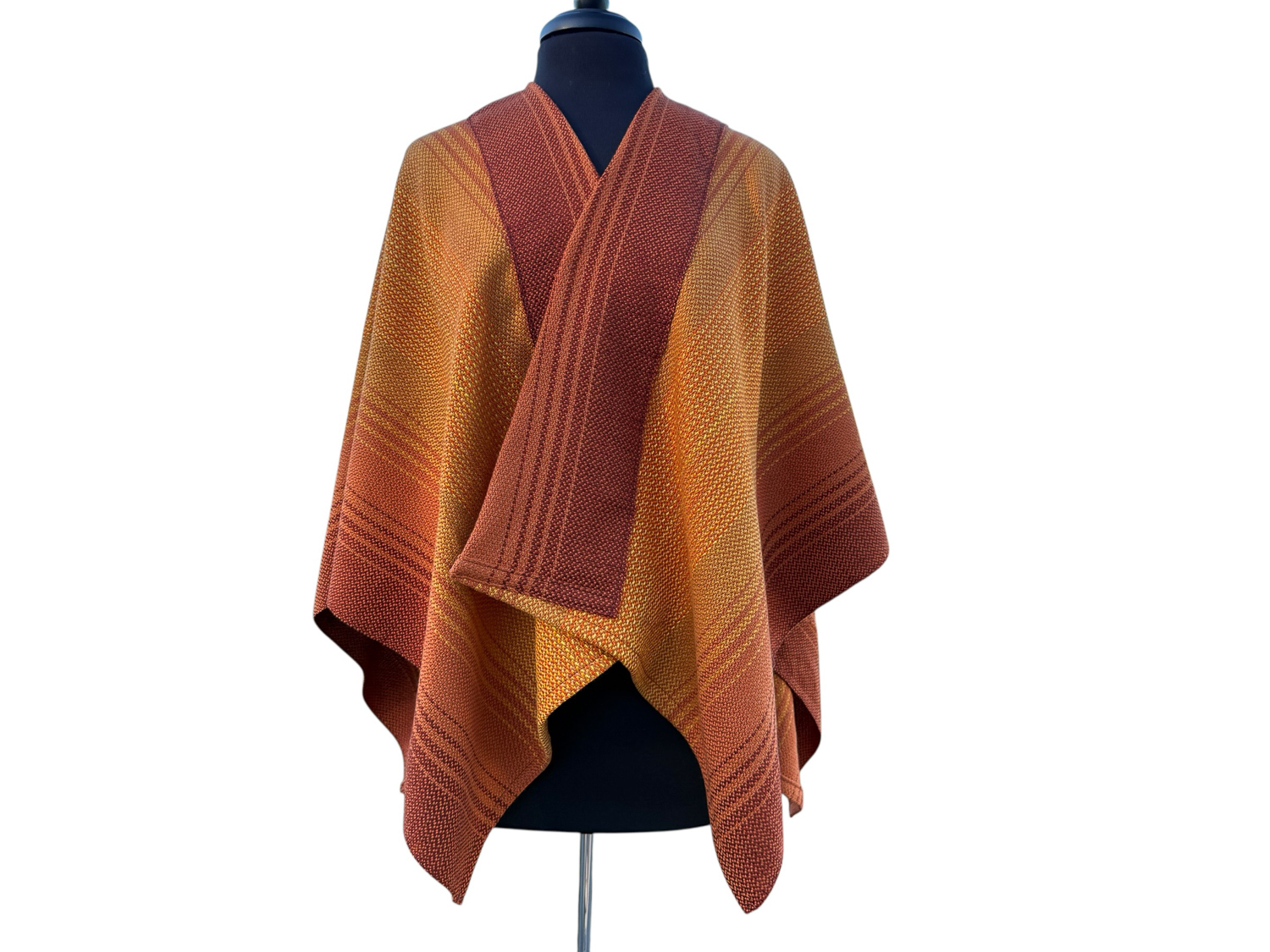
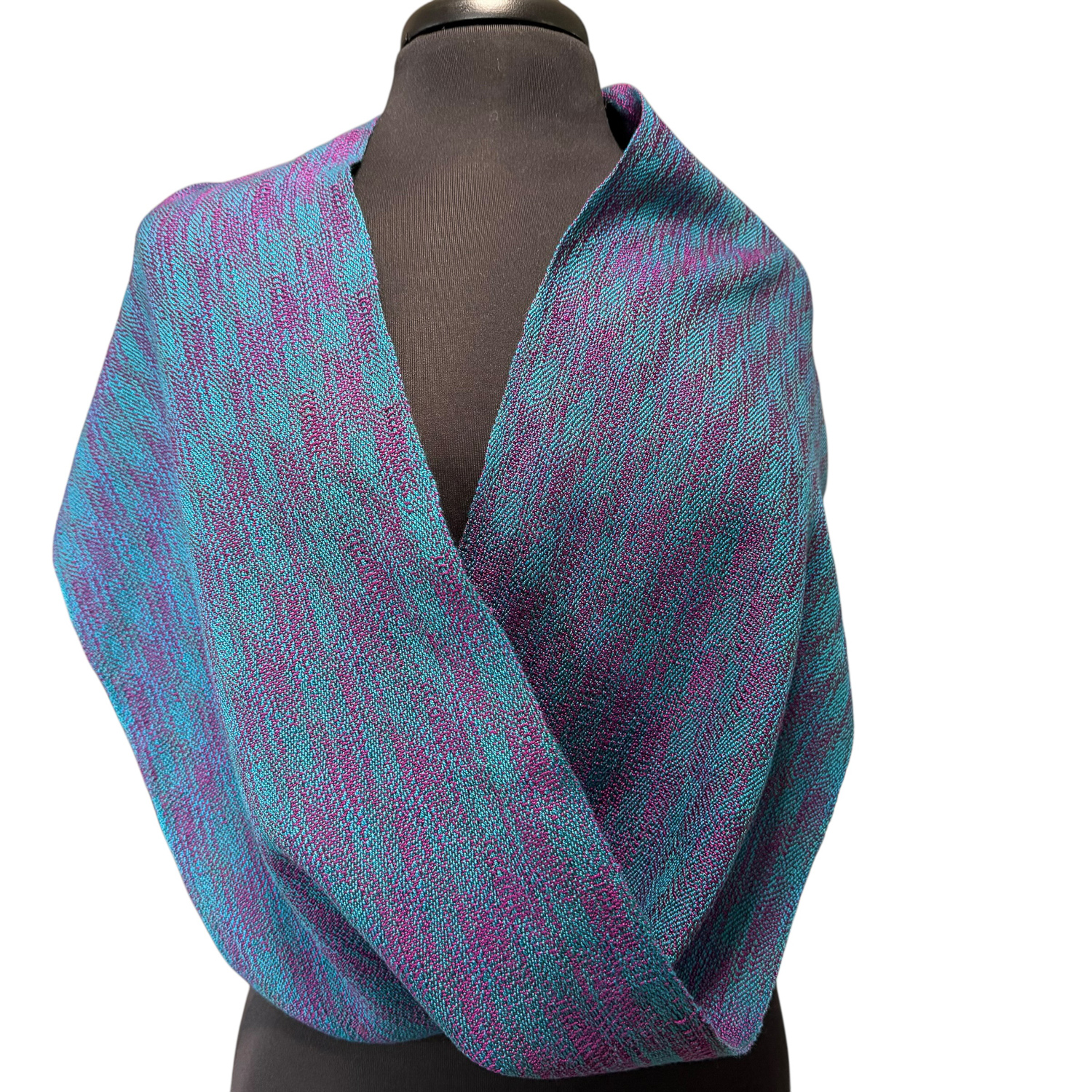
When I wind a warp for articles to sell I usually plan to weave at least two pieces and often more on that warp. That makes sense because the time spent threading is spread out over multiple pieces. That doesn’t mean they are all the same. Each piece may be different by choosing different colors for the weft or treadling differently. But a v-shawl is truly unique because you cut the treads as you go and can’t weave more than one on the warp. This appeals to weavers and I just finished another class.
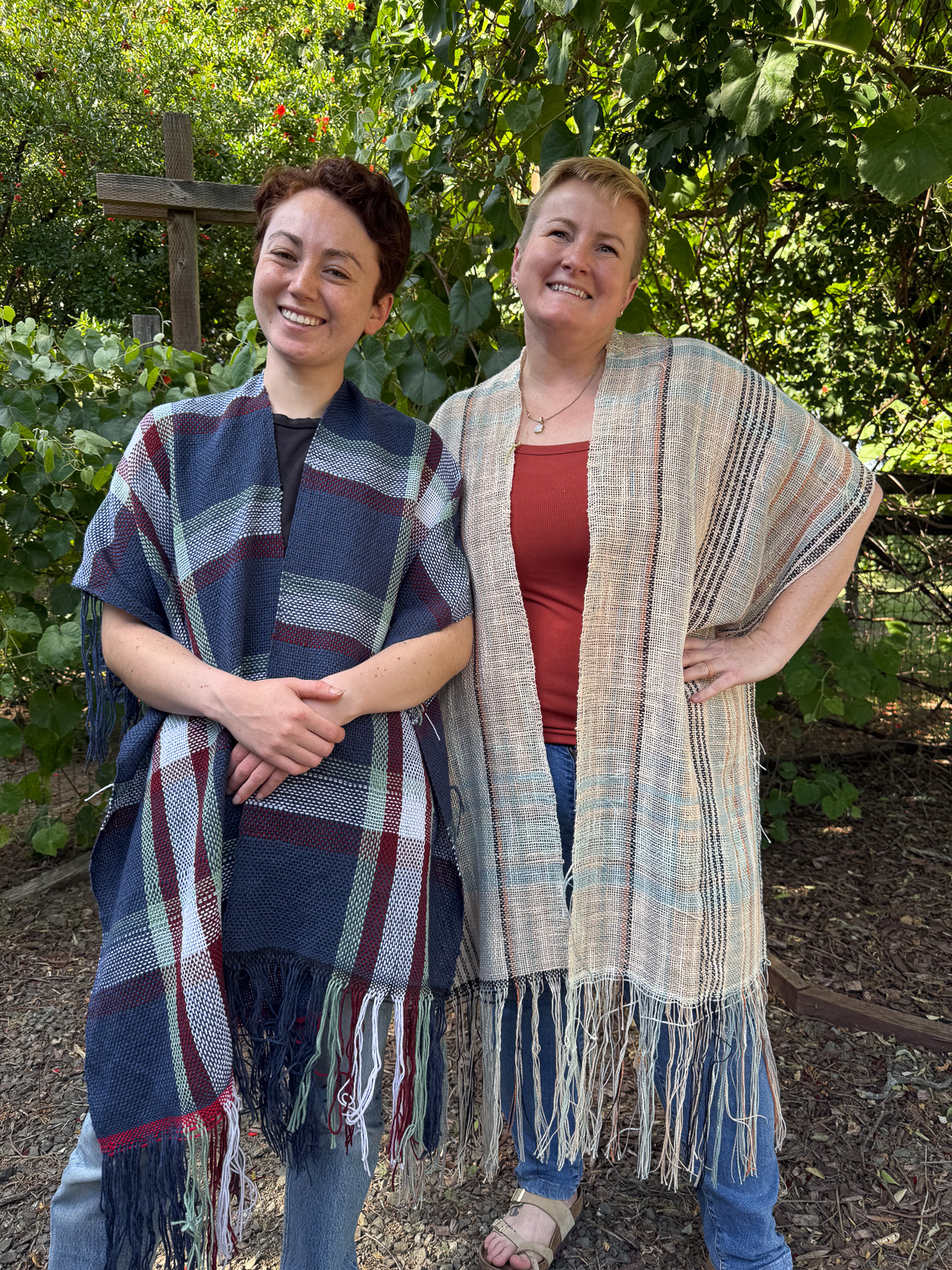
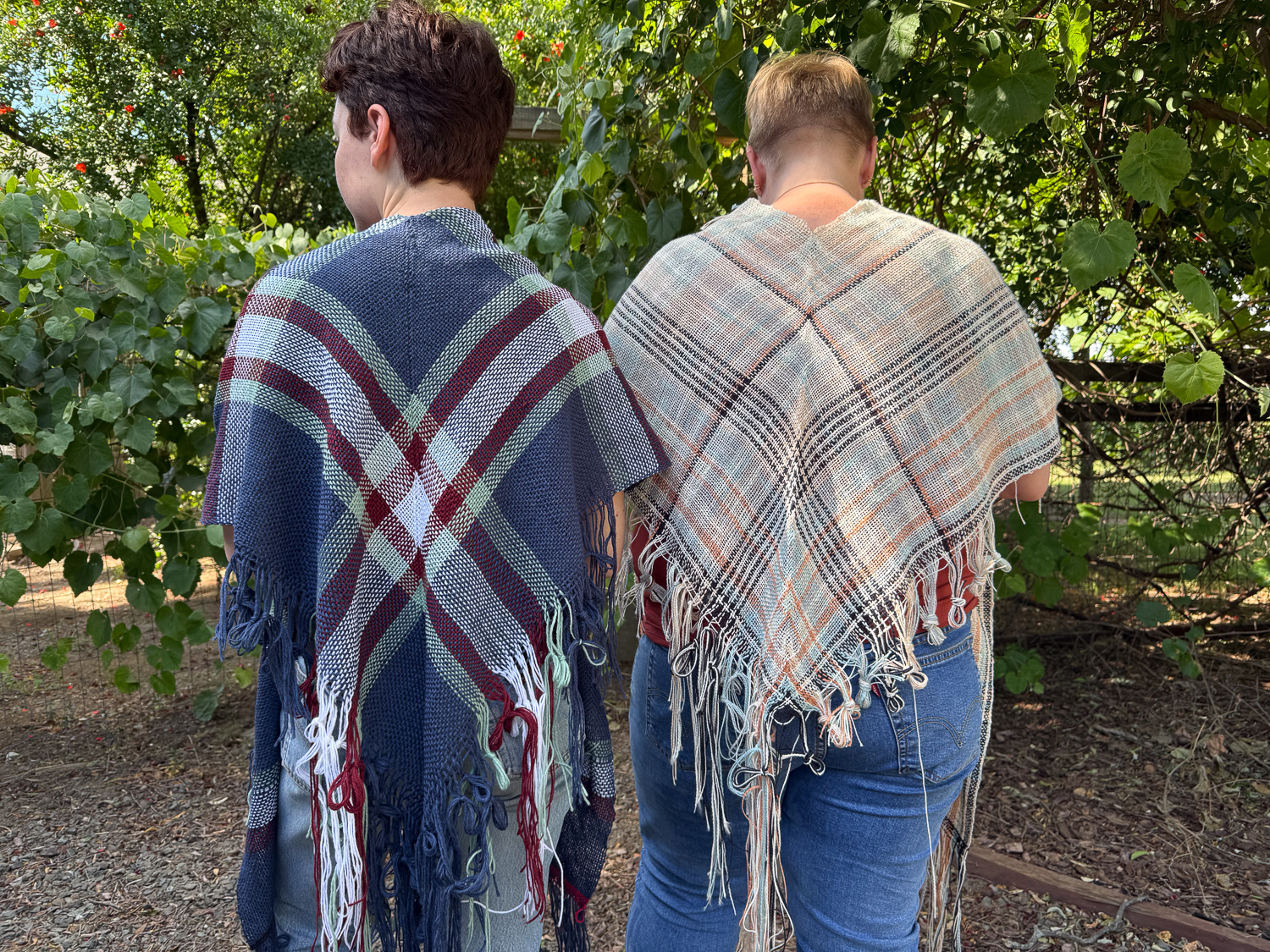
The shawls are just off the loom so haven’t had any finish work yet.
Fringes will be twisted and shawls will be wet finished.
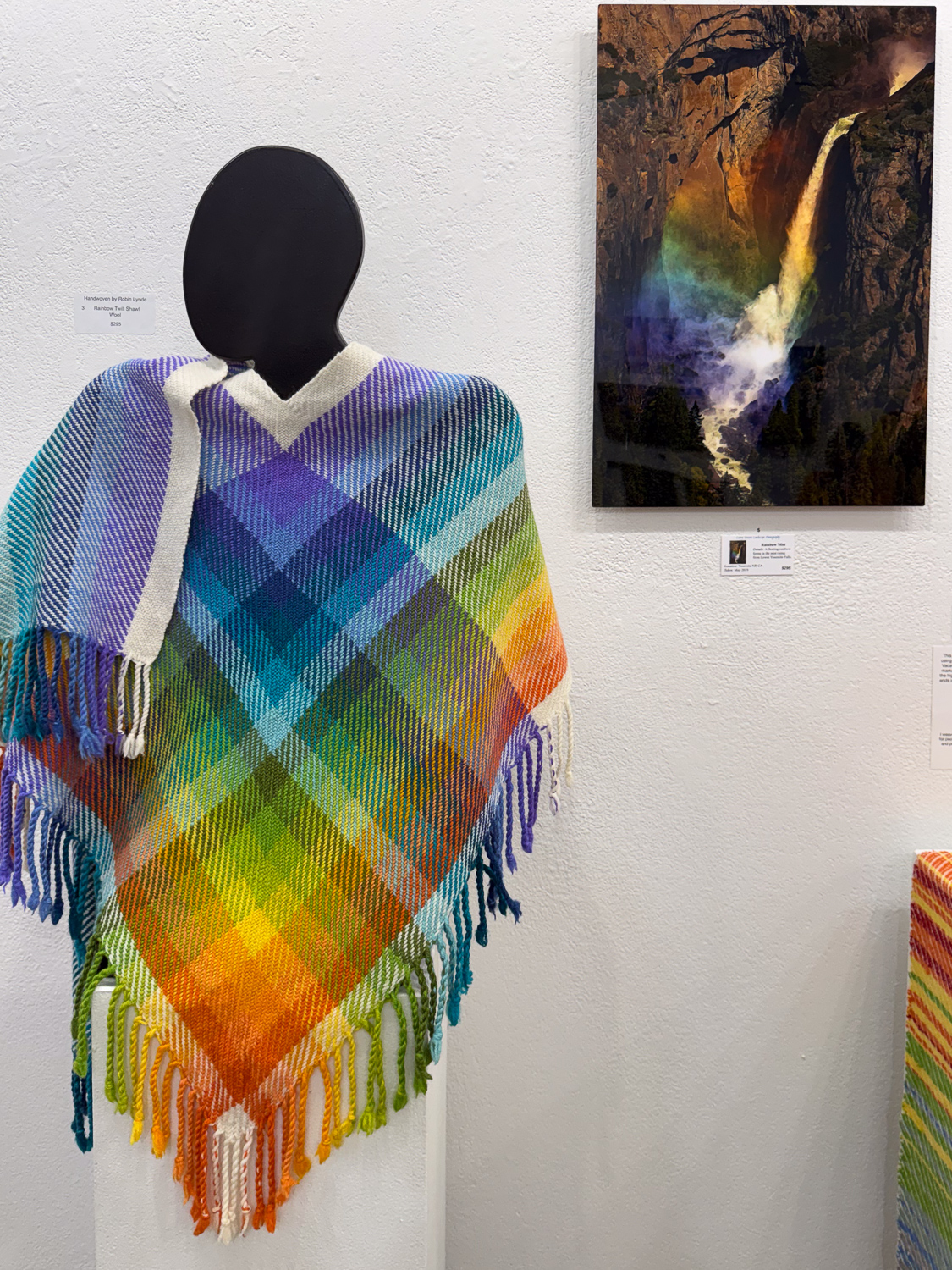
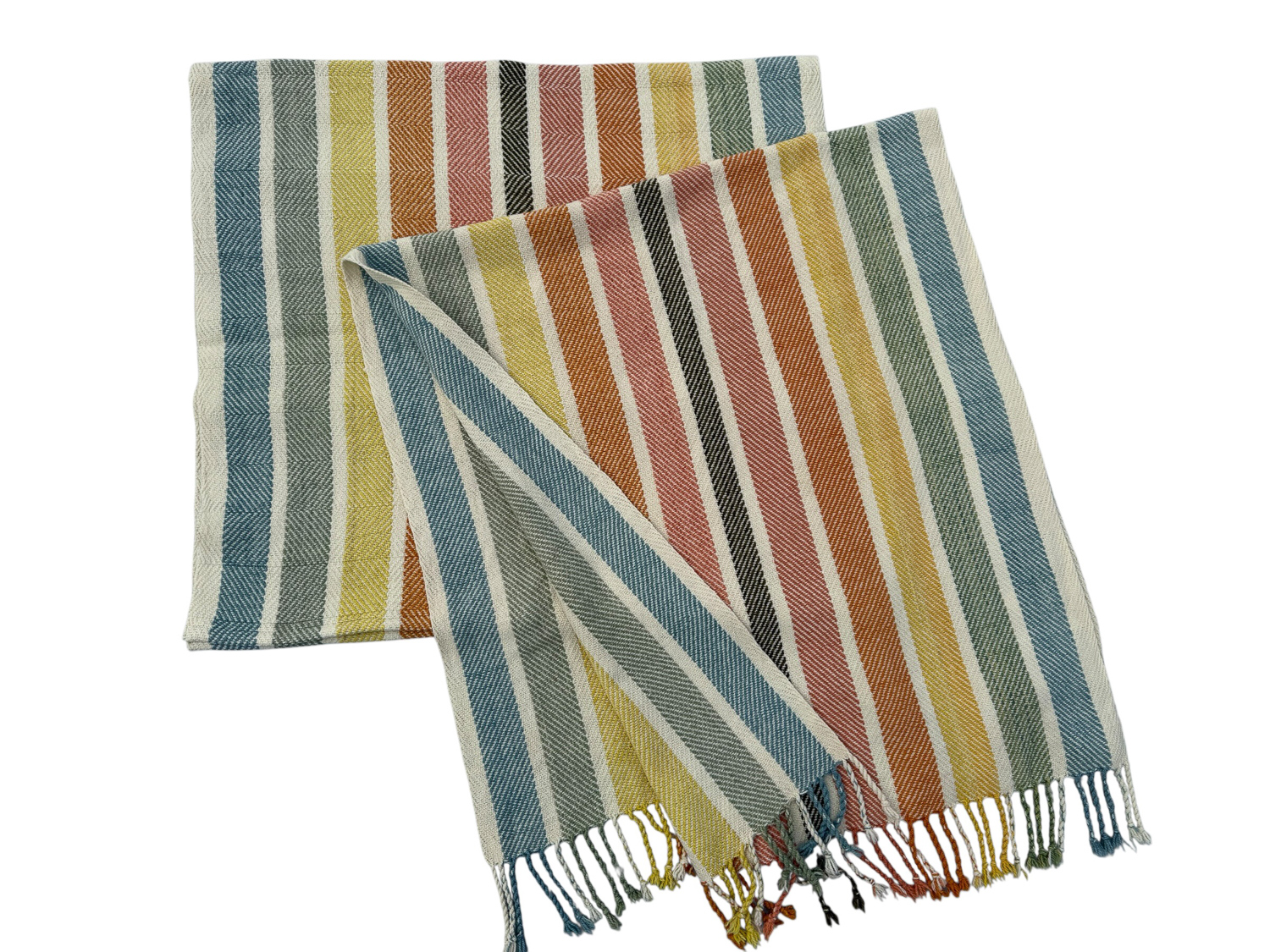
The stripes in this shawl were planned using the Fibonacci sequence.
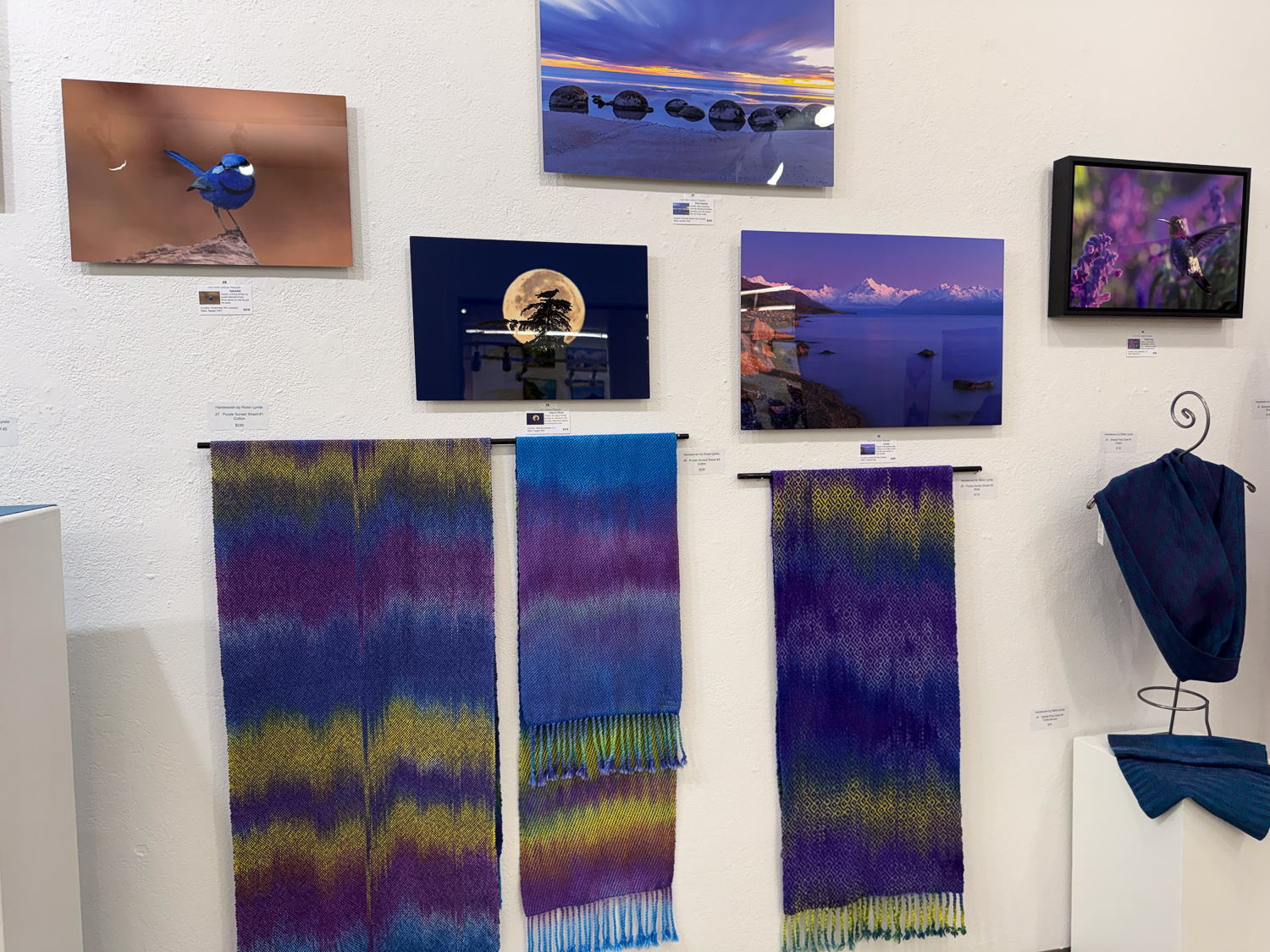
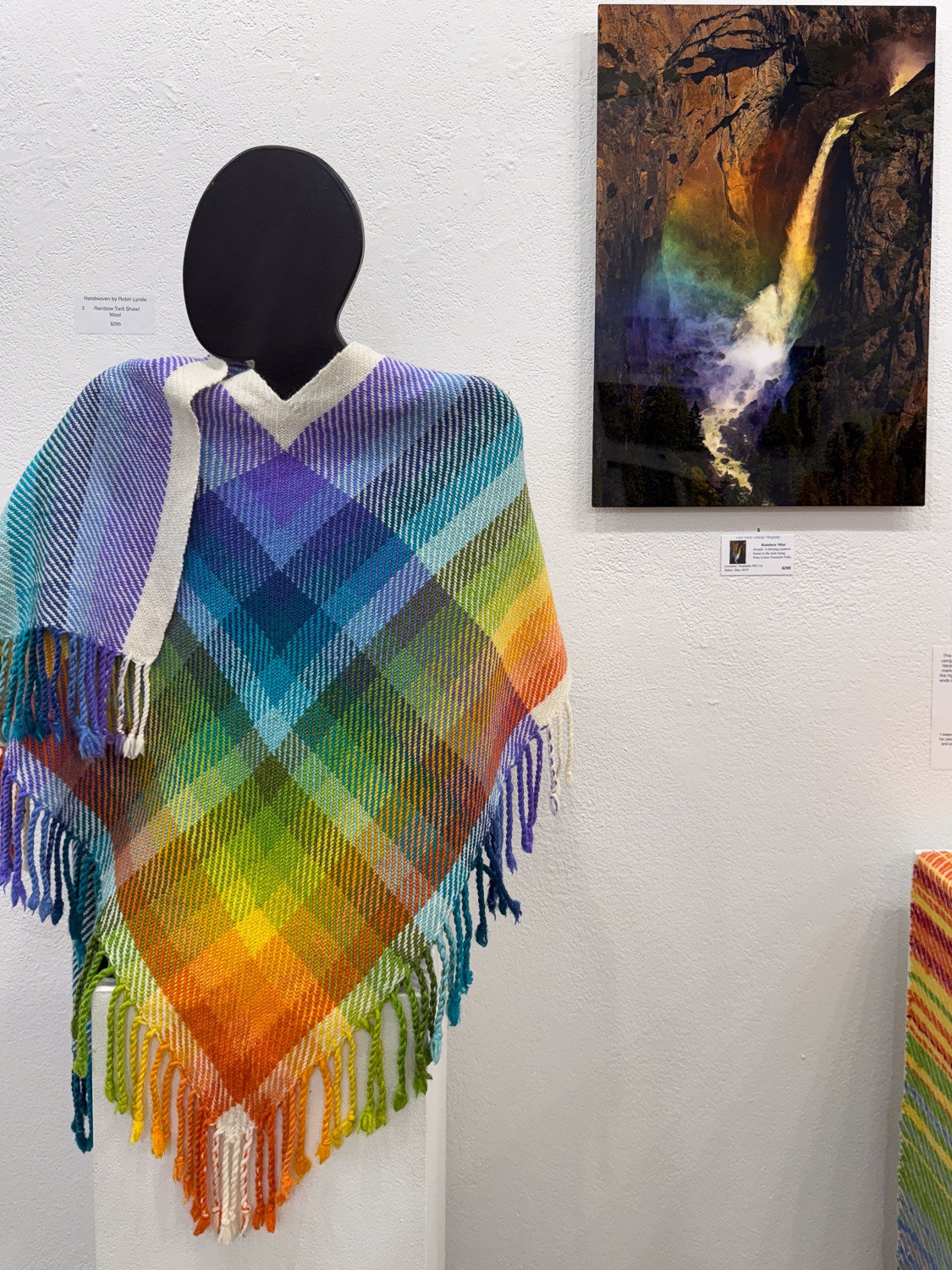
This is one of my latest shawls with colors chosen based on this photograph by Garry Everett with whom I recently shared a show at The Artery.
I have more people who want to take the V-Shawl class and will probably need to schedule a class beyond what is listed at that link.
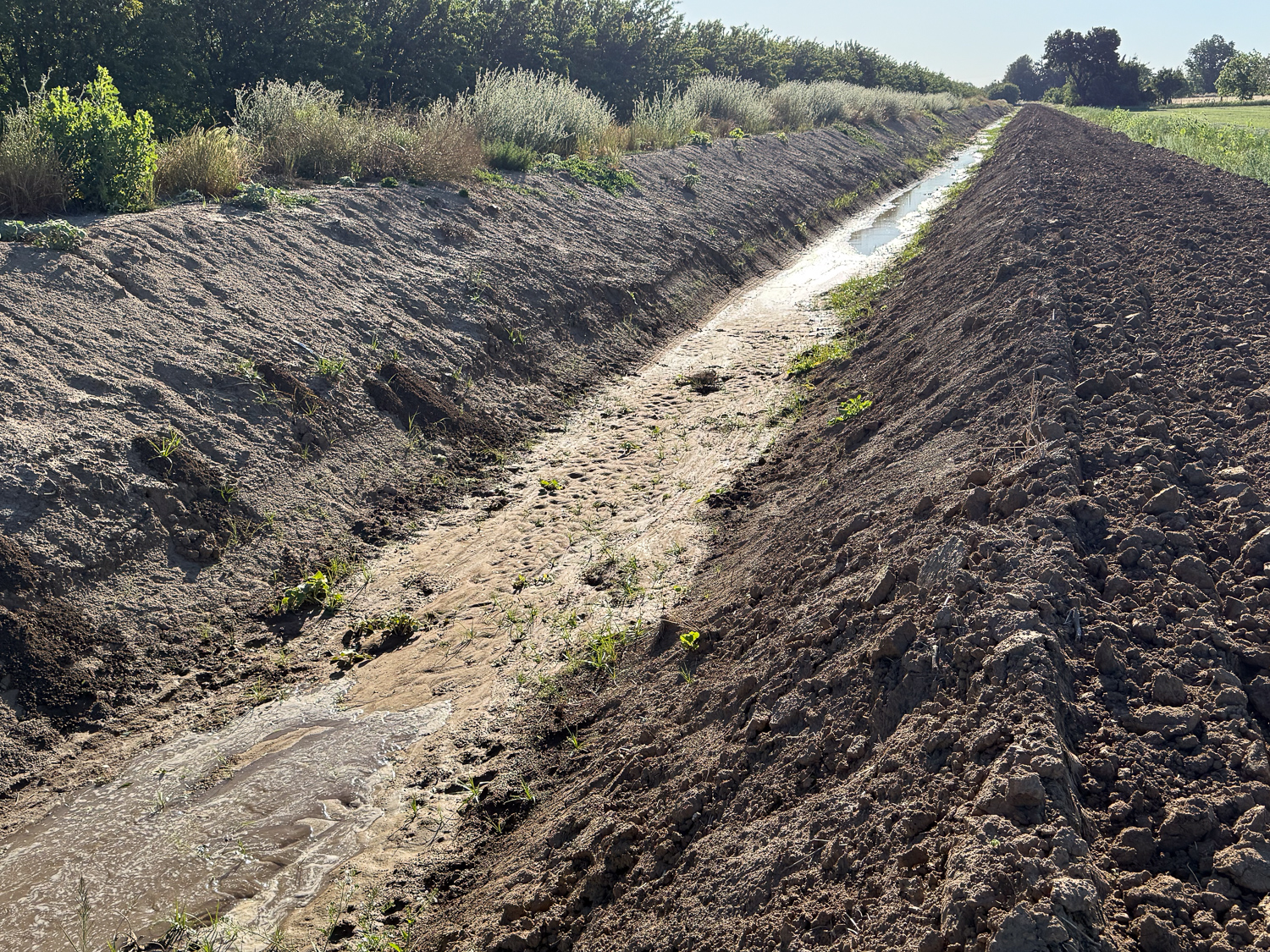
I left the last post knowing that the irrigation would not be finished by the time the water was shut off Tuesday afternoon. I was able to have the water start again at 6 a.m. I waited for the ditch and pipeline to fill again and went out about 7:30 a.m.
I could tell right away that there was more water flowing in–it had already progressed farther down the checks where the valves were still open than the previous day. The following are the notes I took on my phone that morning. The numbers refer to how far down the field the water is for each check.
7:45 a.m. 13 is 1/2, 14 and 15 are 2/3, 16 is 1/4, 17 and 18 are 2/3, 19 is 1/2 9:20 a.m. 13 and 14 almost finished. 15 over 3/4. 16 is 2/3. 17 and 18 are over 3/4. 19 is 3/4. 20 is 2/3 9:40 a.m. 13 finished. Closed. Opened 21 and 6-7-8 I had to go to Davis and didn’t get back until 12:30 12:30 p.m. 15-16-17-18-19-20 finished. 21 is close to end. Now only 21 and 6-7-8 were on. Closed 8. 7 is 1/2. 6 is 3/4. Both of these were flowing backwards into the lane a lot.
The last note is about 21, 6, 7, and 8. Valve 21 was the last one I opened. I had closed 6, 7, and 8 because the water wasn’t flowing enough there and I wanted to make sure all the rest got enough water. It was only after the water was flowing so well and everything else was finished I opened those again.
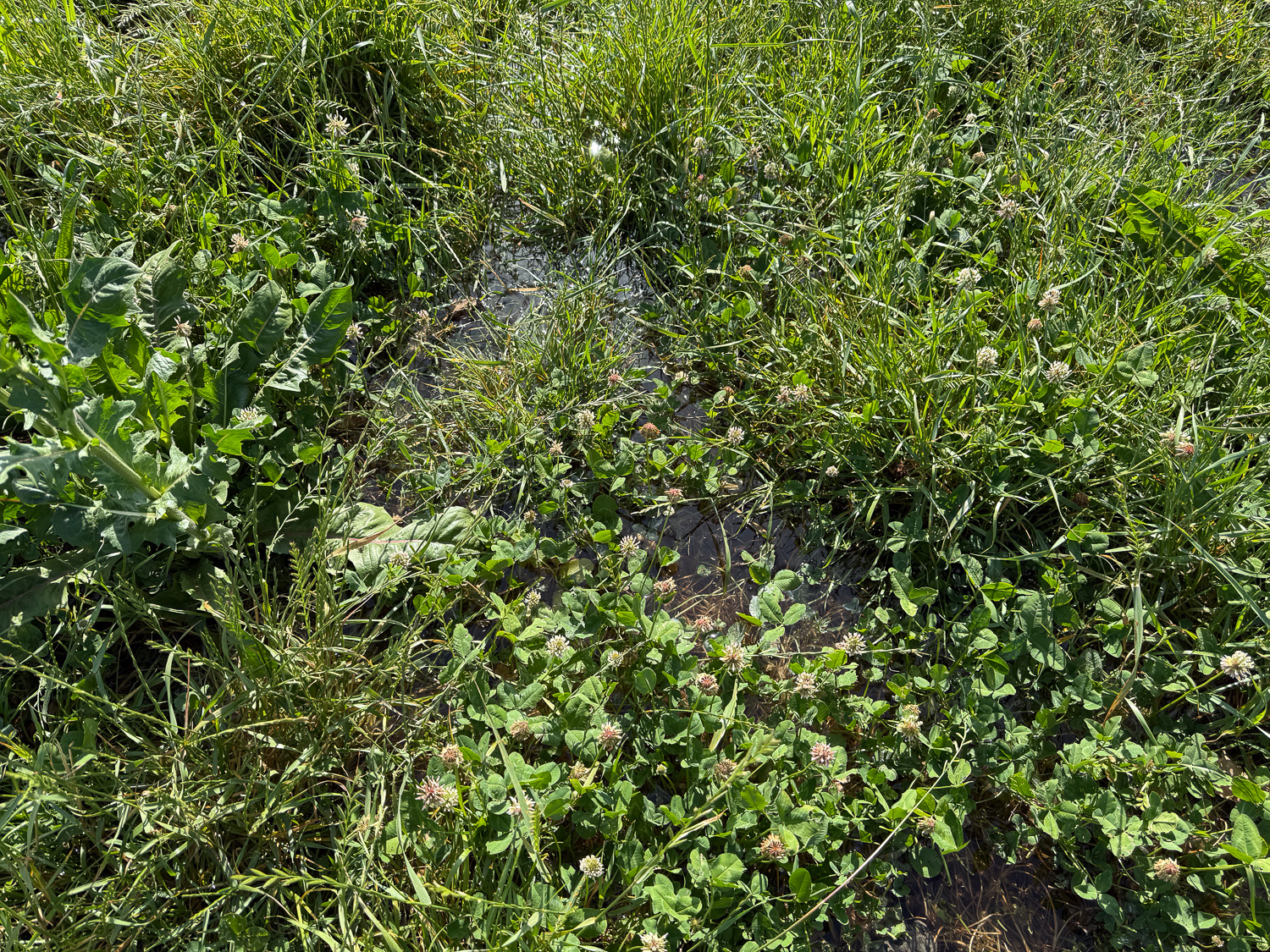
I took this photo in a place where I could actually see the water. Many times I can’t see it because the forage is so thick or tall. In that case I can tell if it’s wet because I can hear the water splashing where I’m walking. I recorded a video to share that, but I can’t upload it here.
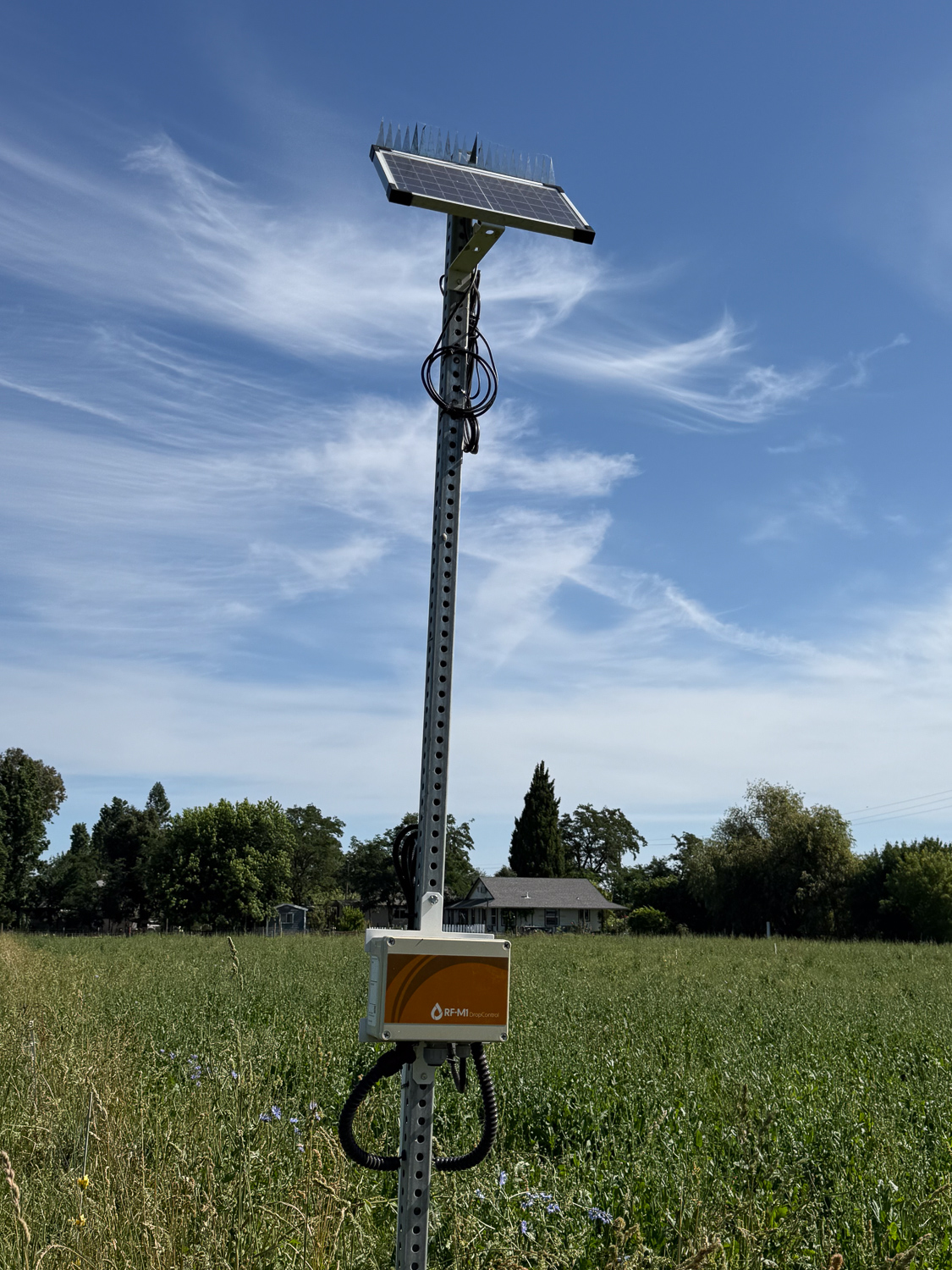
This is what the soil moisture sensor looks like. I get the graph on my computer or my phone.
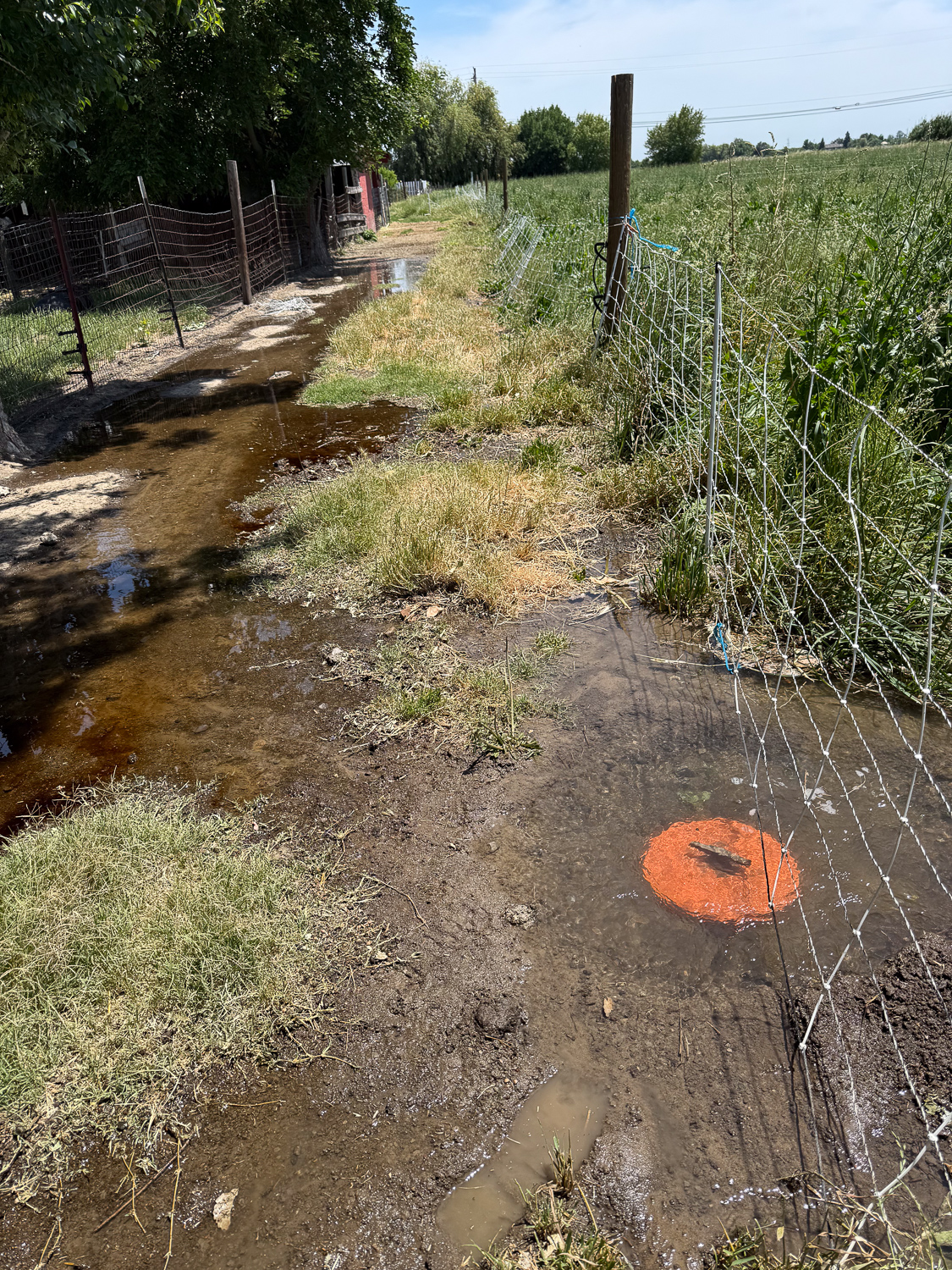
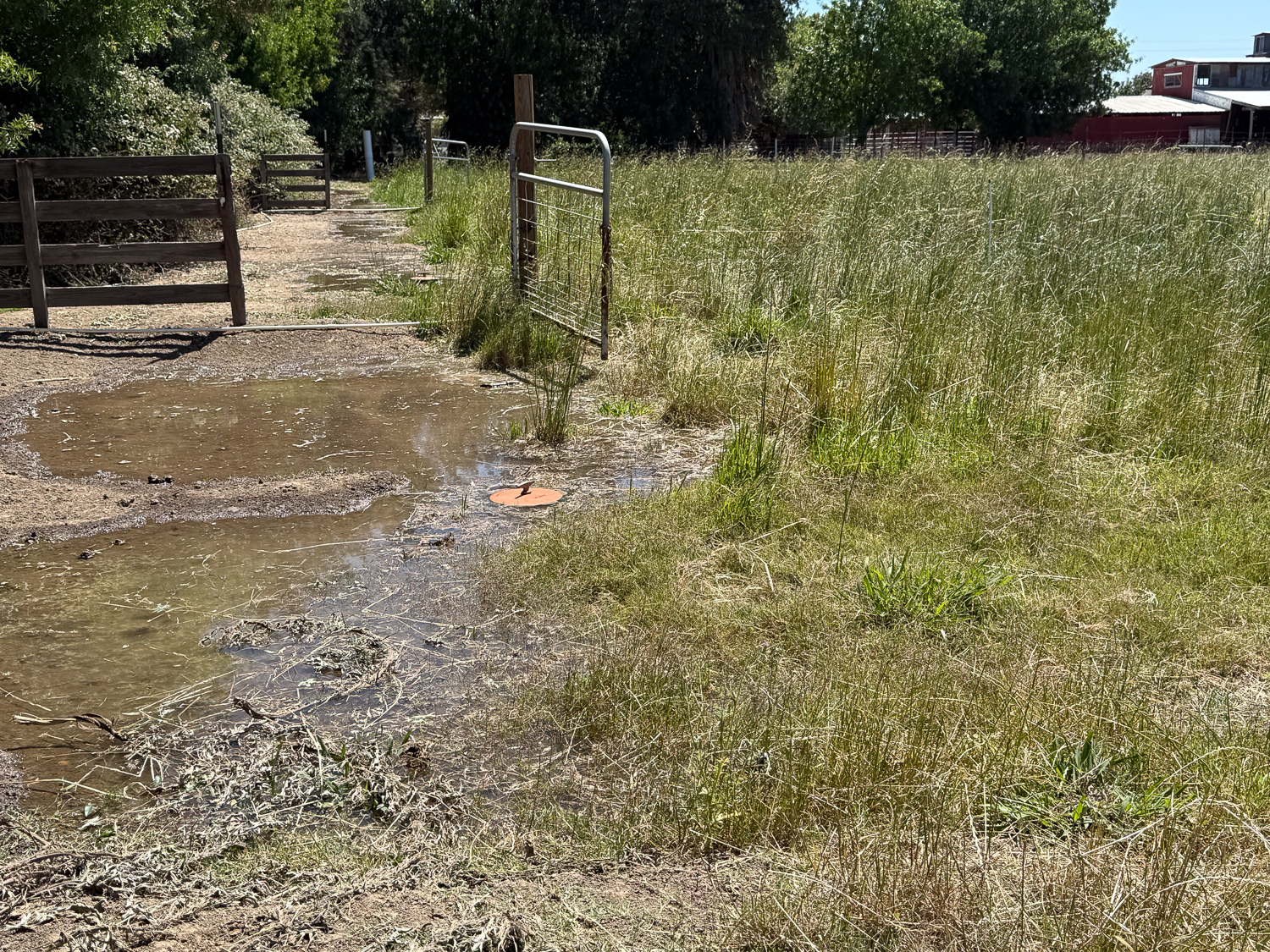
This is what I meant by #7 and #8 flowing backwards. It took only a couple of minutes for the lane to be flooded. Before we irrigate next time we’ll have to pile dirt around those valves.
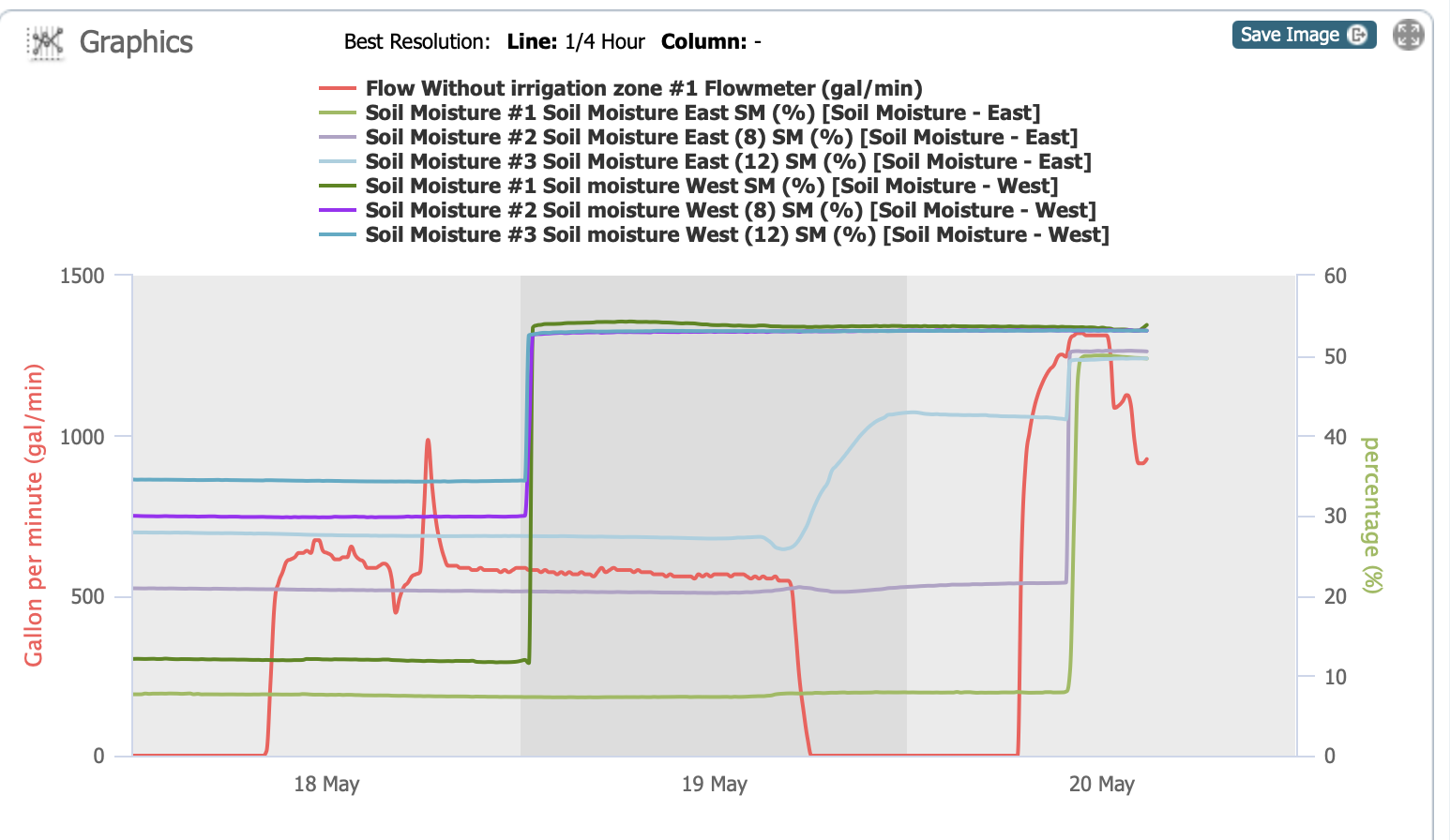
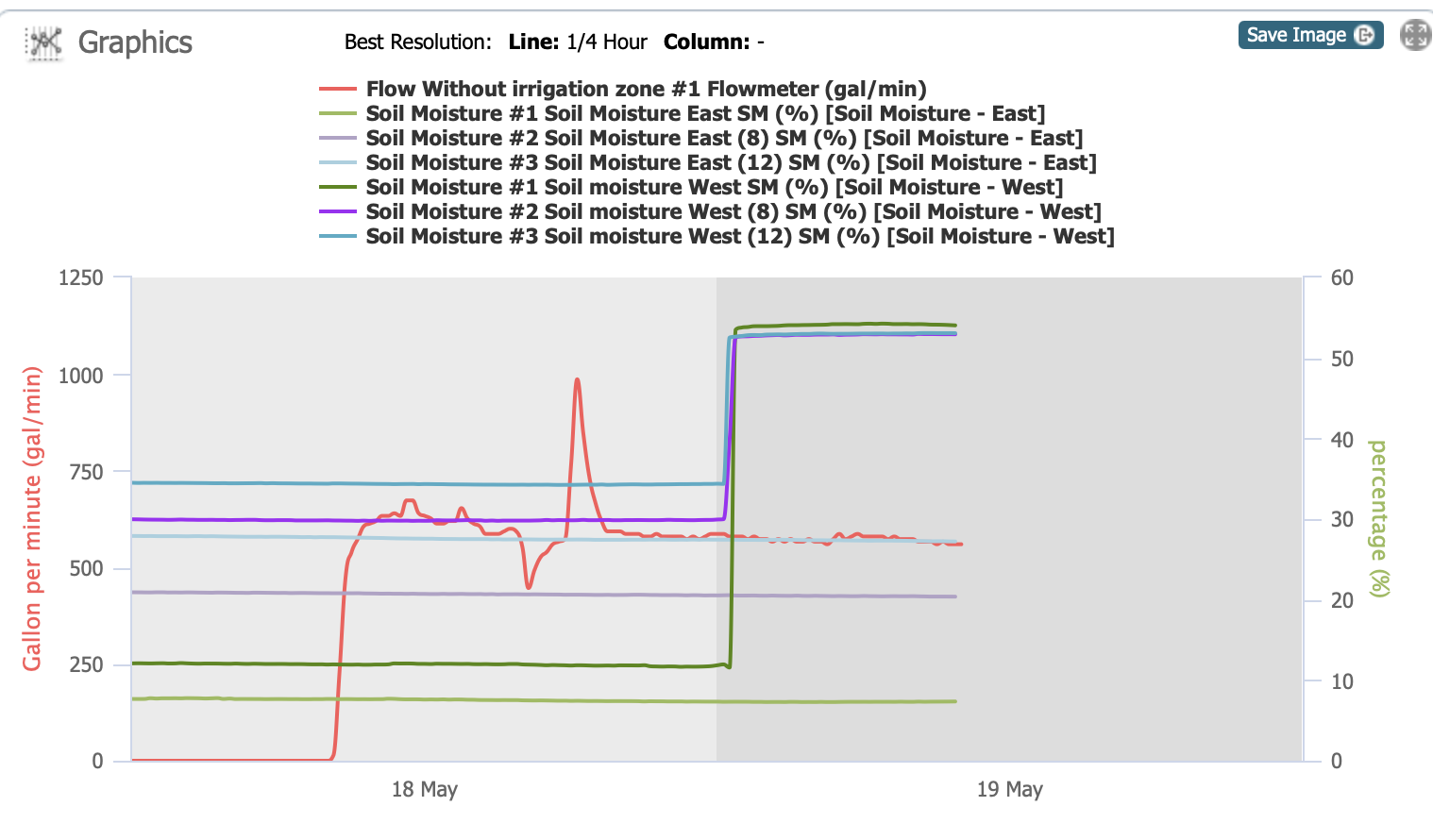
The red line on the graph below shows that the amount of water was more than twice what I had the previous day. It also shows that the other soil moisture sensor finally measured water. I see an anomaly–that faint blue line that rises as the water is shut off the first time. I think the timing is coincidence, but it shows underground flow that activates that 12″ deep sensor on the east. Flowing through gopher holes?
There is a lot to think about before the next irrigation.
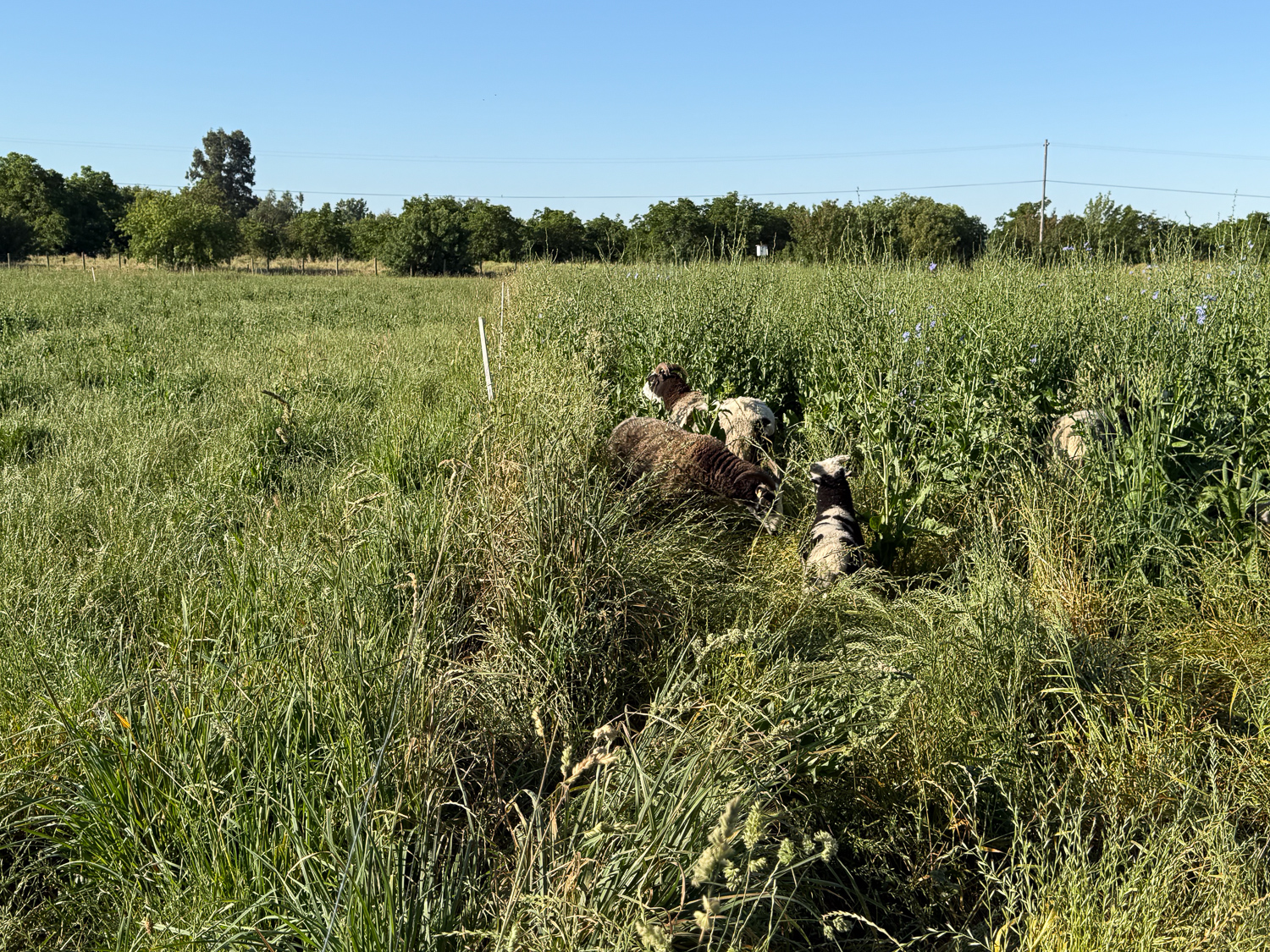
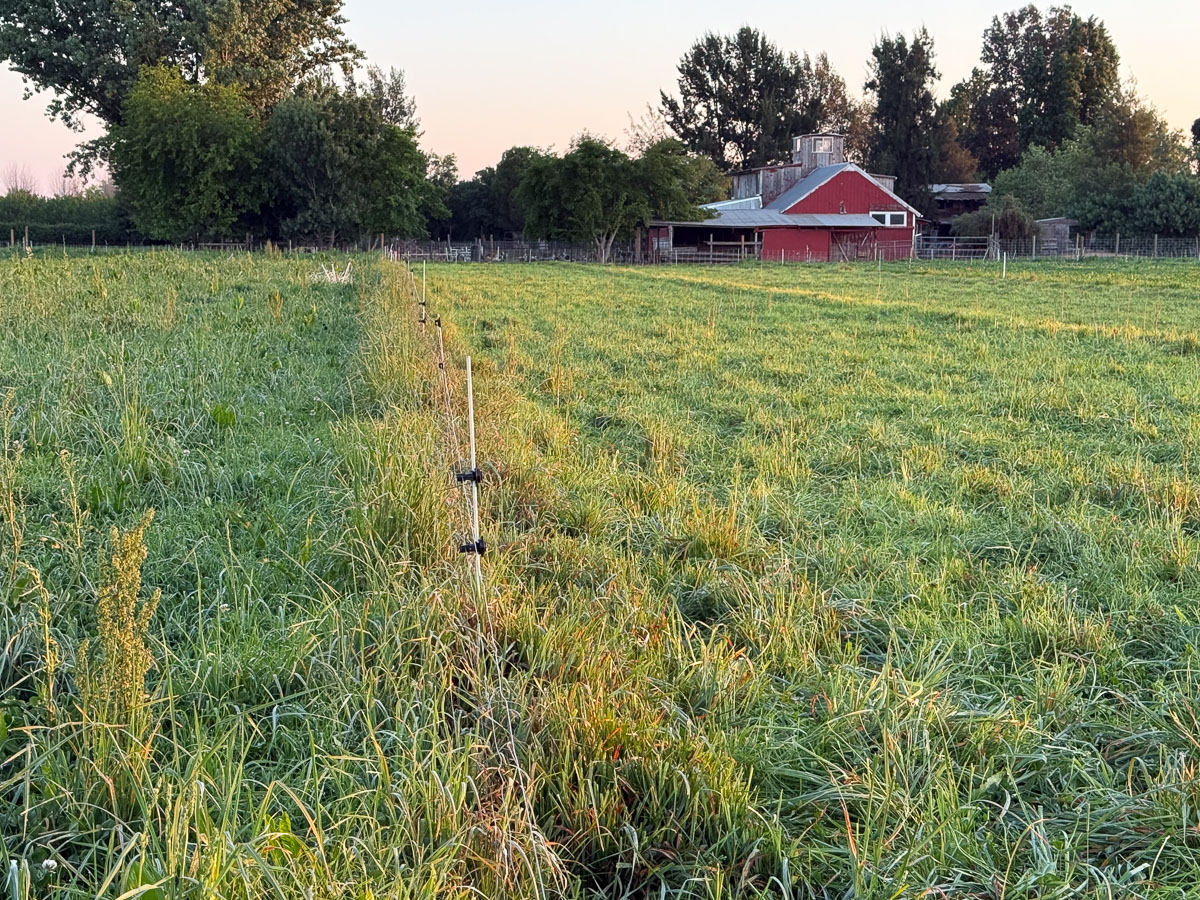
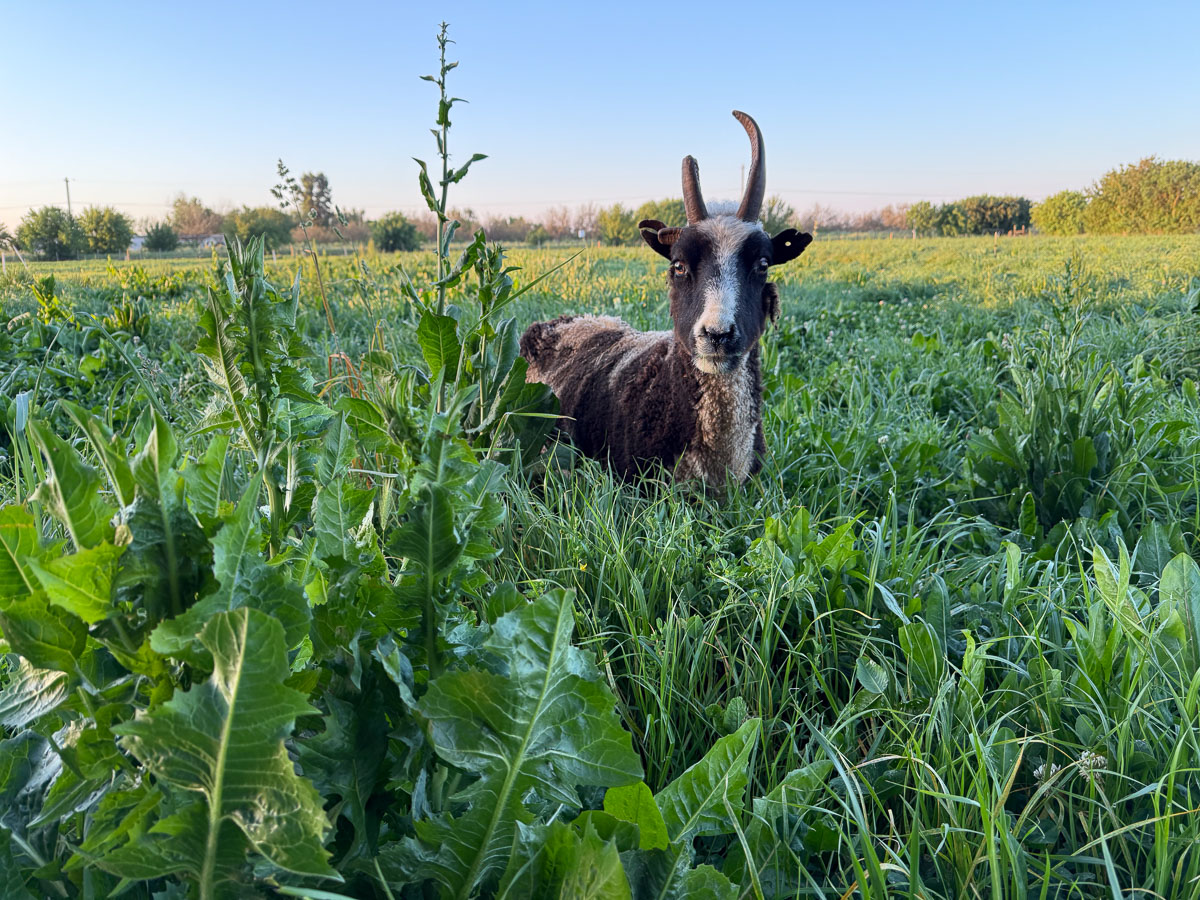
I turned the sheep out this morning. The paddock on the left was last grazed May 1. The sheep moved to the north paddocks after that and then moved from west to east. The one on the right hadn’t been grazed since March 29. The whole flock is out there, but you can’t see them because they are in a jungle of chicory.
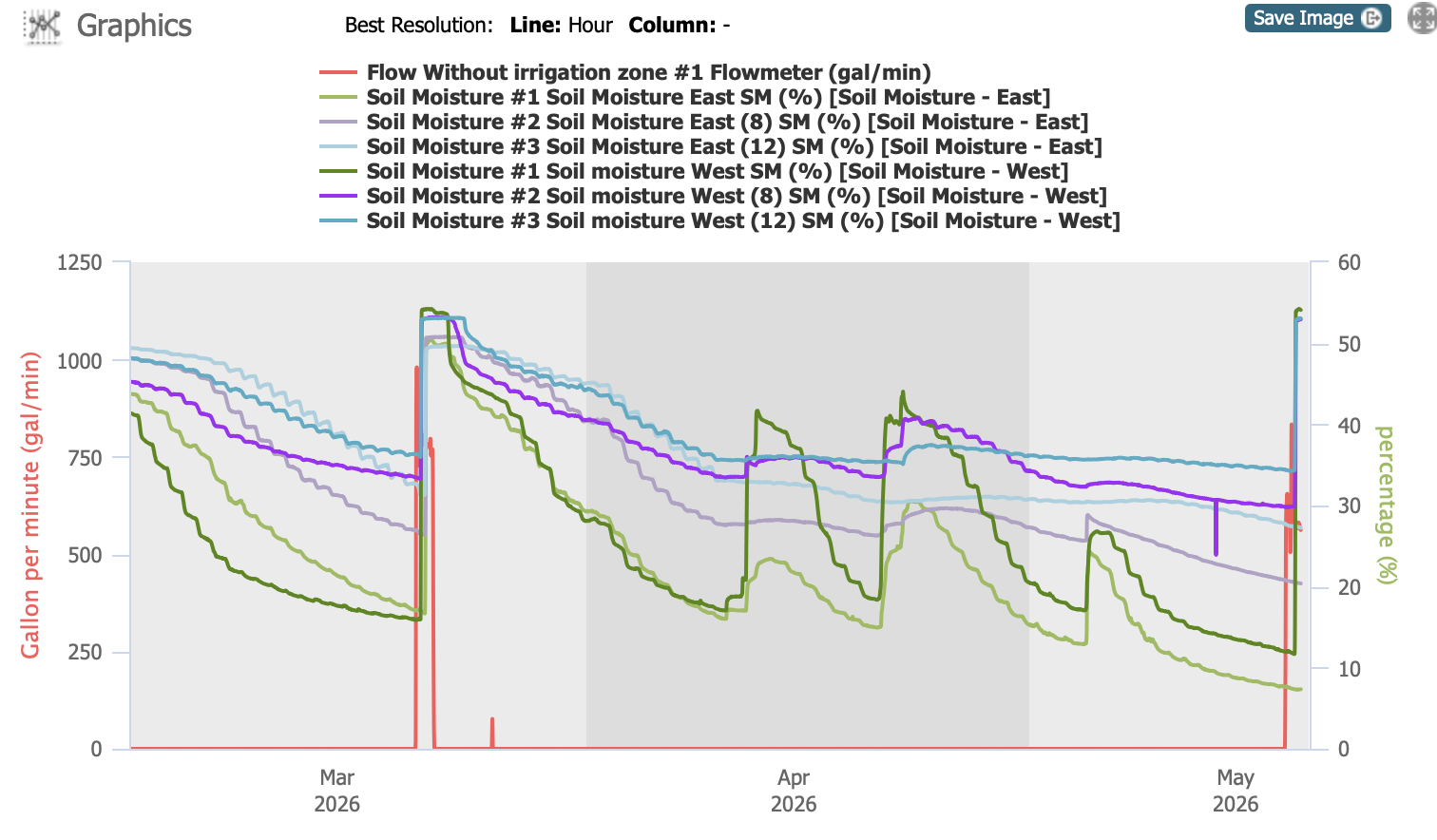
In the Sacramento Valley it rains in the winter (hopefully) and is dry in the summer. Without irrigation the landscape would be brown. So irrigation is a necessary task throughout the summer. March was so dry this year that the irrigation district filled the canals and started the season earlier than usual. We irrigated March 20. There was some rain in April, but at this point in mid-May we were overdue for getting water on the field.
Part of the pasture renovation project (thanks to NRCS–search for Pasture Renovation here to see all the posts) was installation of two soil moisture sensors. This chart indicates measurements at 3 depths on a sensor in the south west (in bold colors) and one towards the east (lighter colors). They indicate soil moisture levels at 4″ (green), 8″ (purple) and 12″ (blue). The red line indicates flow through the irrigation system. All soil moisture levels were high after February precipitation, but you can see how the 4″ content drops fairly quickly and then responds to rain events. By this time in May it was very low and the 8″ readings were getting low as well.
The goal is to measure soil moisture in the root zone and use that to plan irrigation. We’re still learning to use it appropriately. If we irrigate too frequently we run the risk of running out of our water allotment by the end of the season, and who knows how long the dry season will last.
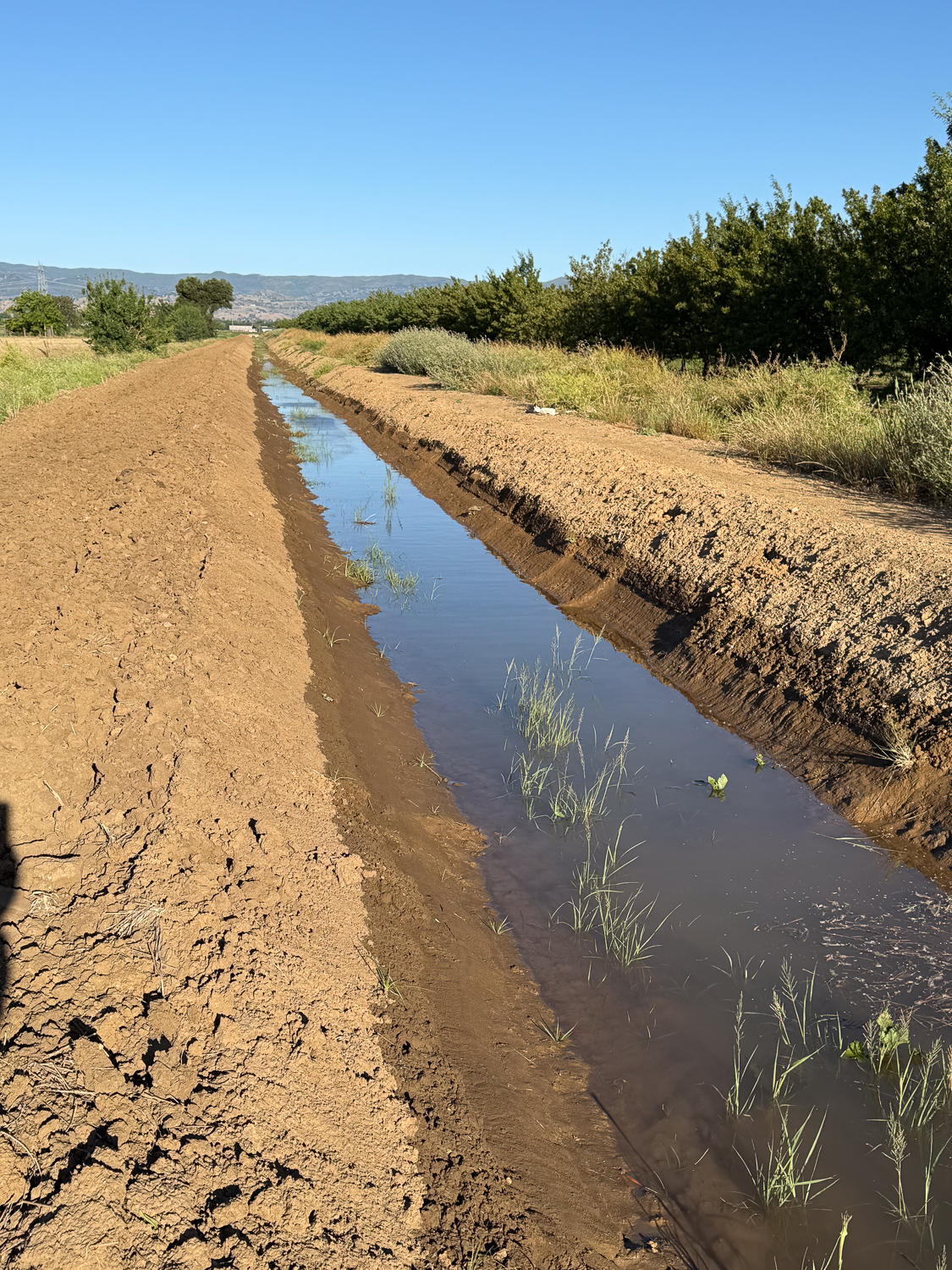
This photo is the view looking west from just beyond the corner of our property. The water in the canal is leftover discharge from irrigation further up.
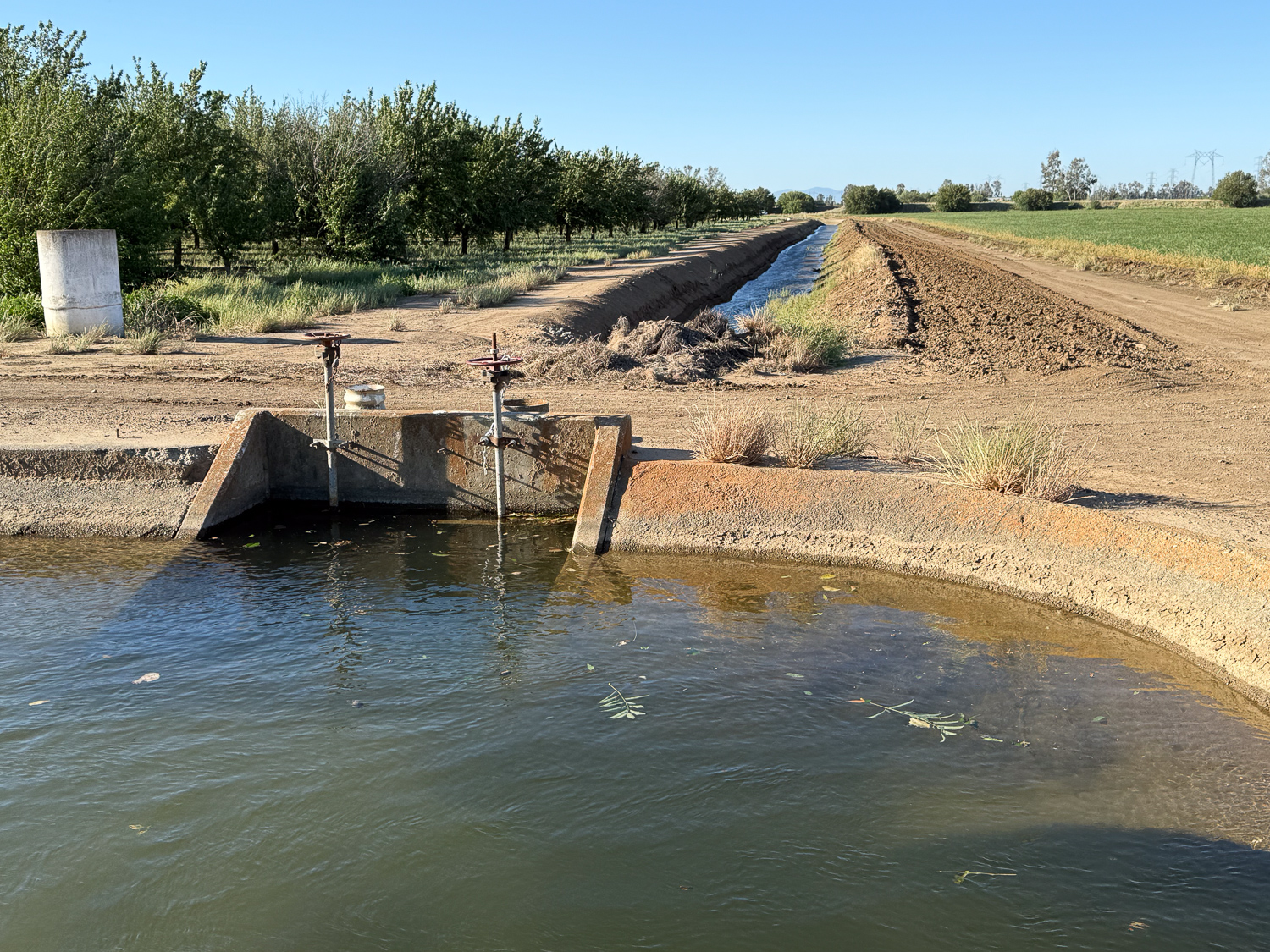
Turning around, this is where the water enters our property. The half pipe on the right is an outlet for the discharge water so that it runs under the dirt road and into canal that goes south along the west edge of our pasture. When we irrigate we block that pipe off with boards to keep the water flowing west.
I walked up that road to the west and then turned north to get to this point where the water is released from a bigger canal. The water goes south until it gets to a bend…
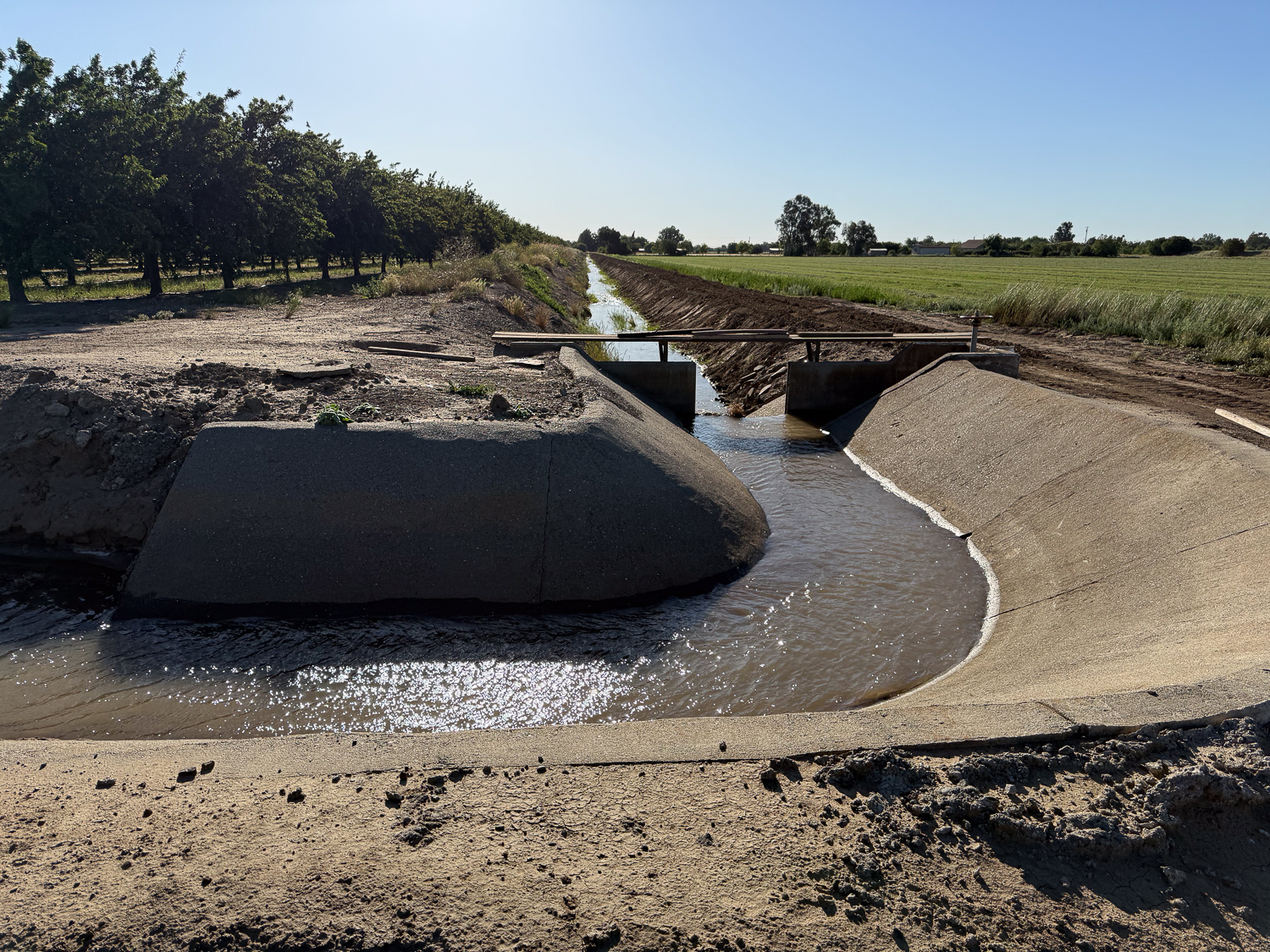
…where the canal turns east. This canal is mostly dirt, but the corners are concrete.
This is the other view of that canal
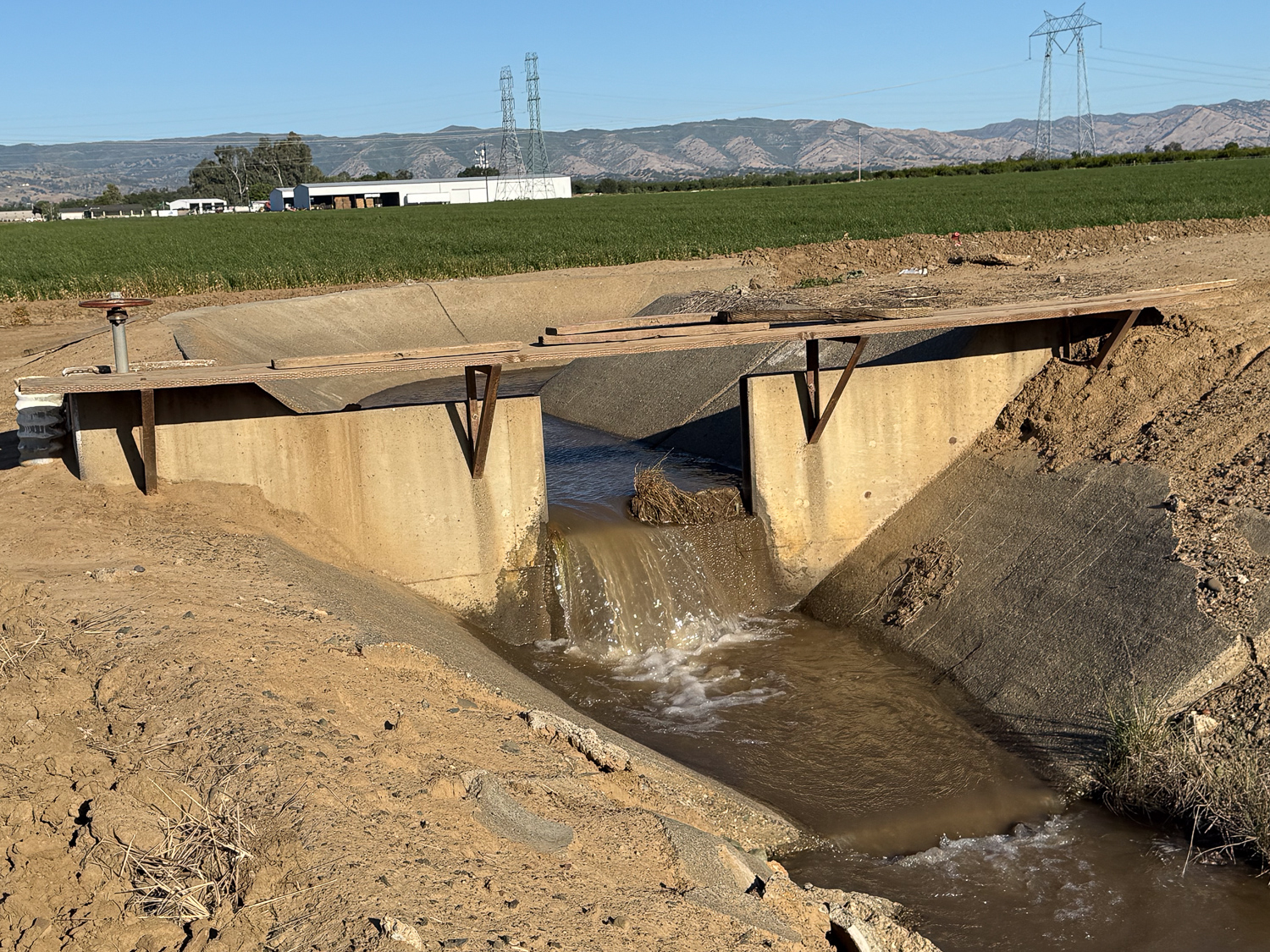
Here is the water I asked for flowing down the canal (lower left) where it will meet up with the water that was already there but not flowing into our field.
When the water gets here it will start to fill our pipeline.
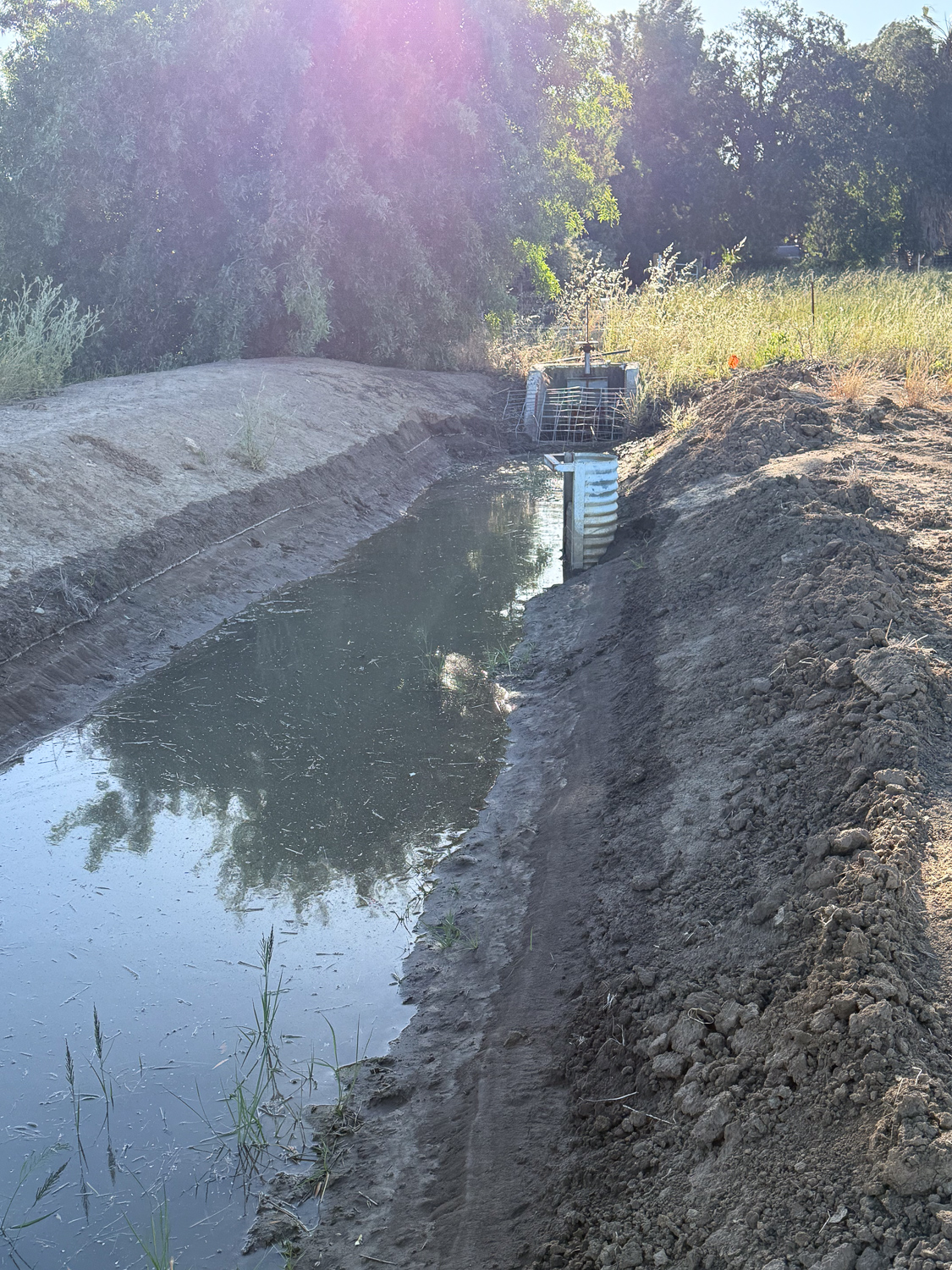
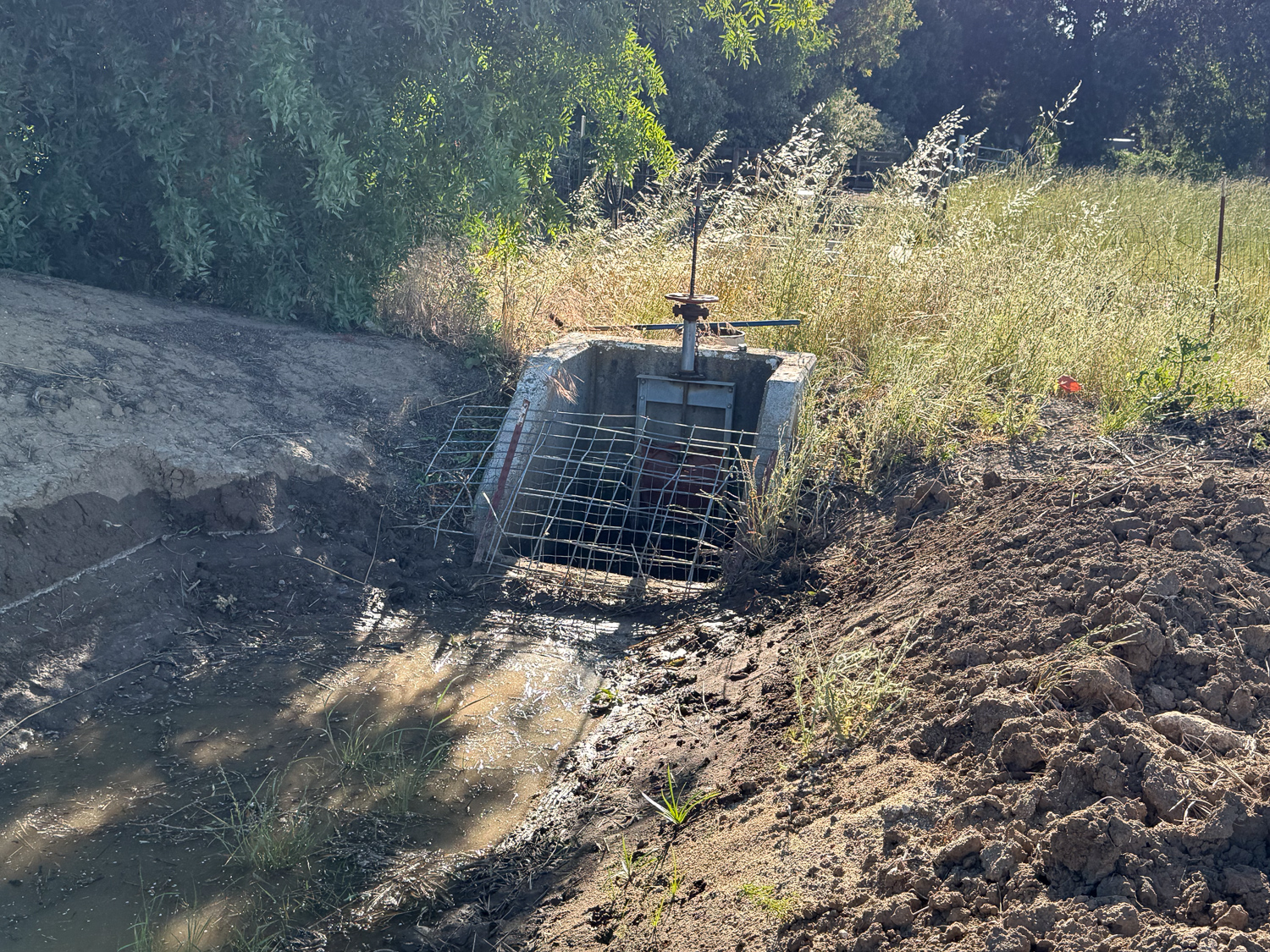
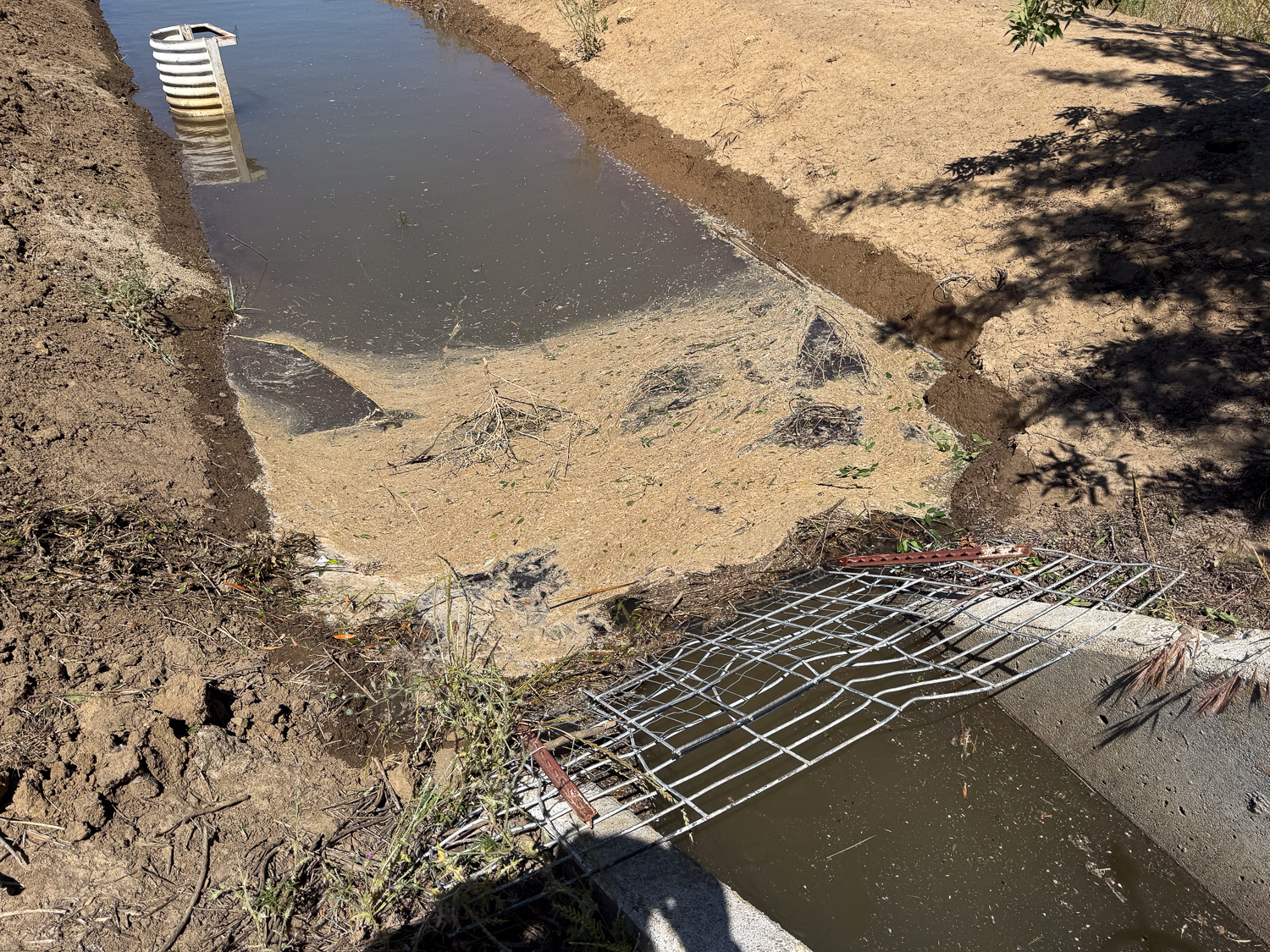
I came out a few times to clear debris away from the inlet. Before we put this screen up there were issues with larger weeds and branches impeding the flow into our system.
This shows the valves across the north pasture after the water started yesterday. I was out here many times yesterday to monitor how far the water had gone. It was much slower than the last time, probably because it is so dry and it takes more water to fully soak the soil. That March irrigation took only 24 hours for the whole place. We started yesterday about 8 a.m., and I didn’t finish this field until evening. I started the south pasture around 7 p.m. and went out to monitor it at 9 p.m., midnight, and 4 a.m. I already extended this as much as I could for today, but it won’t get everything irrigated.
Here’s the graph now showing that the moisture sensor on the west has been activated, but not the east one so far. This feels like a FAIL. We’ll need to get that water flowing again, but you can see it’s not as simple as turning on a faucet.
It’s been a long time since I’ve written a blog post or a newsletter because I was focused on finishing work for the show at the Artery that will be in place through May 25. I teamed up with photographer, Garry Everett, to present Colorful Creations by Loom & Lens.
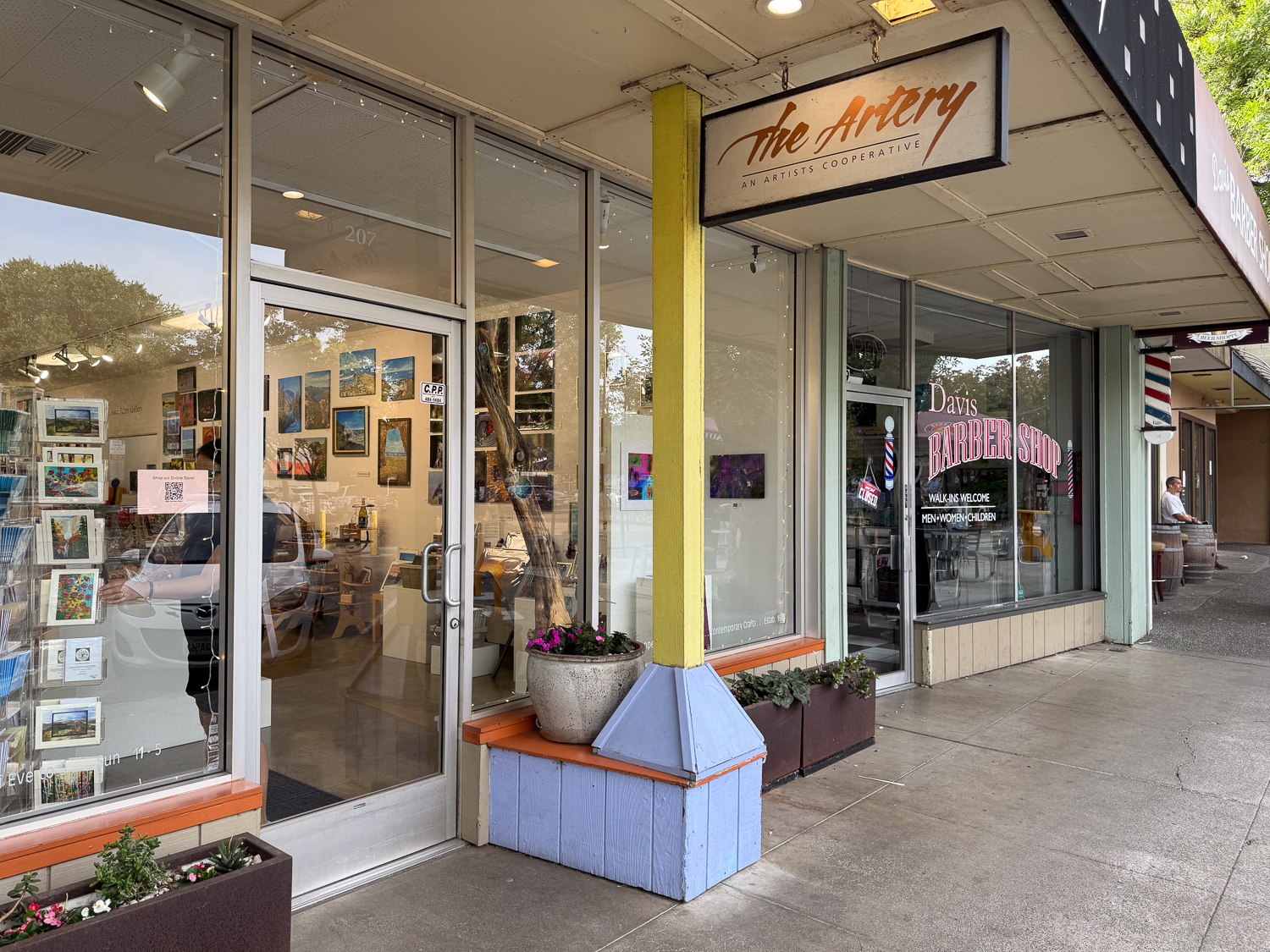
Street view of The Artery. Items in the show are available for purchase at the store of course, or online through the end of the show. Woven pieces are here. Photography is here.
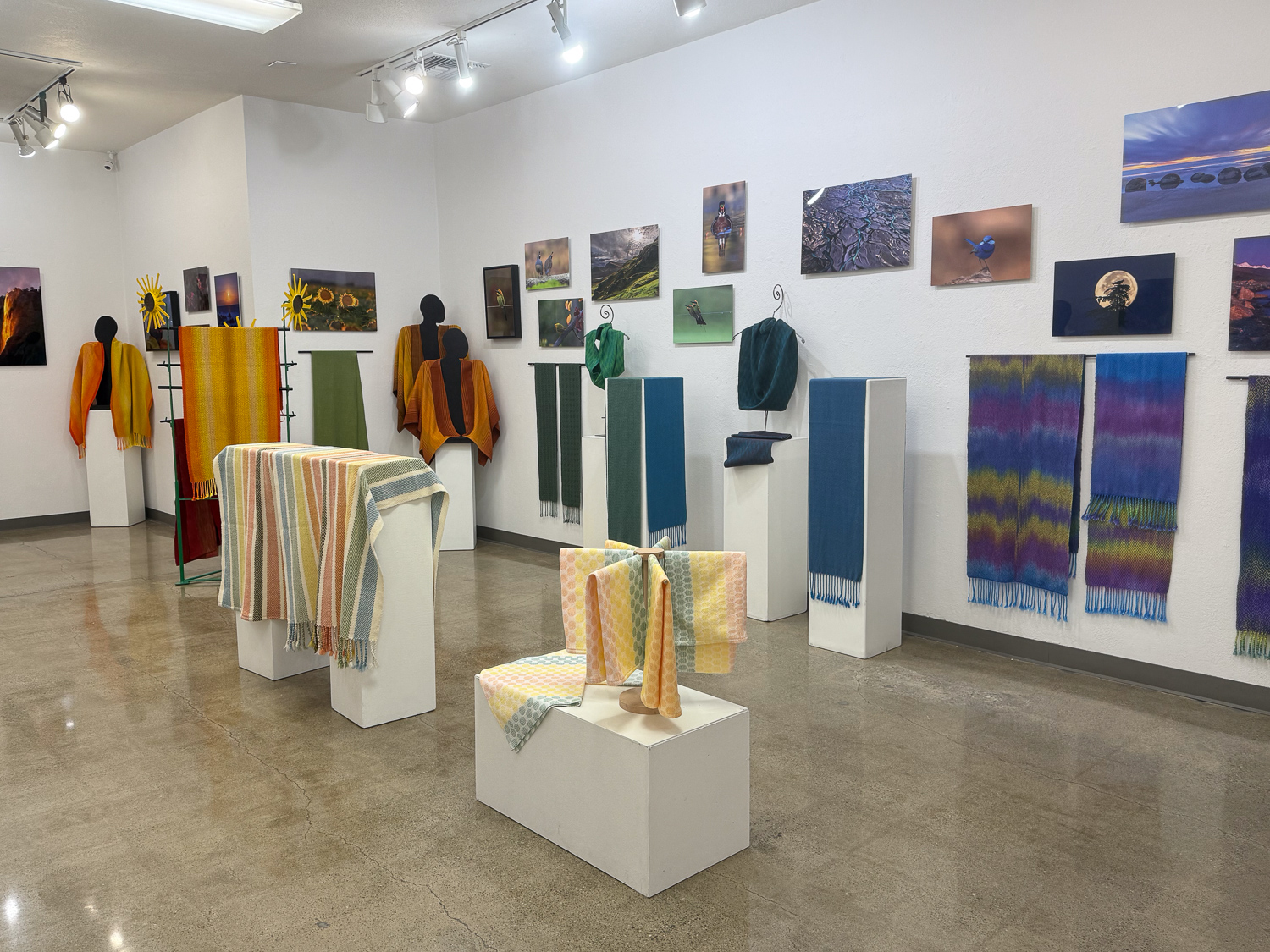
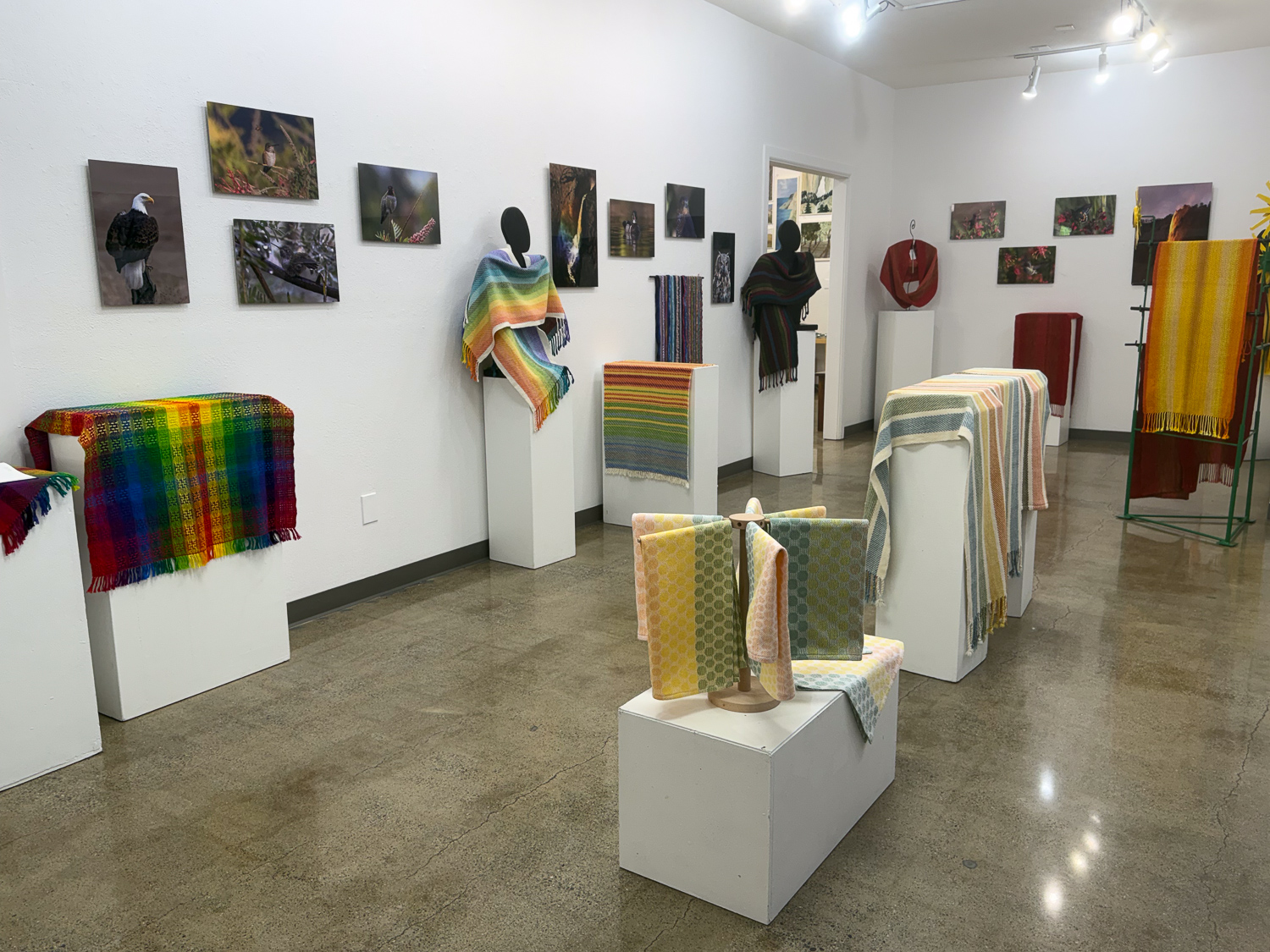
It was very difficult to take photos that portray how good the woven pieces and photos look together. We set it up, working our way around the color wheel.. When you walk in you are first see the purple wall. My photos have reflections from the lights–sorry about that. Try to ignore them.
Purple leads to blue which blends with green before getting to the yellow to orange to red wall.
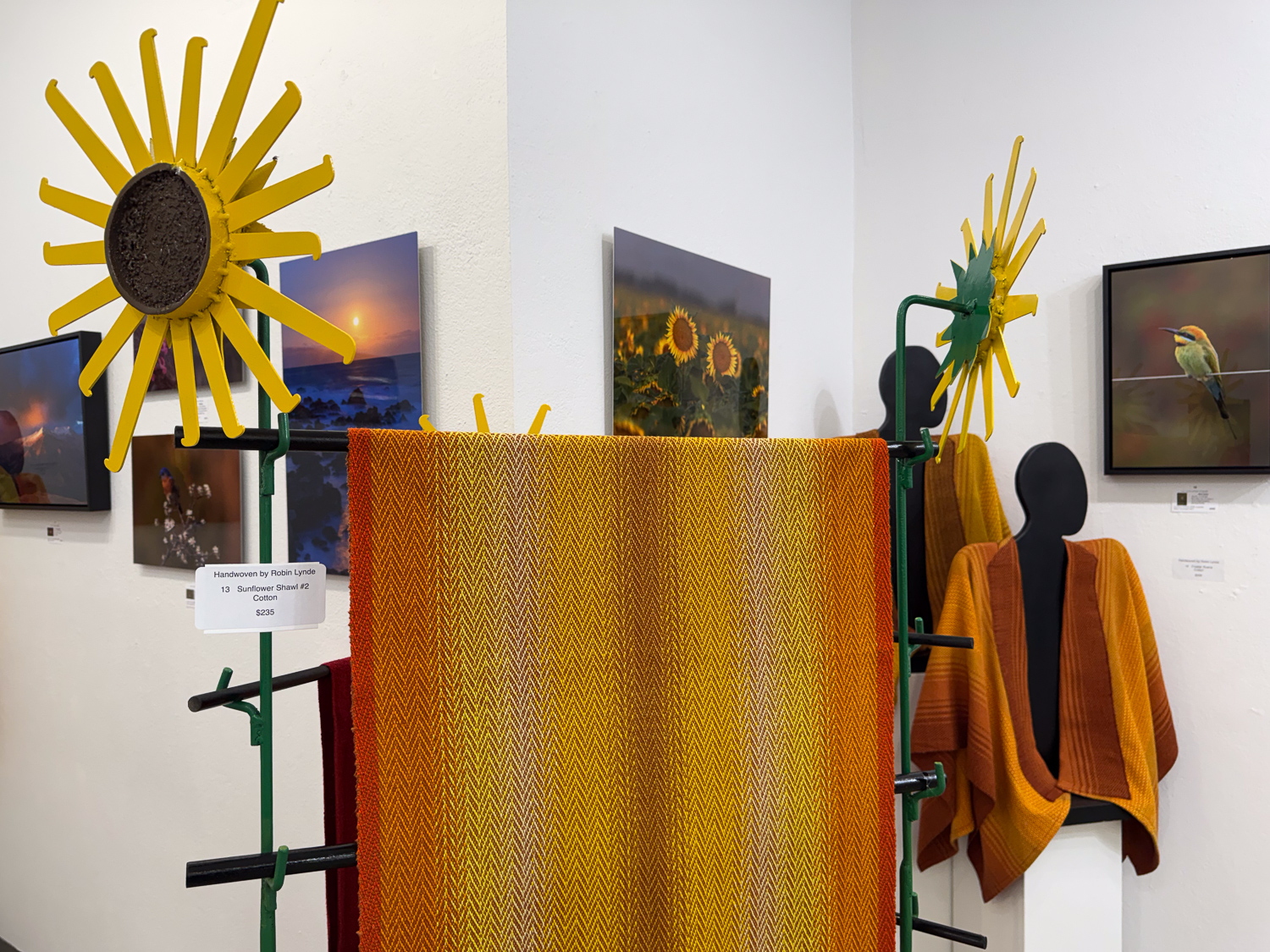
Notice the custom display rack that Dan made specifically for the sunflower corner.
The south wall has pieces that include ALL the colors.
Garry’s photo and the shawl I wove to match.
Blankets woven of Timm Ranch wool and dyed with indigo, weld, madder, cosmos, and walnut hulls, all growing on the farm.
Wrap in cotton.
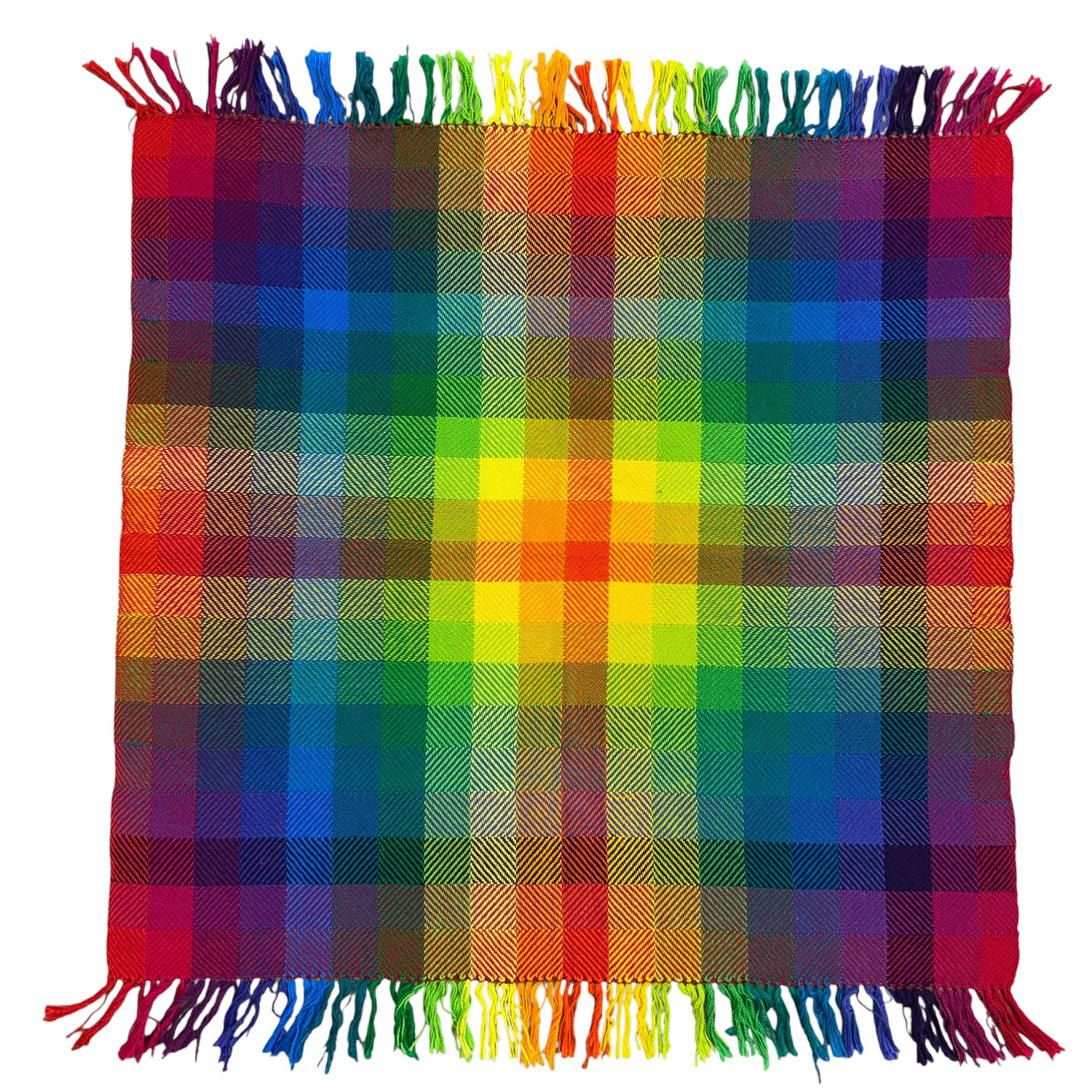
Colorful spectrum in cotton.
Cotton wrap that I wove to show alongside Garry’s Glacial Flow photo.
It was five days ago that I named this this blog post and was writing it in my head while I was in the pasture trying to set up fences for the next grazing paddock before it started raining any harder.
We planted a hedgerow at the edge of the pasture back in November and I described it in this post. Keep in mind that these were all very small plants. Many are still small and some didn’t make it, and some will be small at maturity anyway, so you’re not going to see photos of what you probably picture when you think about a hedge.
Here is what it looked like when we were finished.
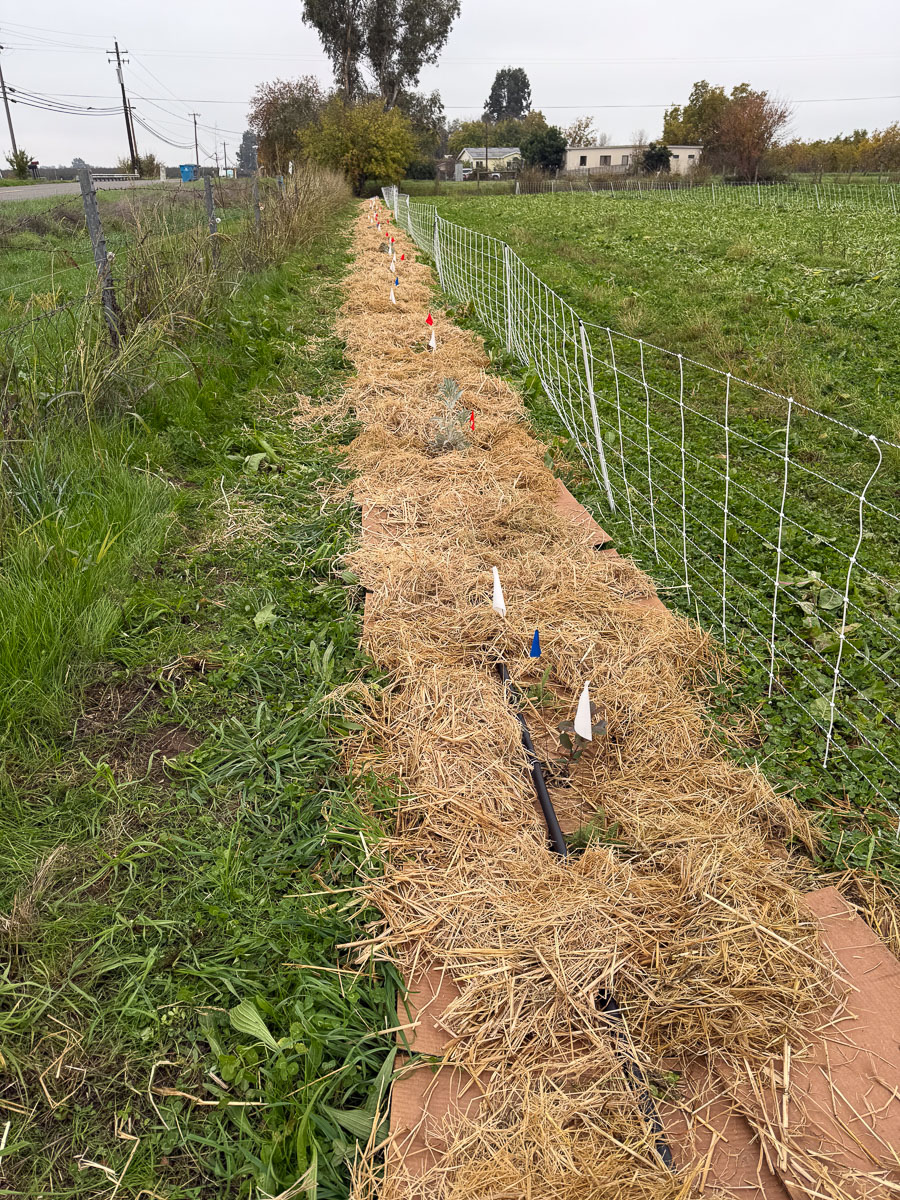
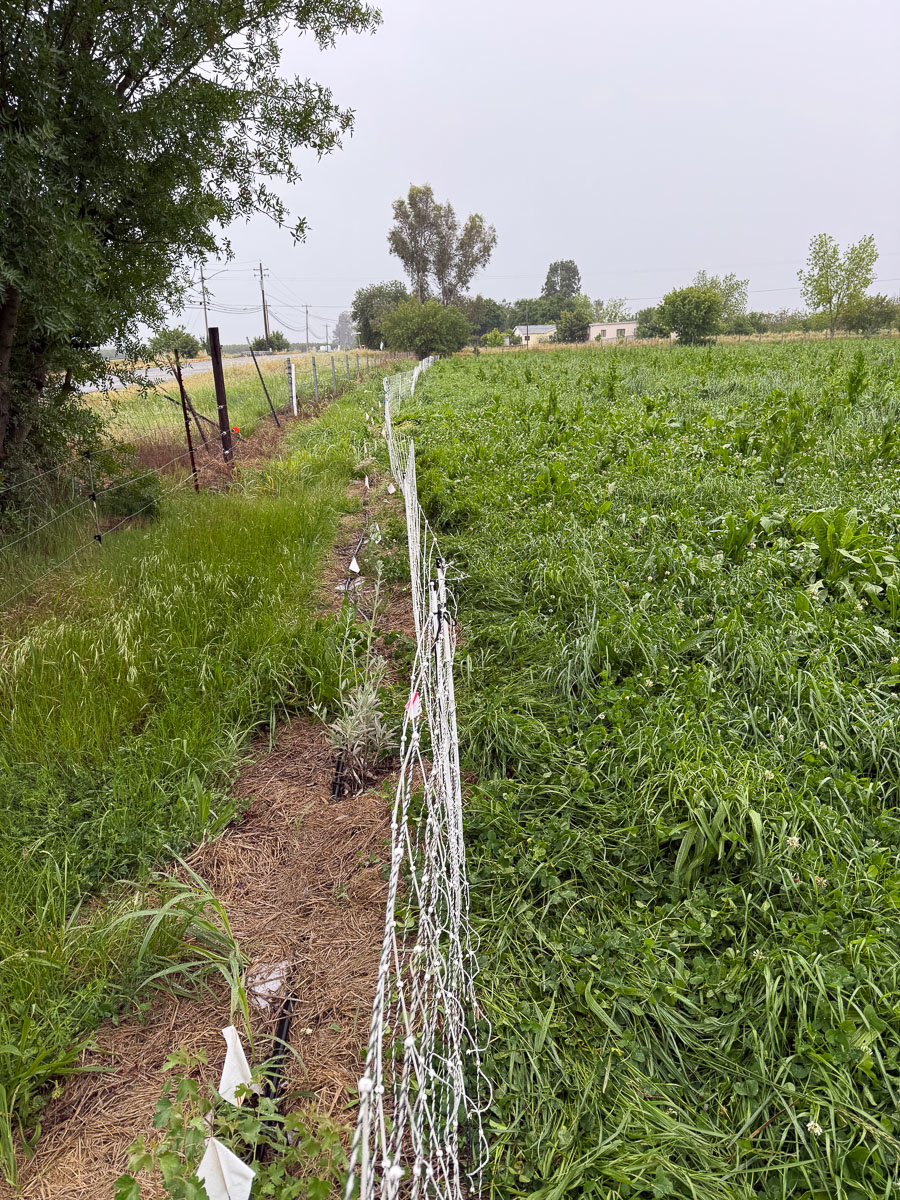
This photo is the same view taken last weekend. You can barely find the flags that mark the plants.
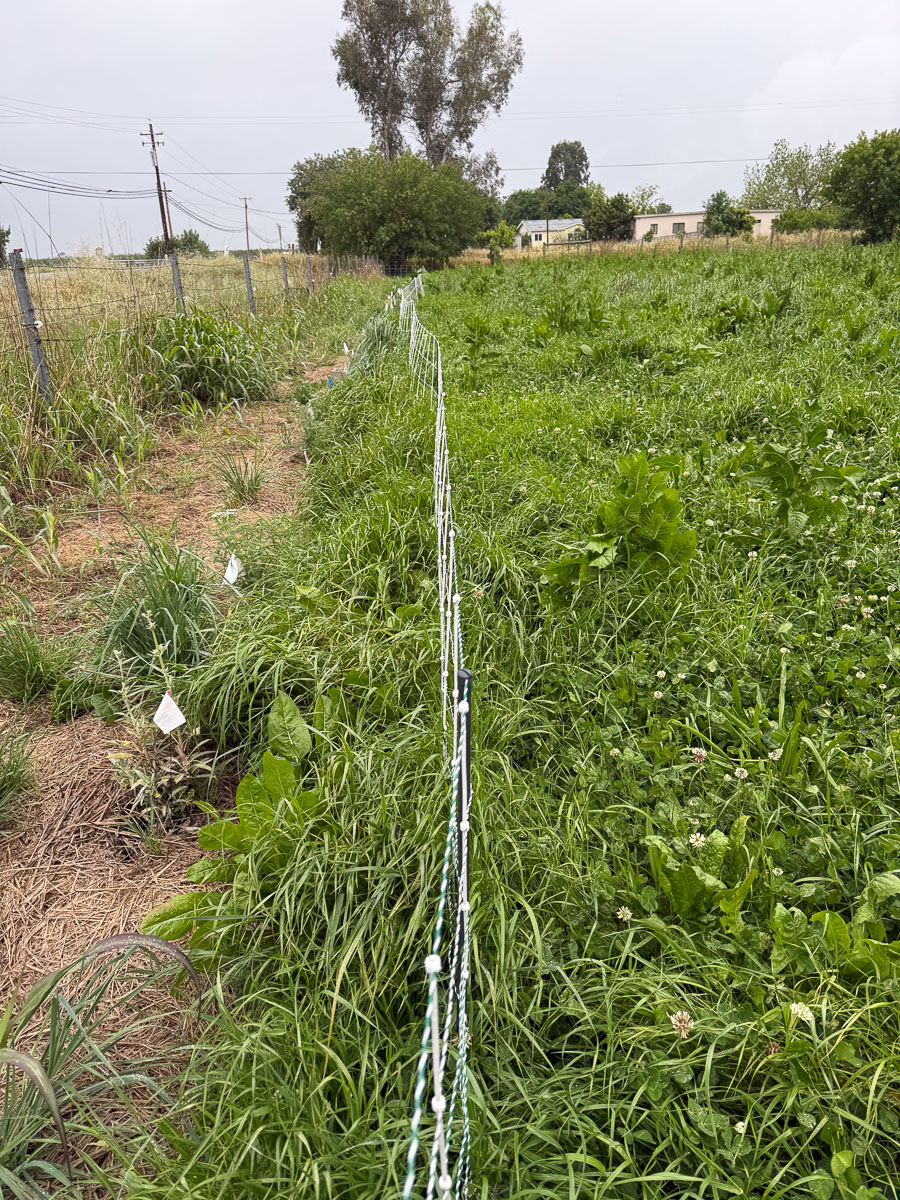
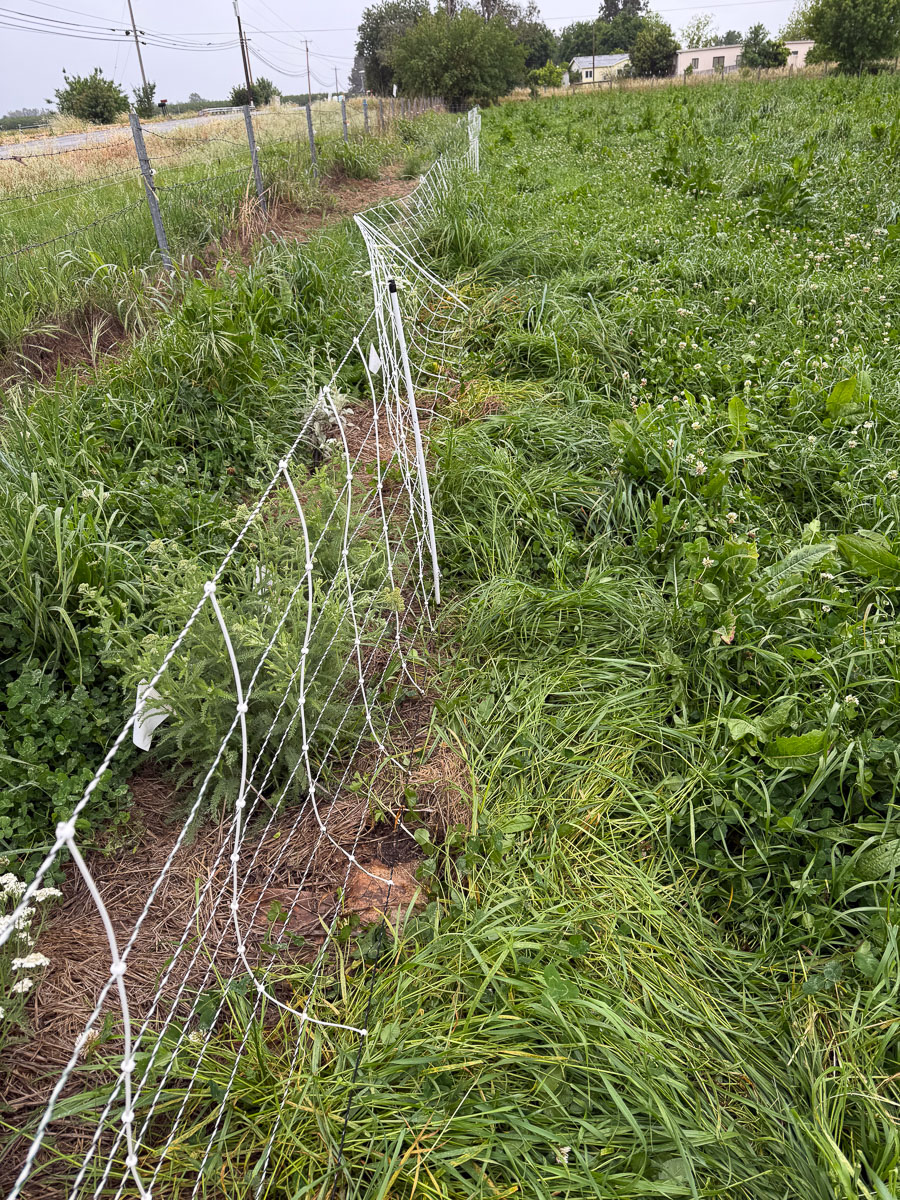
Lesson 1. I should have spread the cardboard and straw mulch out farther. Lesson 2. The electric net fence should be closer to the plants so more of the grass would have been grazed when this was last grazed (which, by the way, was February 12). That may not have made a huge difference since March was so warm and the grasses really took off.
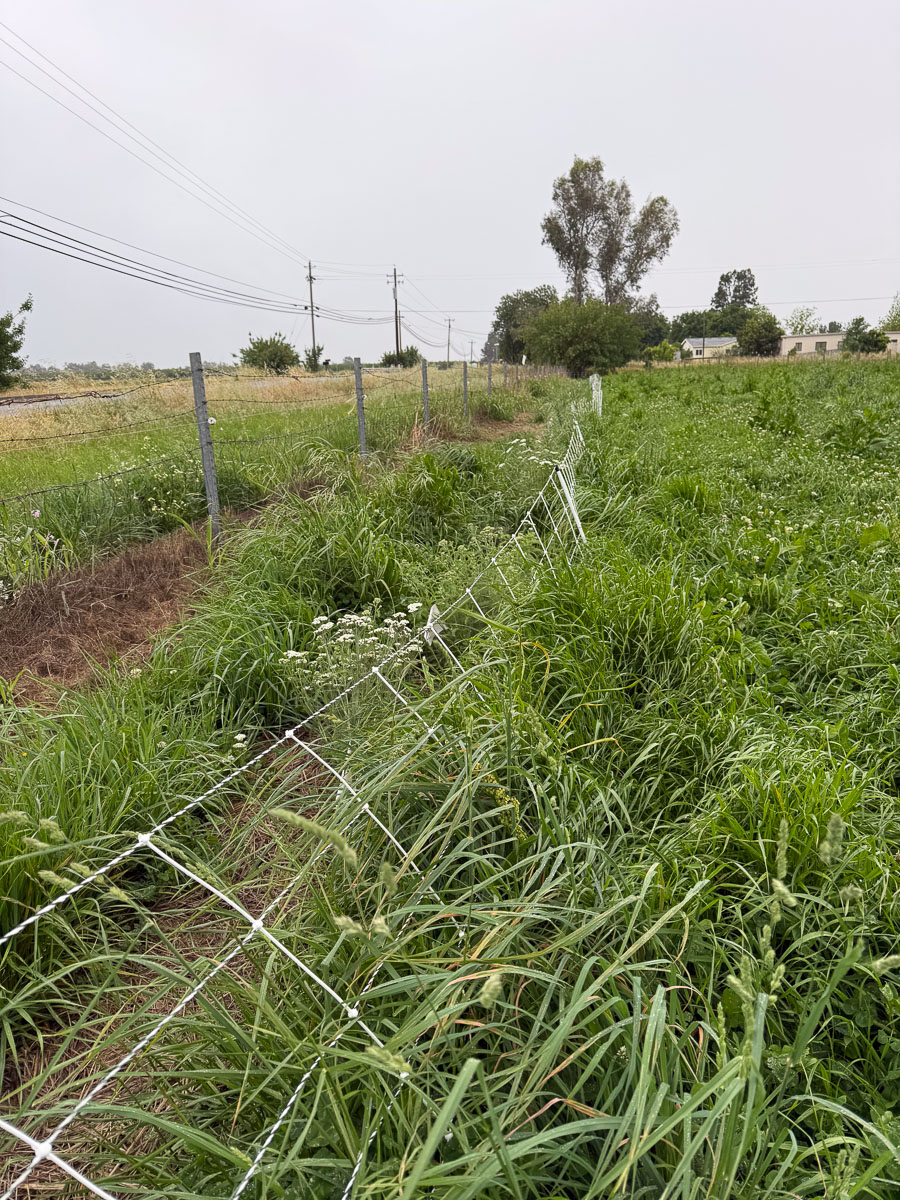
Here is another view from a little further north. The white flowers are yarrow, one of the species we planted. Do you see how overgrown the electric fence is?
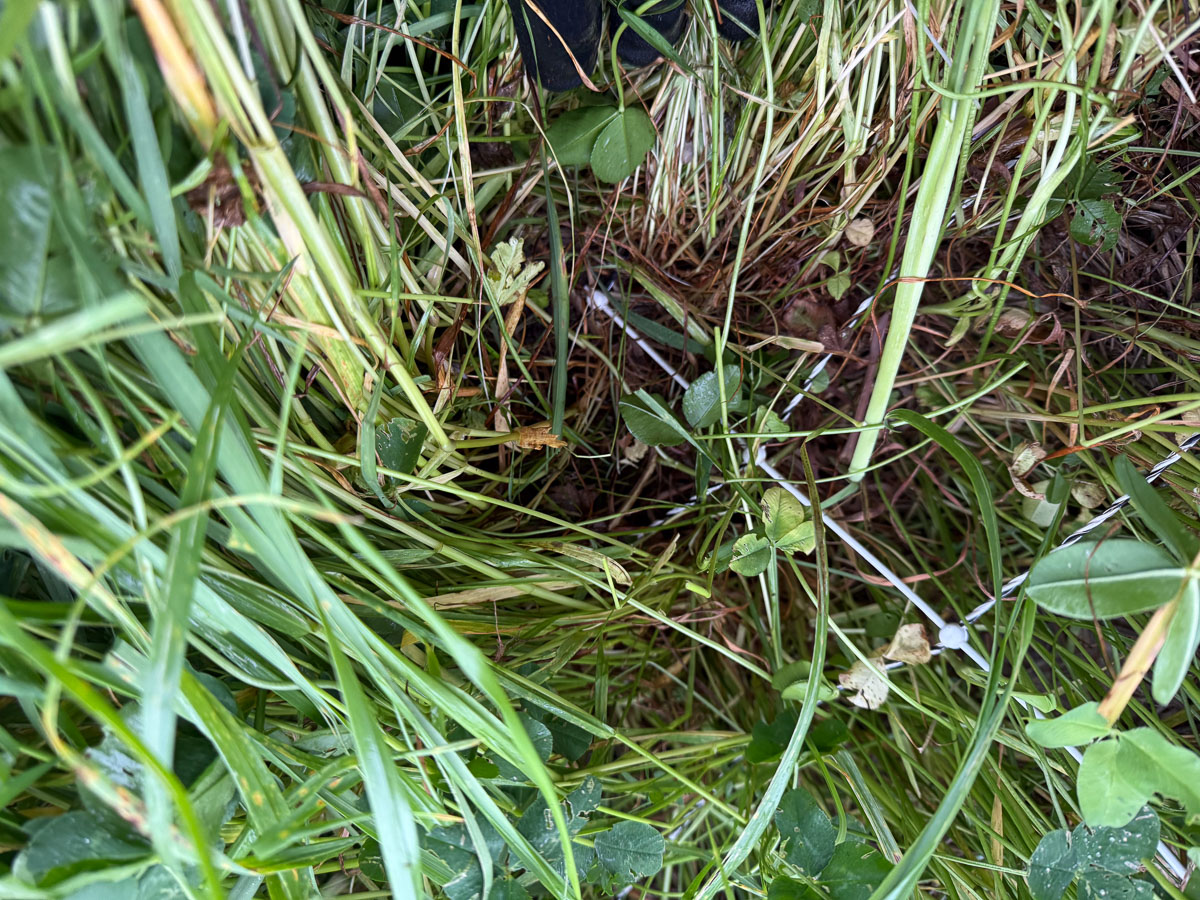
Here is a close-up view after I had pulled away some of the grass and clover. You can’t even see the lowest part of the fence. There is a black strand about 4″ below the white one.
I had to pull the fence away from the tangled plants foot-by-foot for the whole length. Then I moved the fence much closer to the desired hedgerow plants so that the sheep could clean up most of the vegetation. This photo is an “in-progress” view.
This is how it looked when I was finished. The storm hit not long after and we had about 3/4″ of rain in the next hour.
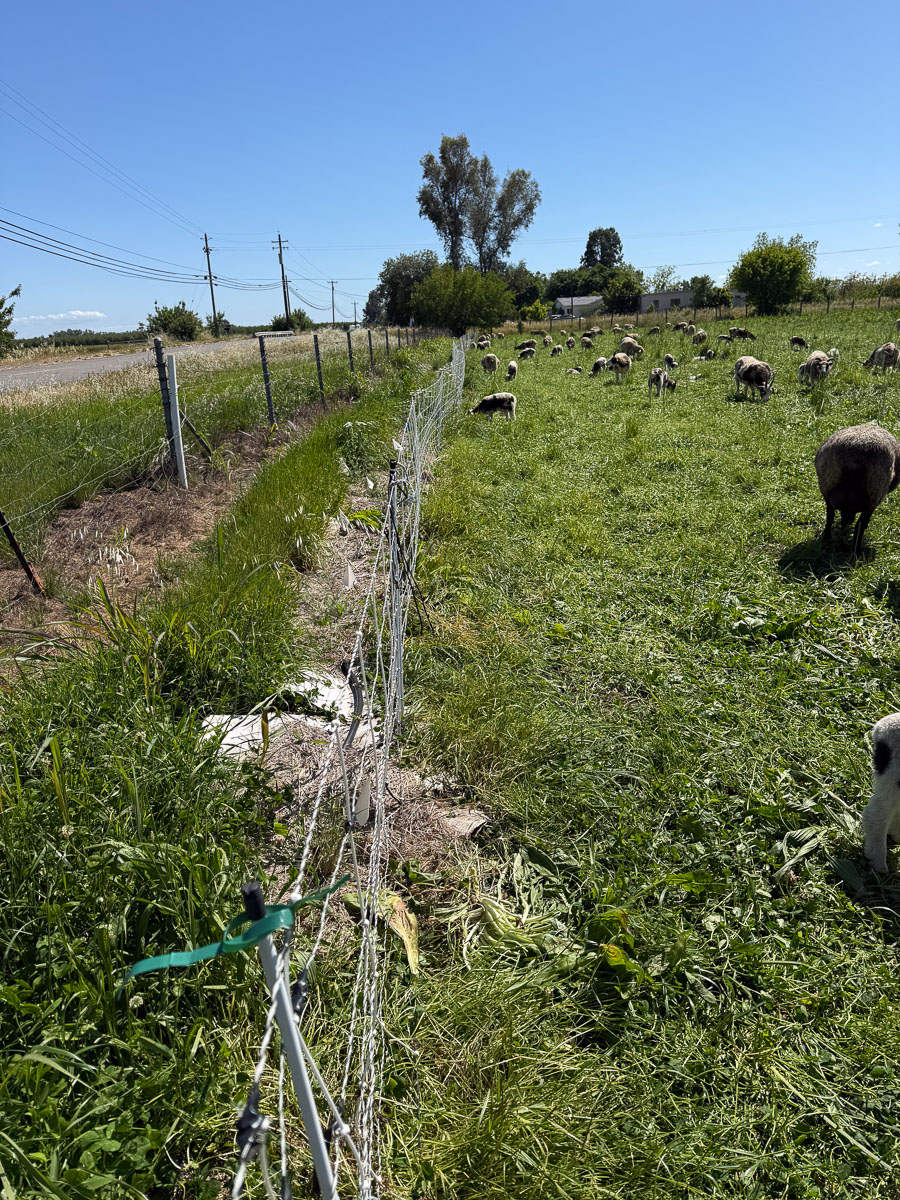
The sheep did a pretty good job of cleaning up the fence line. I have to do something about the grass on the other side of the plants. I think that will involve the weed-eater and more cardboard and straw for mulch.
I told the story of renovating the pasture and irrigation system starting with a post written October 3, 2024. If you search Pasture Renovation in the blog you’ll find the whole story. This is a year and a half later. We grazed almost all winter, which we could never do before.
This photo is before moving the sheep from the recently grazed paddock on the right to the fresh one on the left.
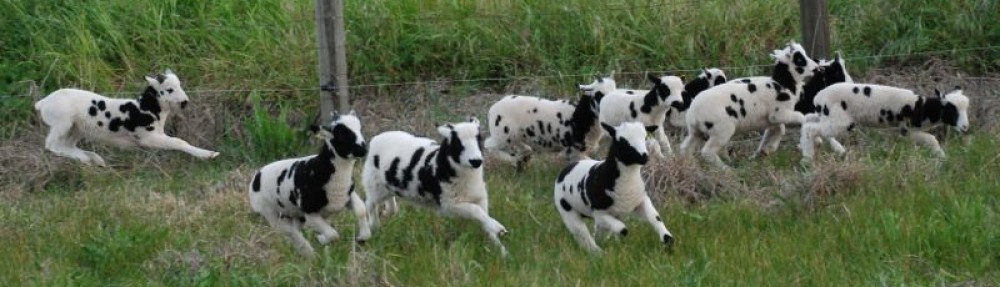
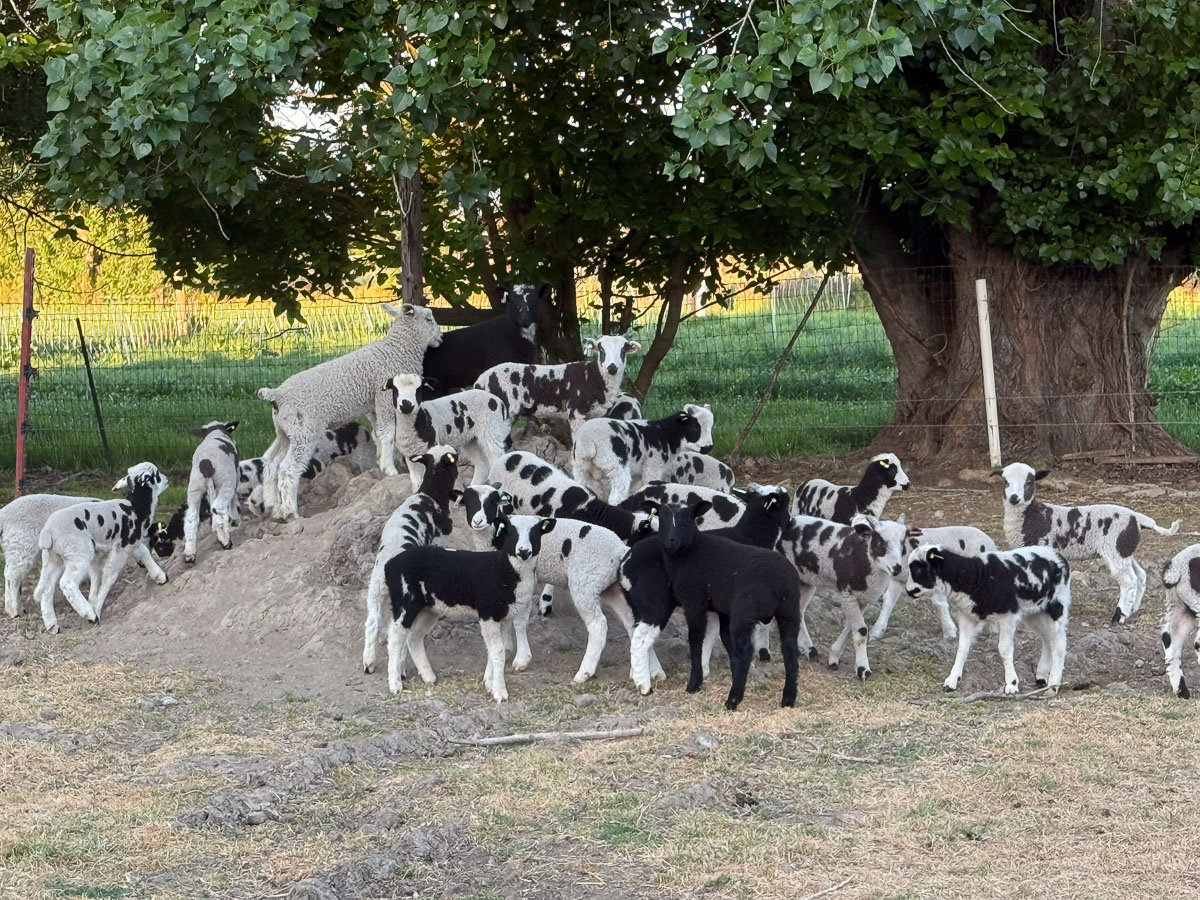
Lambs waiting to go out to pasture.
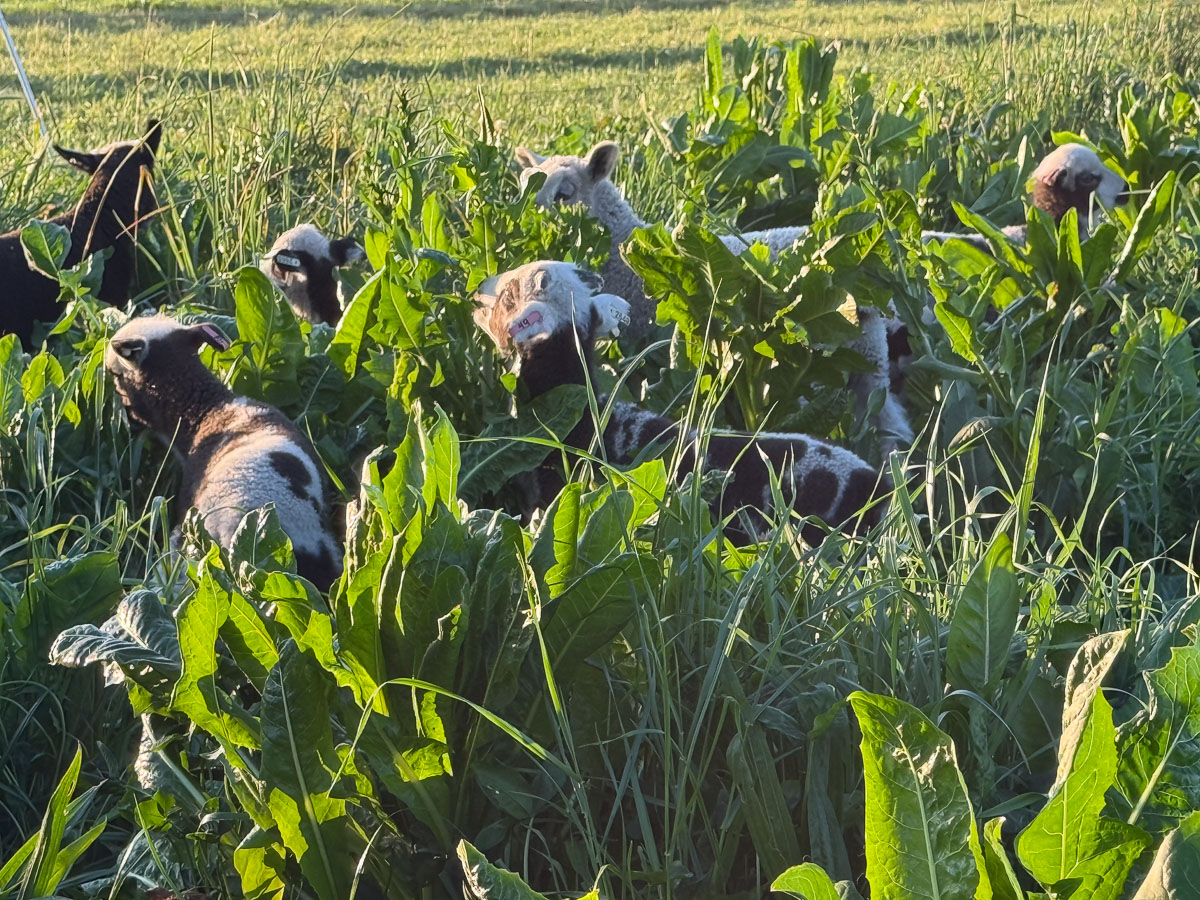
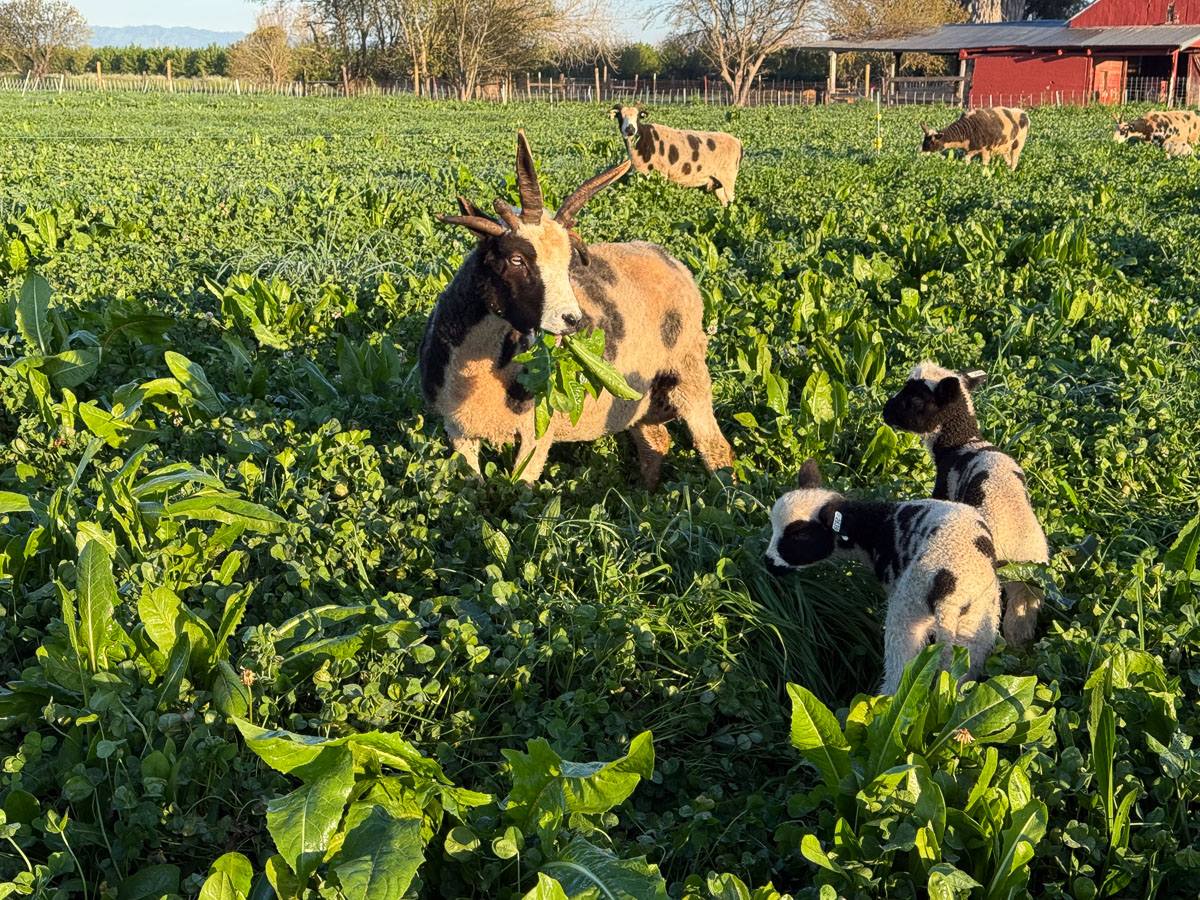
Lambs lost in the chicory and grass.
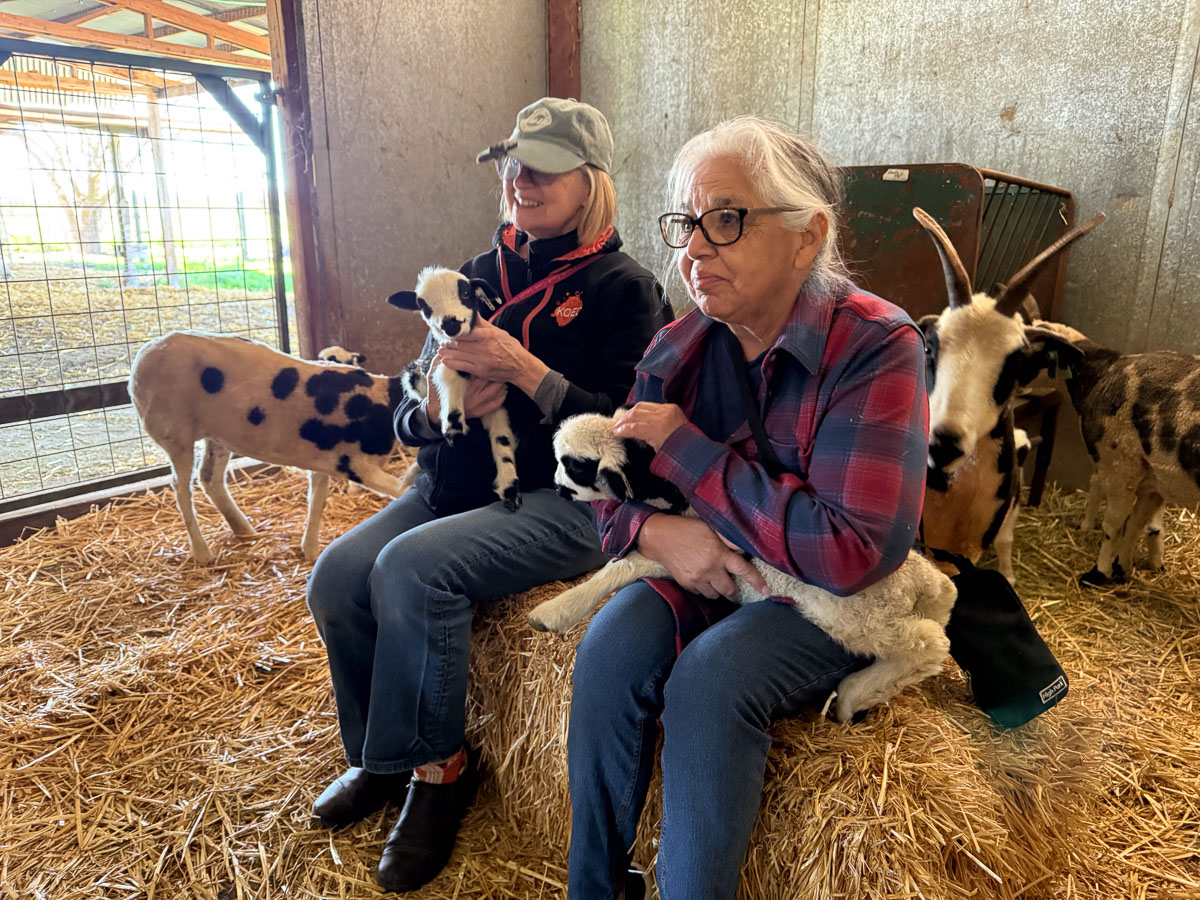
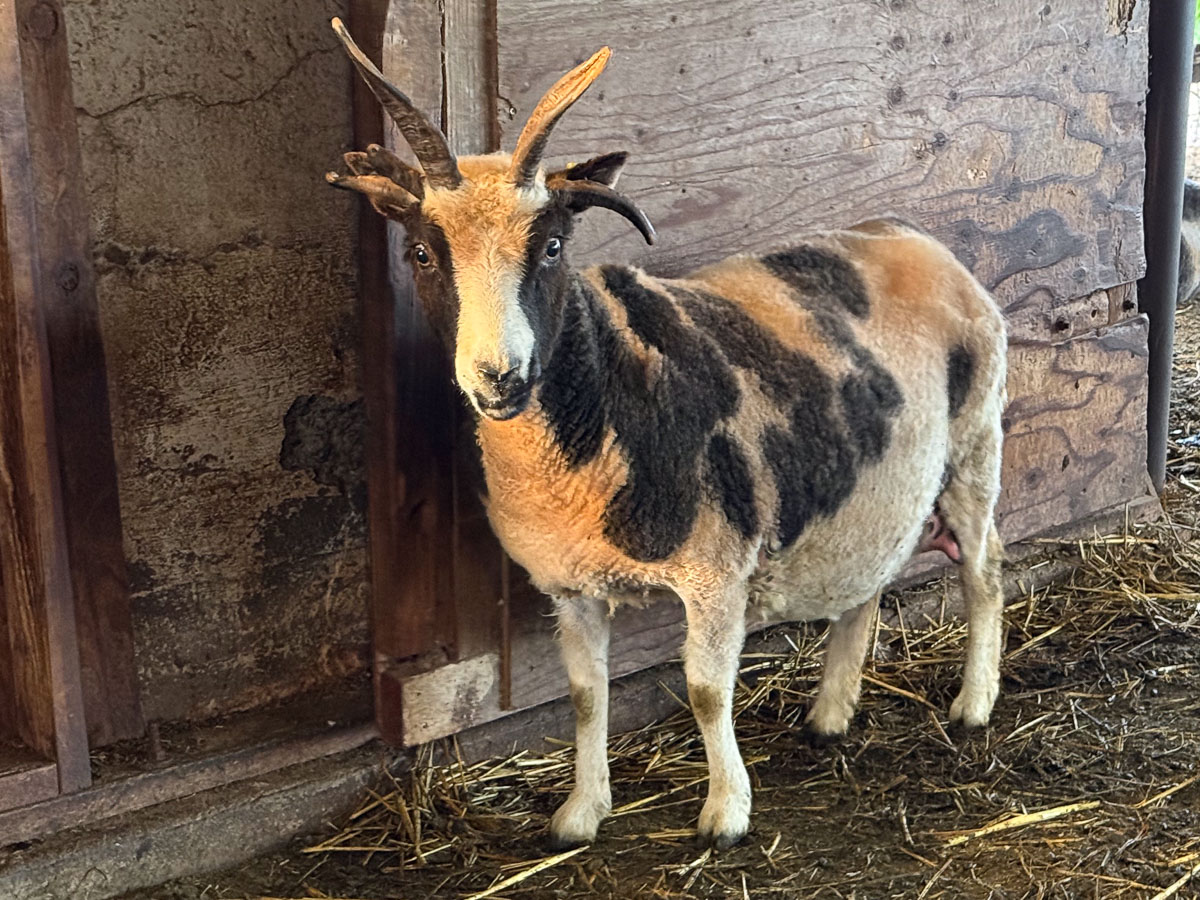
Jade is the oldest sheep here and a big pet.
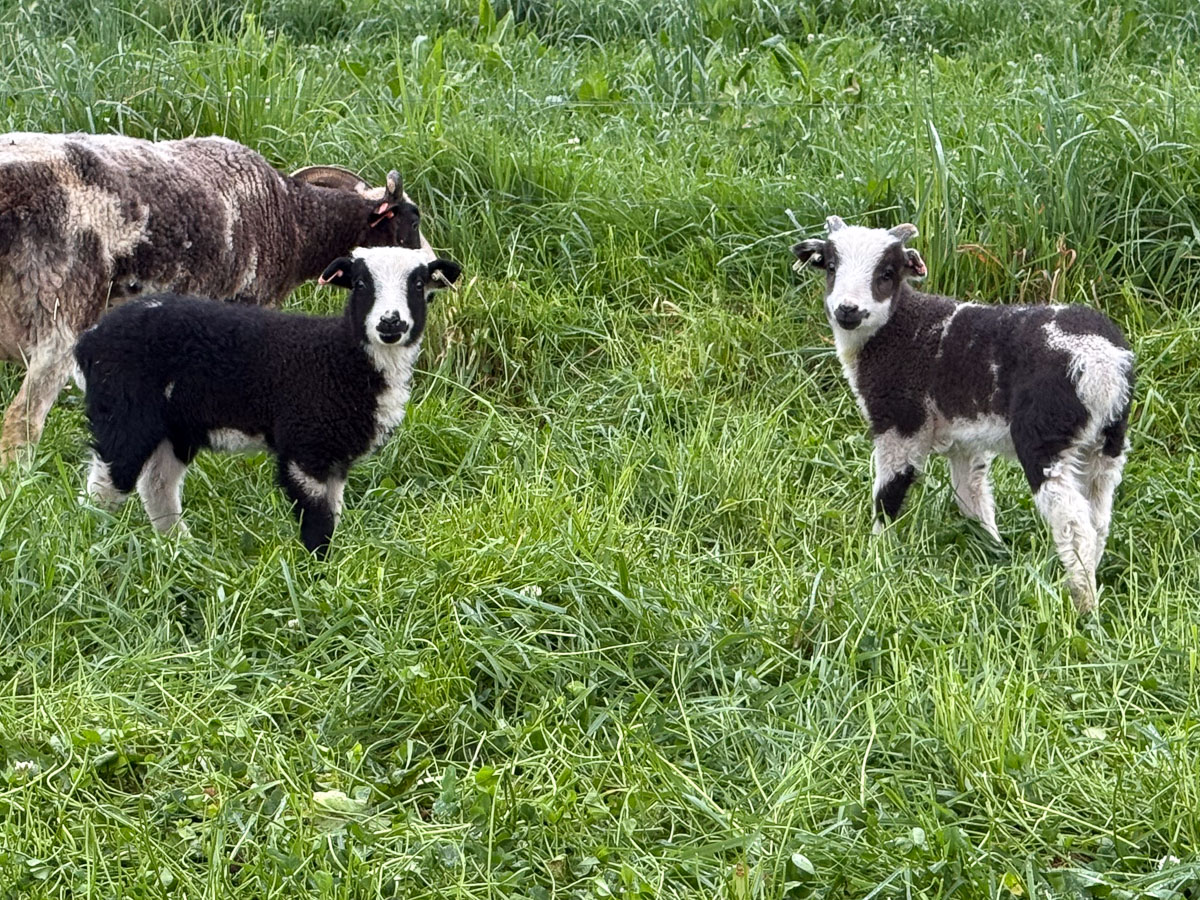
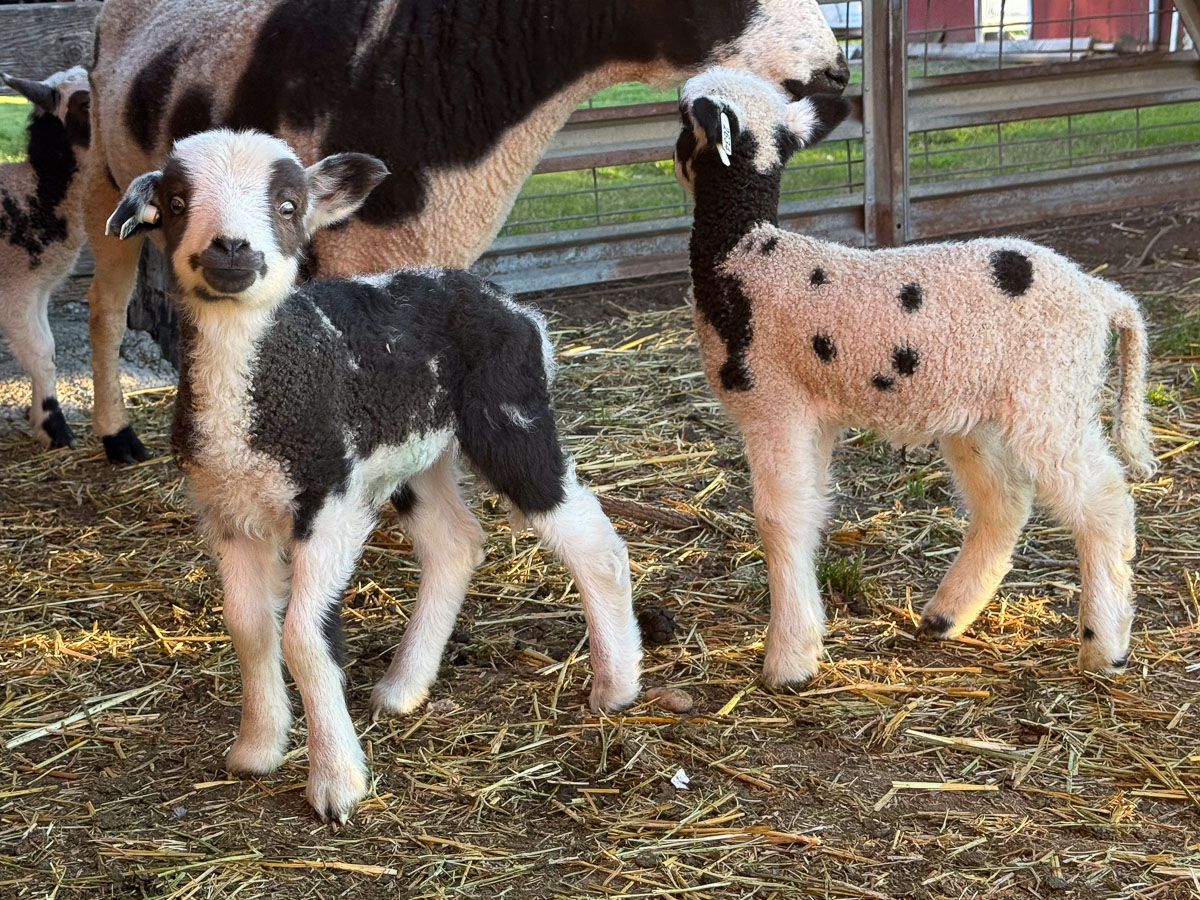
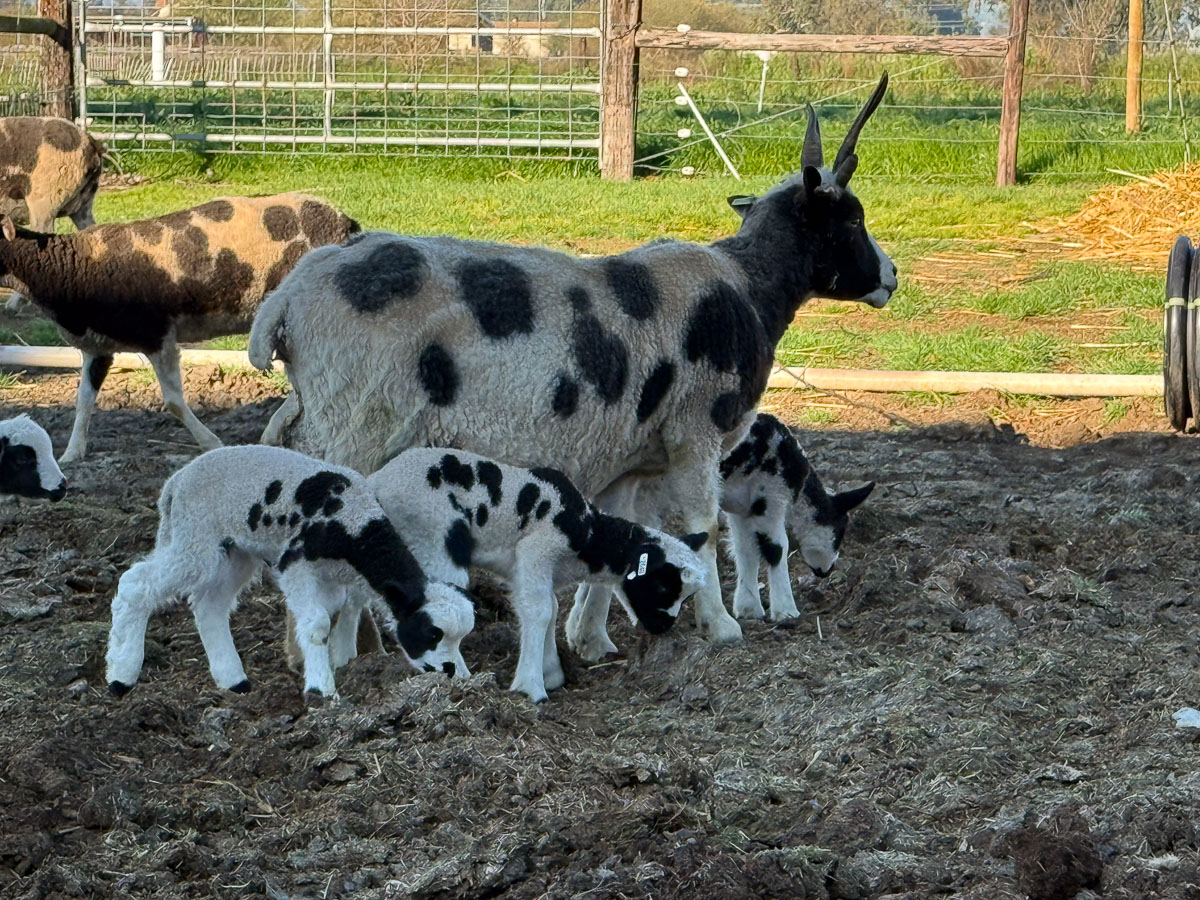
This is two days after moving the sheep into this paddock. These two lambs are examples of black and white on the left and lilac on the right. This lilac is darker, but still not black.
…and she brought some friends out to see the lambs.
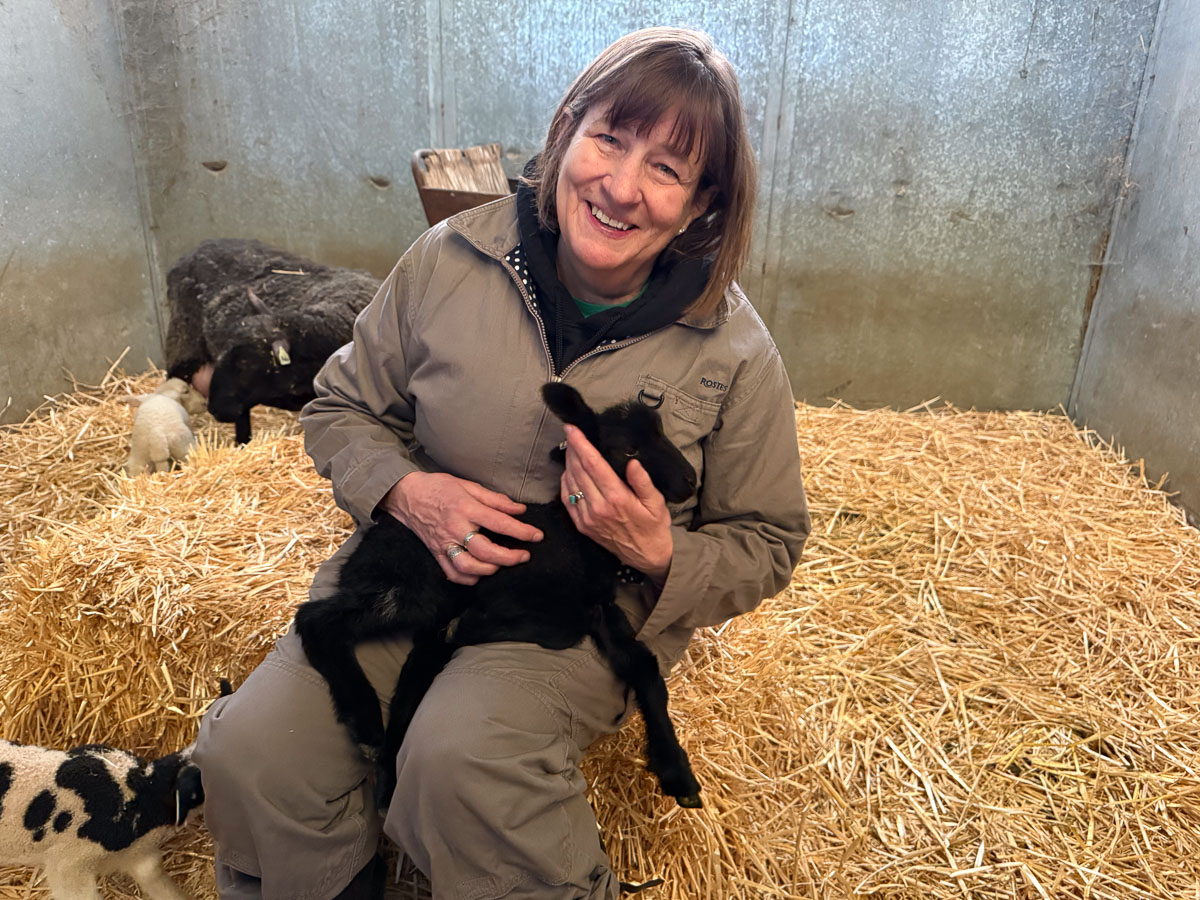
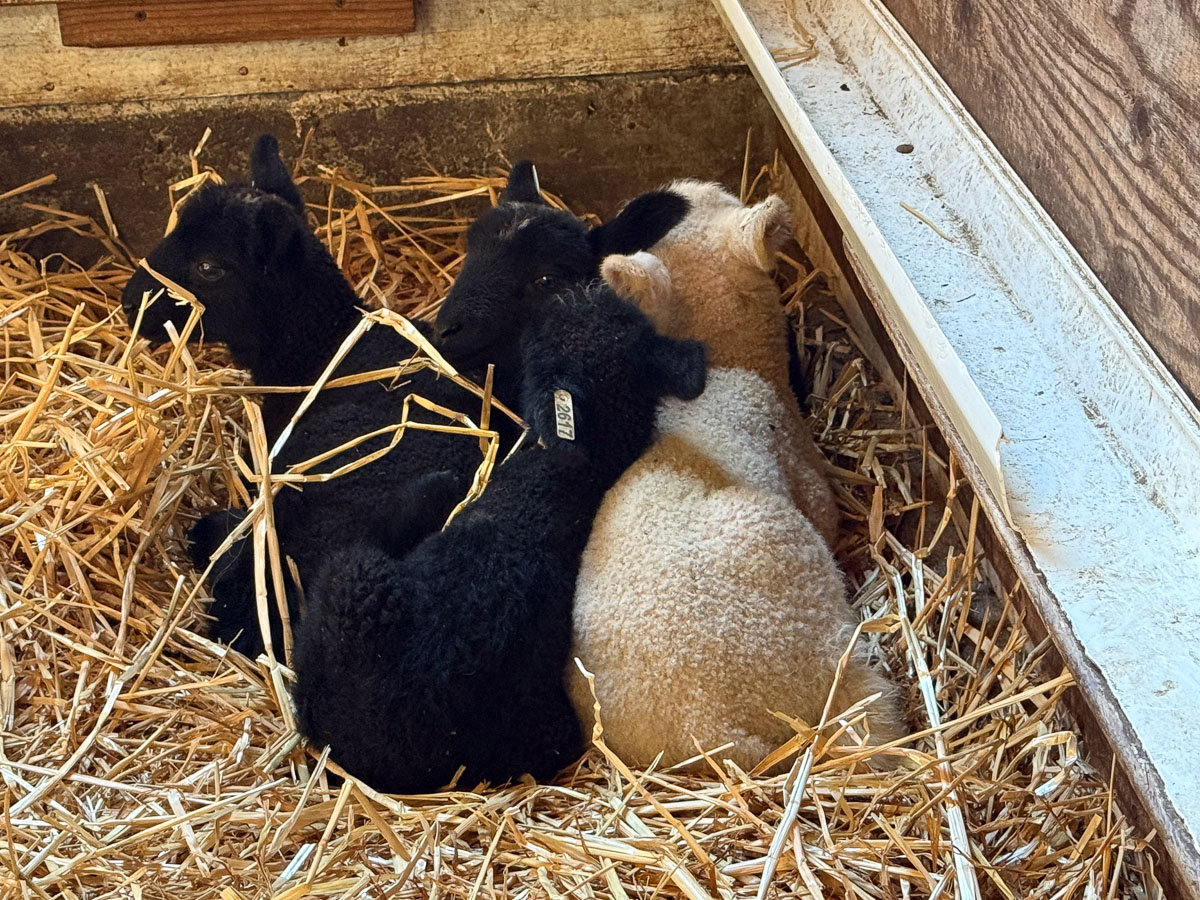
These are the quads. I am bottle feeding the smallest black one. She is not as vigorous as the others and isn’t able to compete for milk. Besides I think she has something else wrong with her, but I’ll keep feeding her to see how she develops.
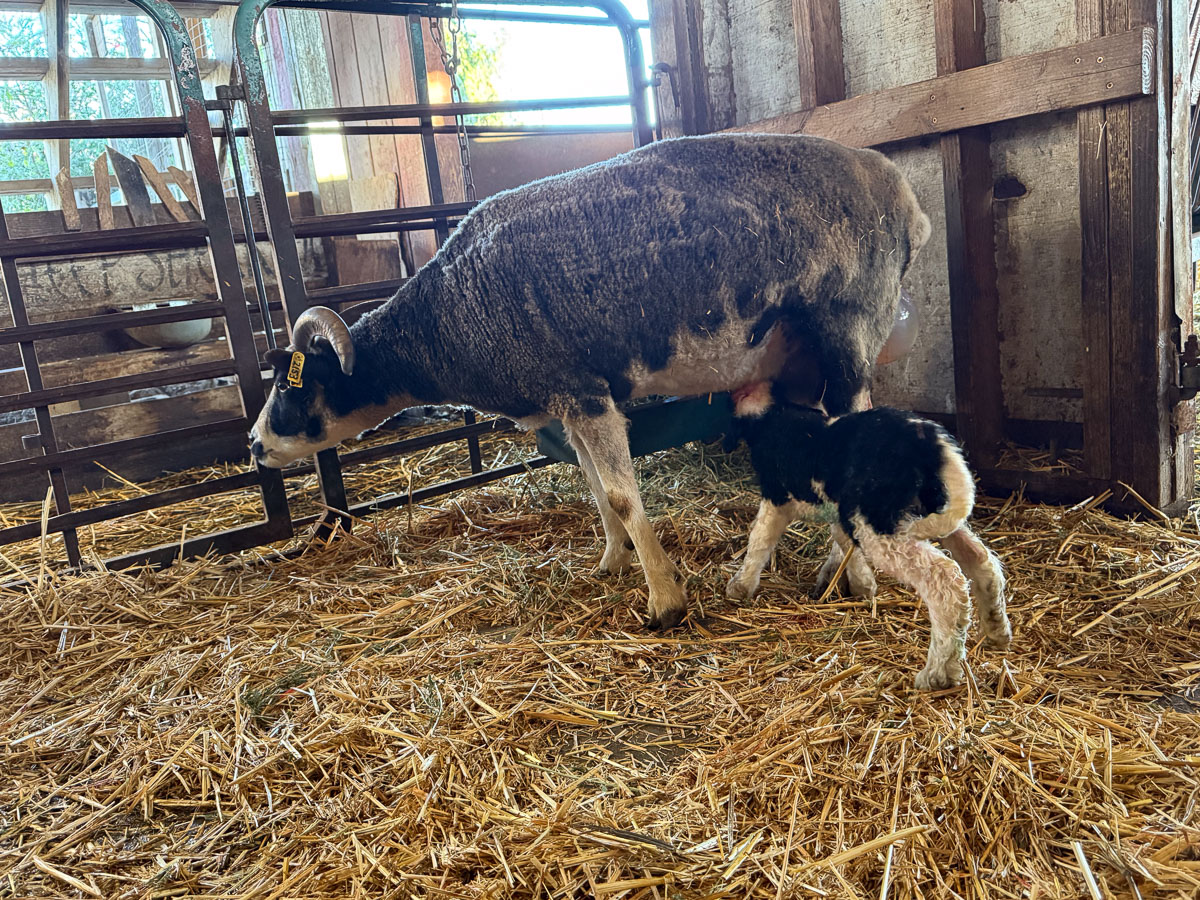
Storm and triplets. Storm is a Jacob/BFL (Bluefaced Leicester) cross, bred back to a BFL.
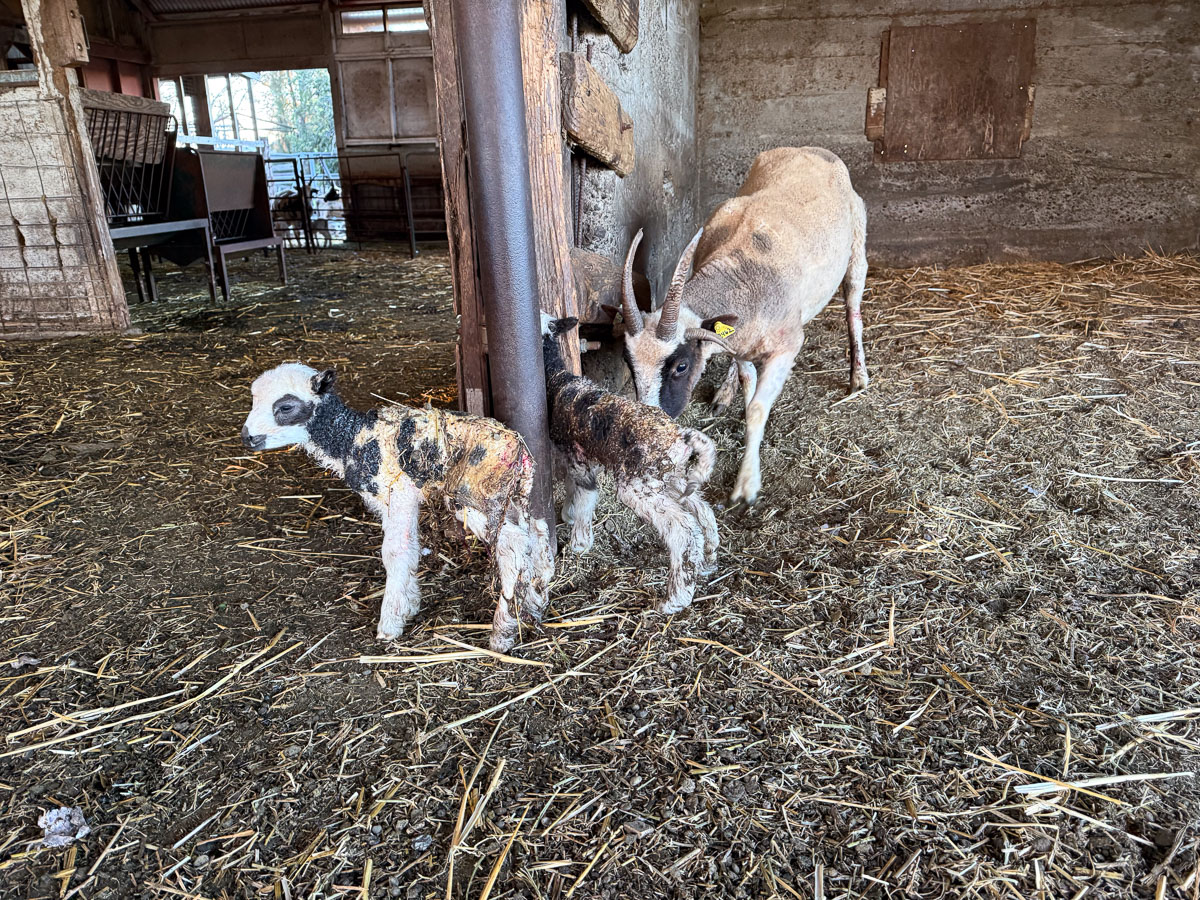
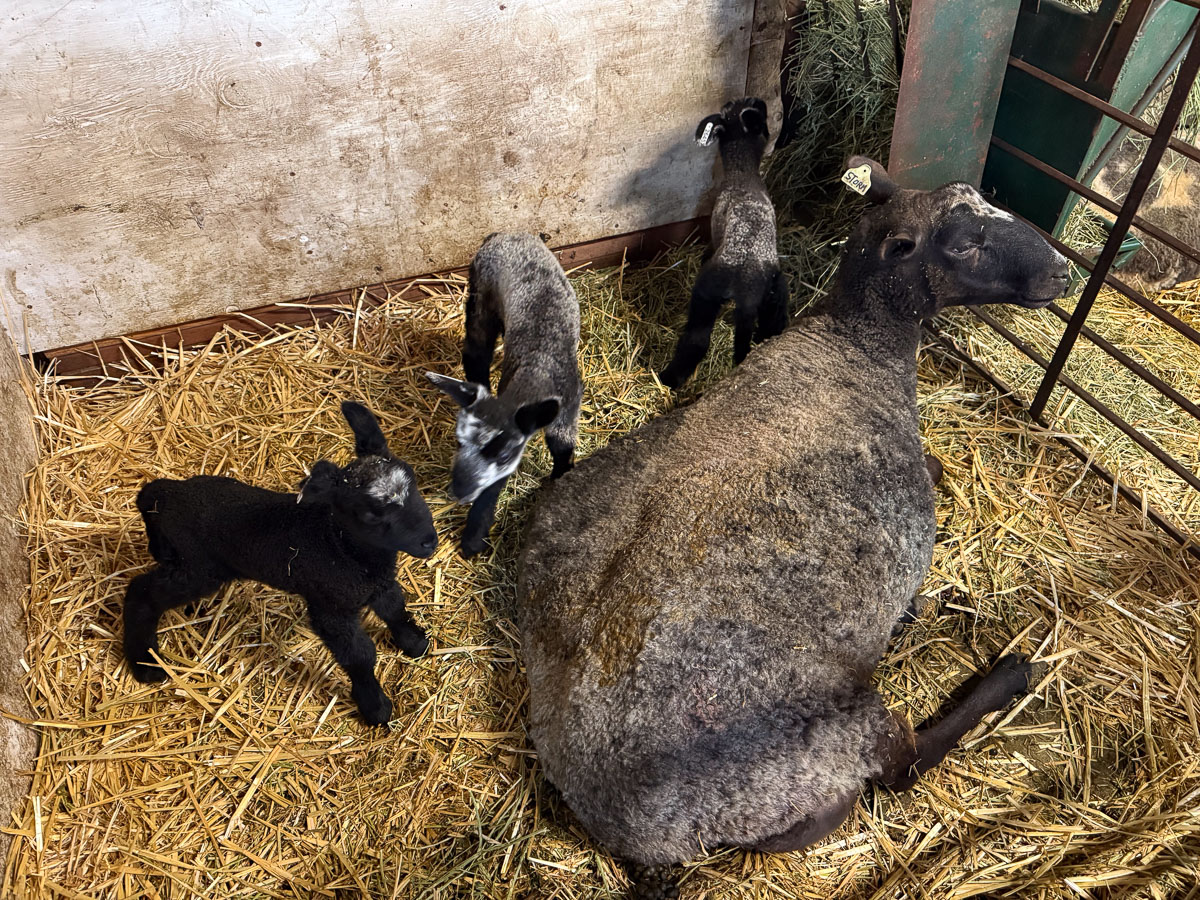
Tranquility’s triplets.
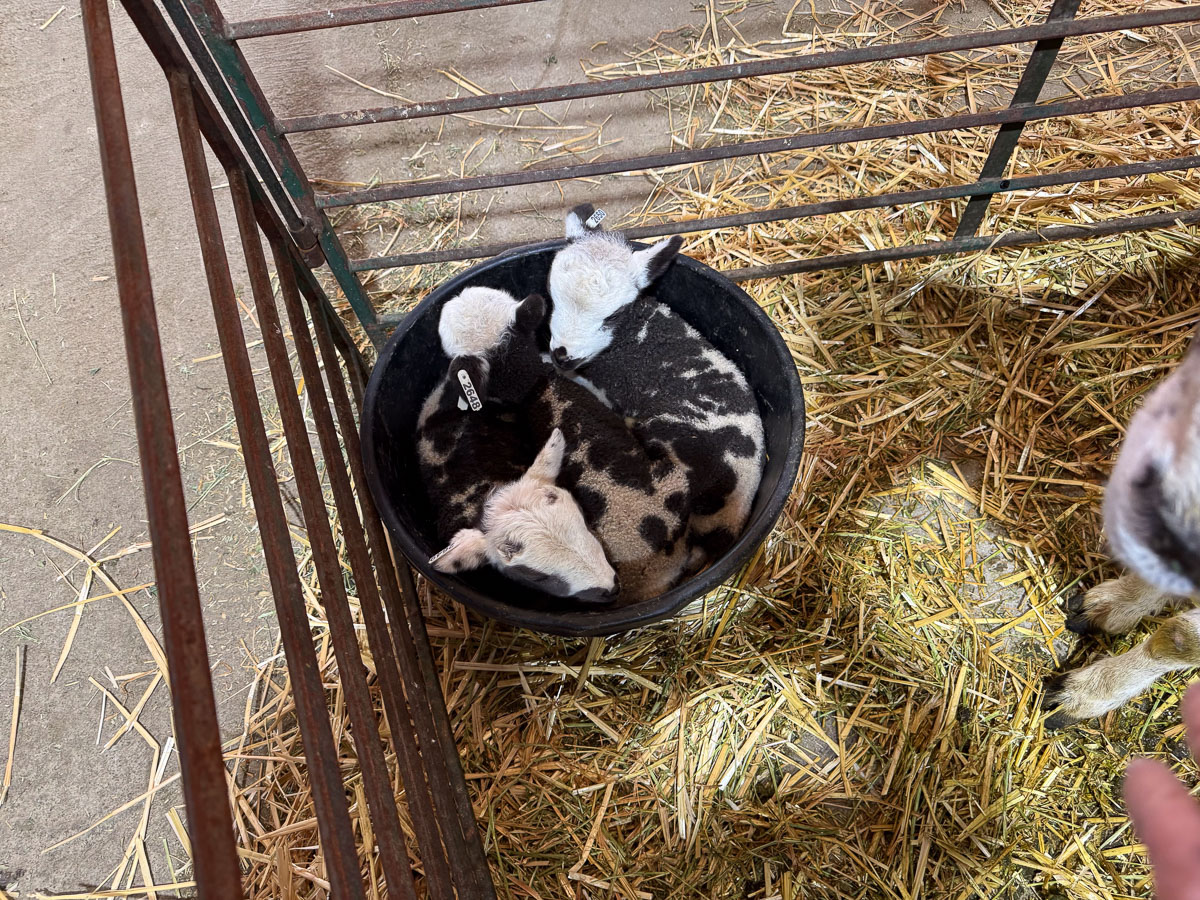
Zora’s triplets. I asked the question earlier of “how many lambs can you fit in a tub?’ The answer is three.
If it seems as though there are a lot of triplets this year, that’s because there are six sets so far. I looked back in some of my Lambing Journals, the document I keep up with daily so I can share with Farm Club. I didn’t tally the stats most years, but for those I did I came up with: 8 sets in 2024, 7 sets in 2022, 2 sets in 2019, and 8 sets in 2017.
Fresh pasture this morning.
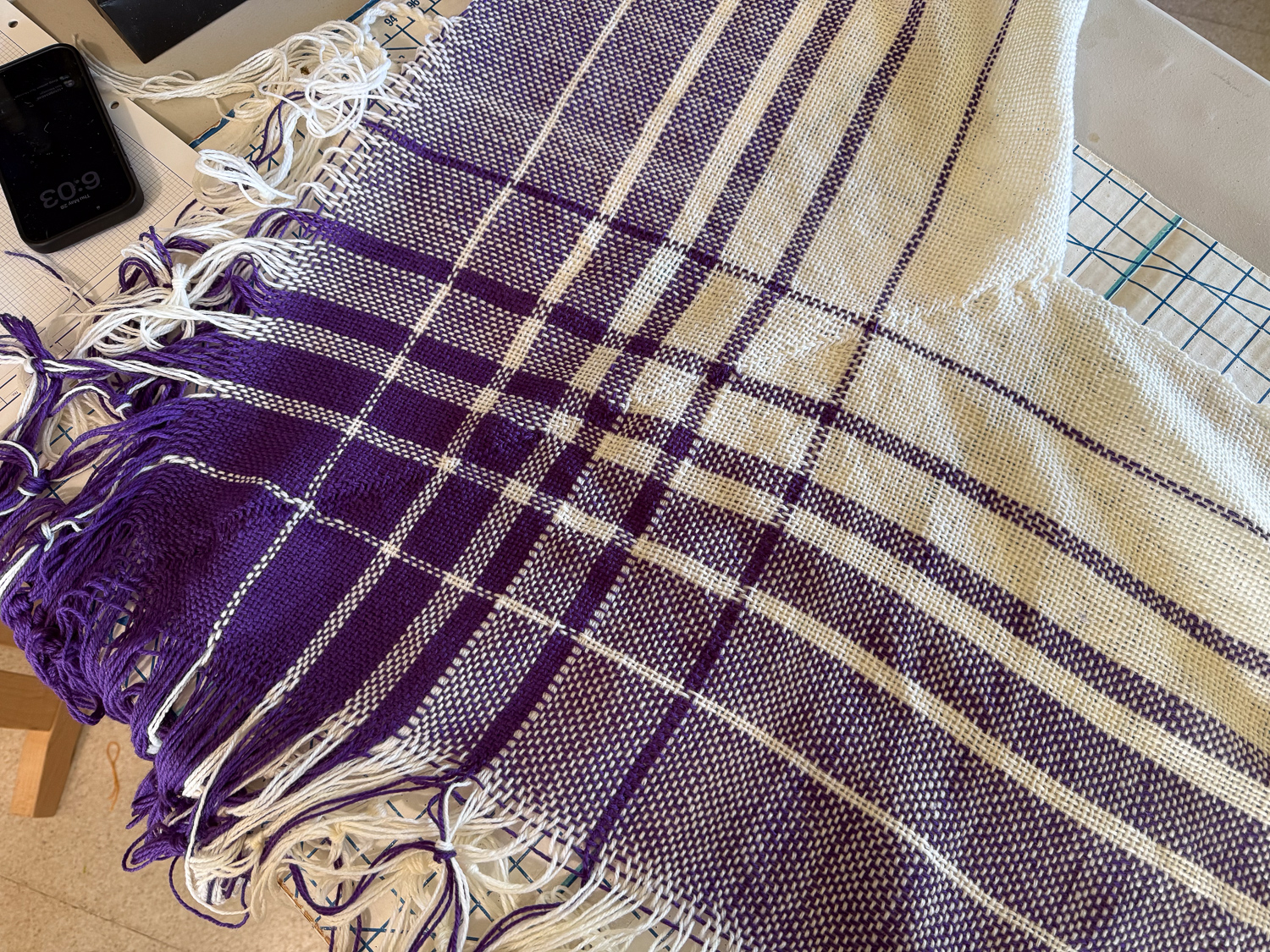
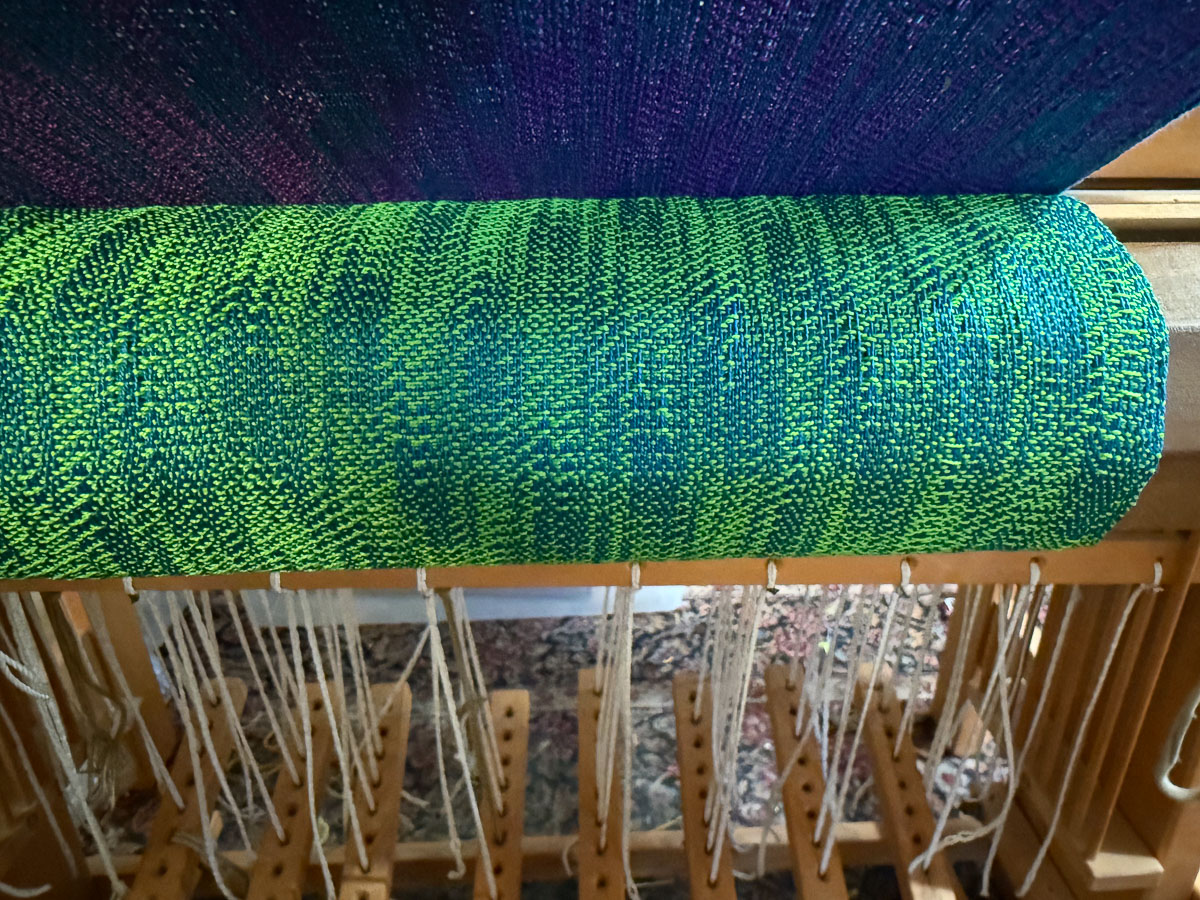
Back to the loom. This has nothing to do with sheep or wool, but I am starting to panic because I have a show at the Artery in May and I’m trying to get some new things woven. This is 10/2 cotton, much finer than the wool I usually weave.
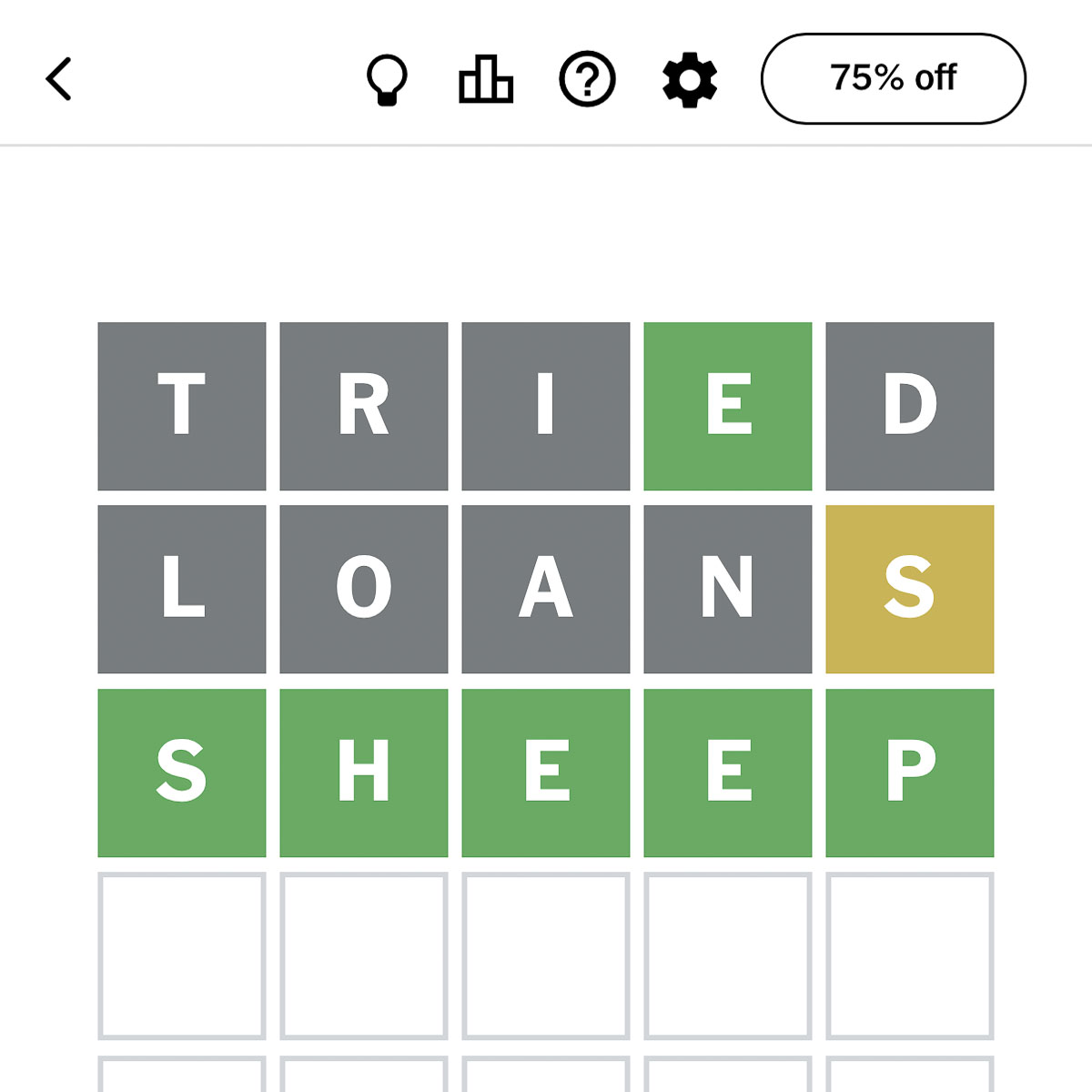
Screenshot
And speaking of sheep, do any of you play Wordle? I just started at the end of January and am now on a 49 day streak that I don’t want to end. This one was relevant.
As the title indicates, I have already written one blog post about lambing. That described that lambing began on February 22. That’s nine days ago now, and a lot has happened. I started this post yesterday and it’s already outdated. However, I’m going to go with it because these photos are already loaded. Just play along and pretend it’s Monday. I was sharing photos in reverse order. Now I just need to add the text.
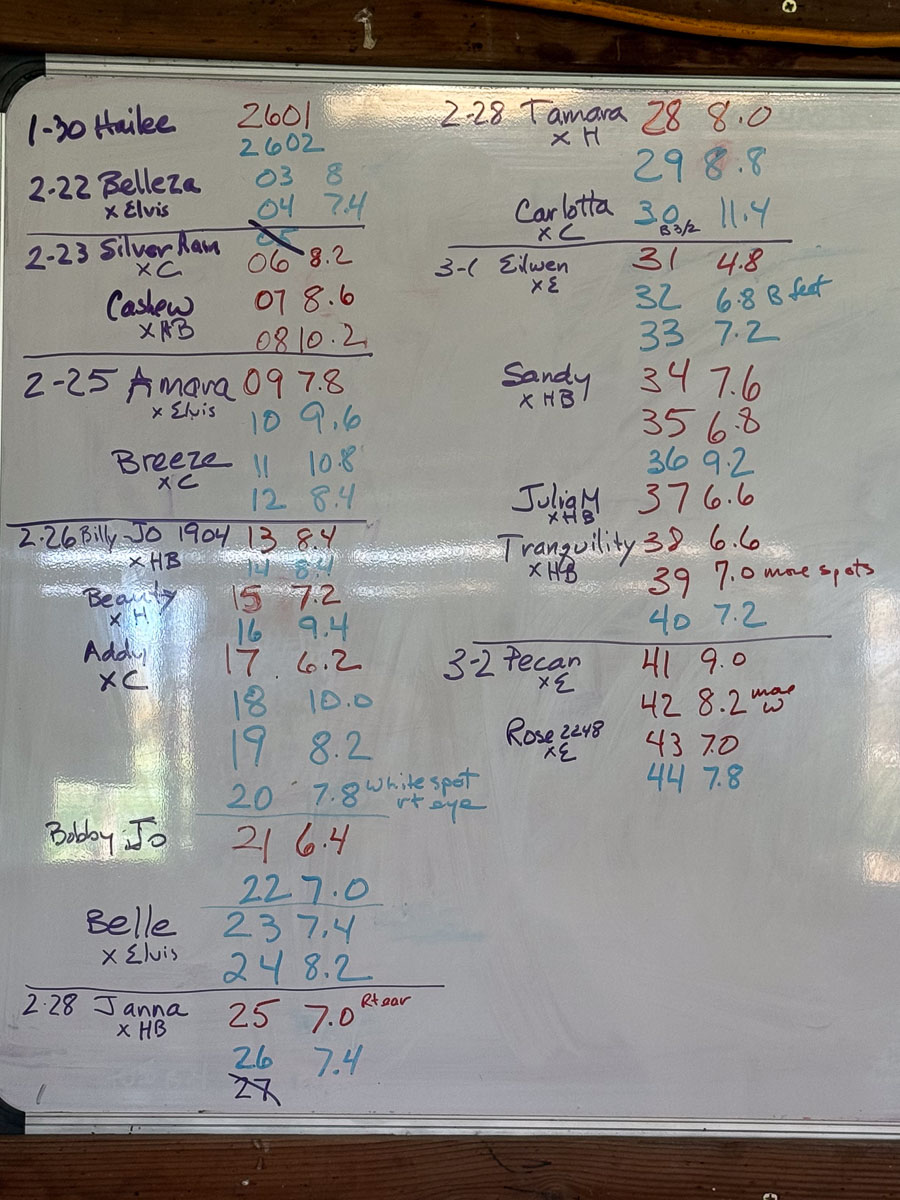
This is how I keep track of all the details. The numbers are the lamb ID, each with a 26 in front. Red ones are ewe lambs and blue are ram lambs. The next column is birth weight. The X _ indicates the sire: Hornblower, Clancy (BFL), Elvis, and Hunter.
The last one on the board is Rose with twins. I usually try to have them in the lambing pen area when they are in labor but I missed this one.
Pecan was just before Rose with twins.
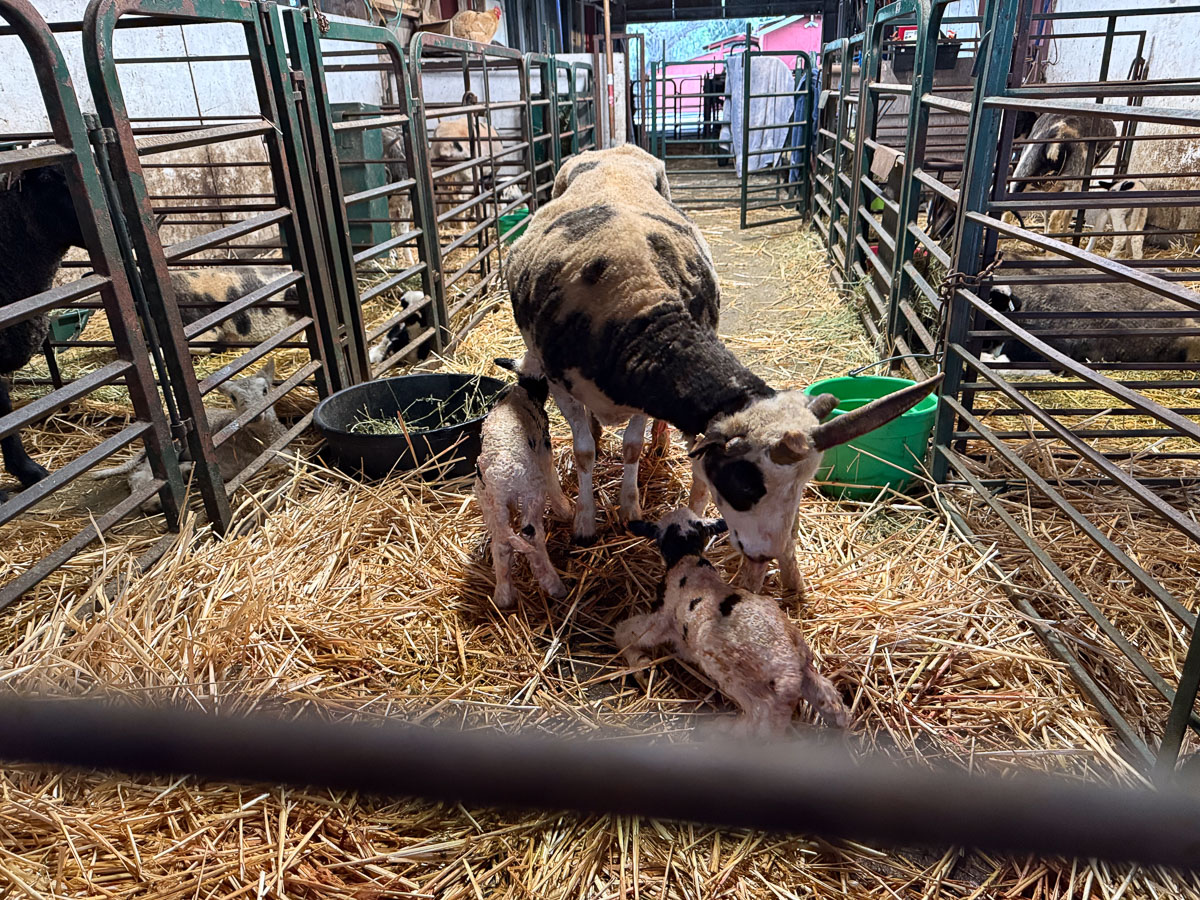
Tranquility lambed the night before with triplets.
This is how Tranquility looked earlier in the day. When a ewe gets that sunken look in front of the hips that is a sign that the lambing is imminent. Maybe imminent isn’t the right word because I put her in the lambing area earlier in the day and she didn’t deliver until about 10:30 p.m.
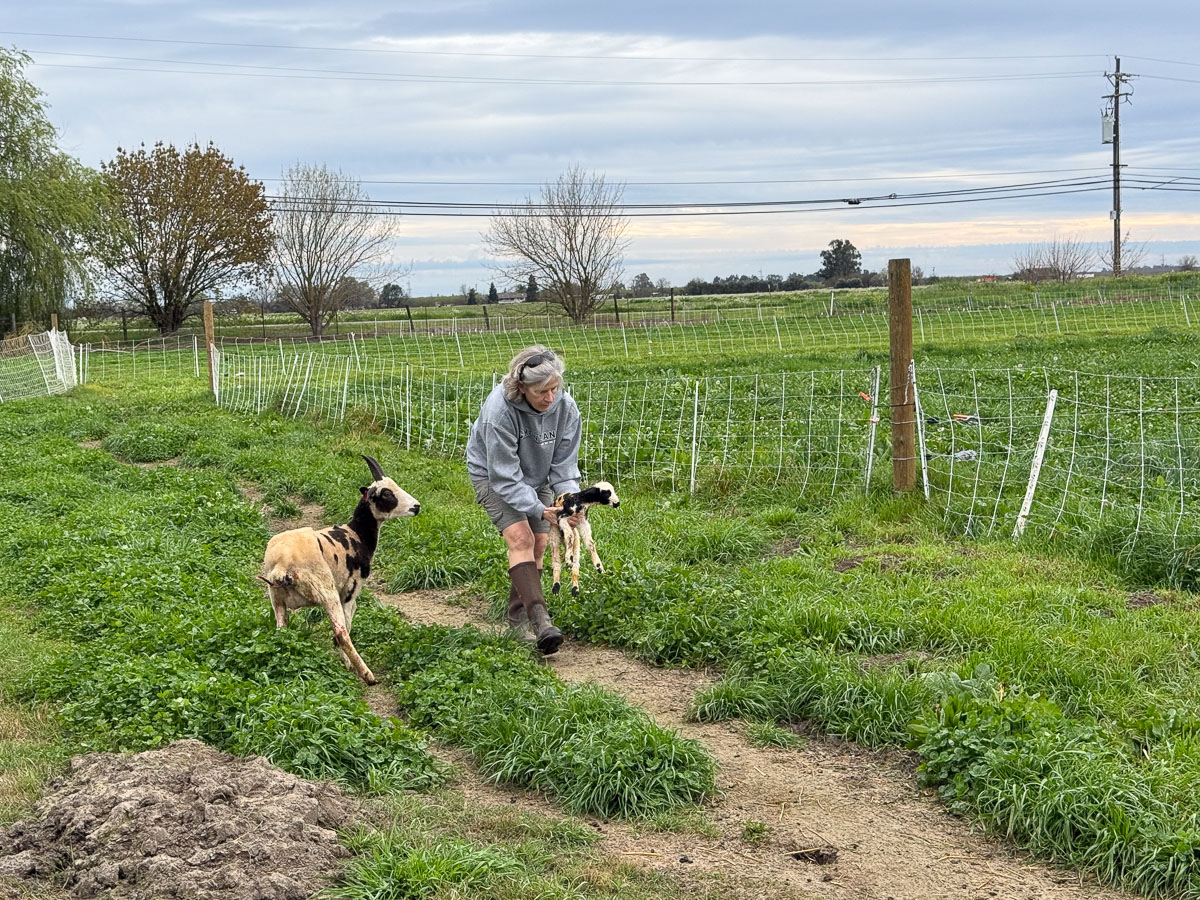
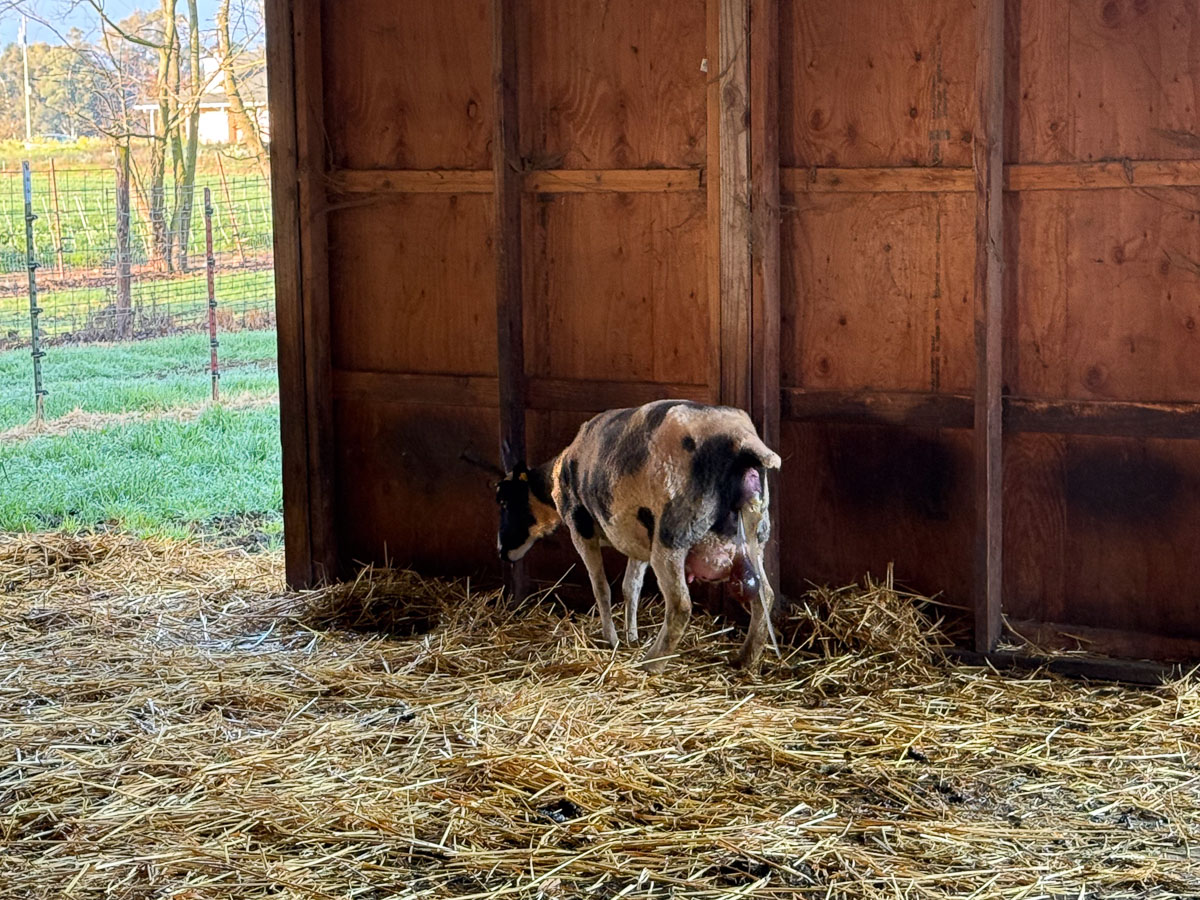
Julia is a yearling who lambed in the pasture. One of the Farm Club members who was here brought her lamb to the barn, carrying it low so the ewe would follow.
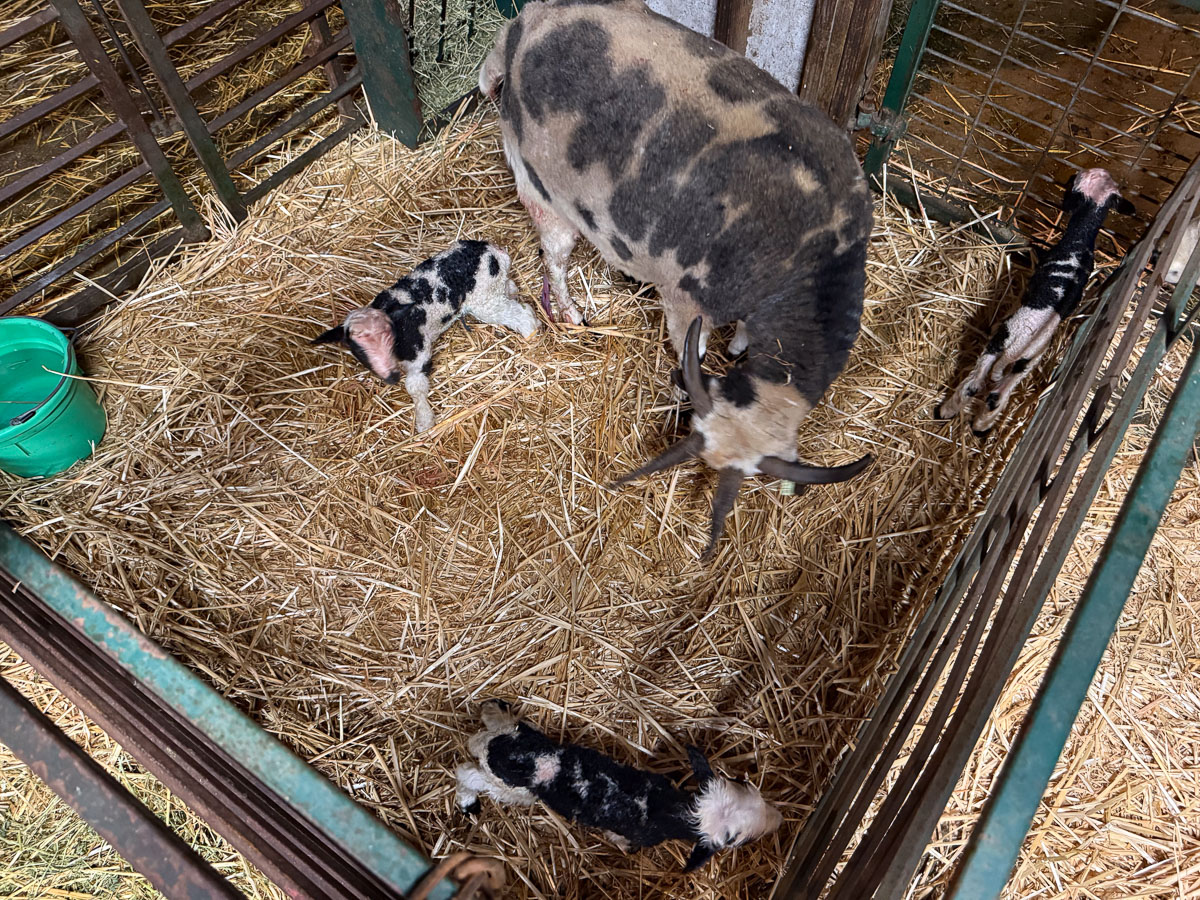
Sandy had lambed earlier in the morning with triplets. I set up panels to separate Sandy from Eilwen (next photo). This is like having hospital beds in the hall. The lambing pens were full and I already had overflow pens in the alley of the barn.
Eilwen with triplets around 2 a.m.
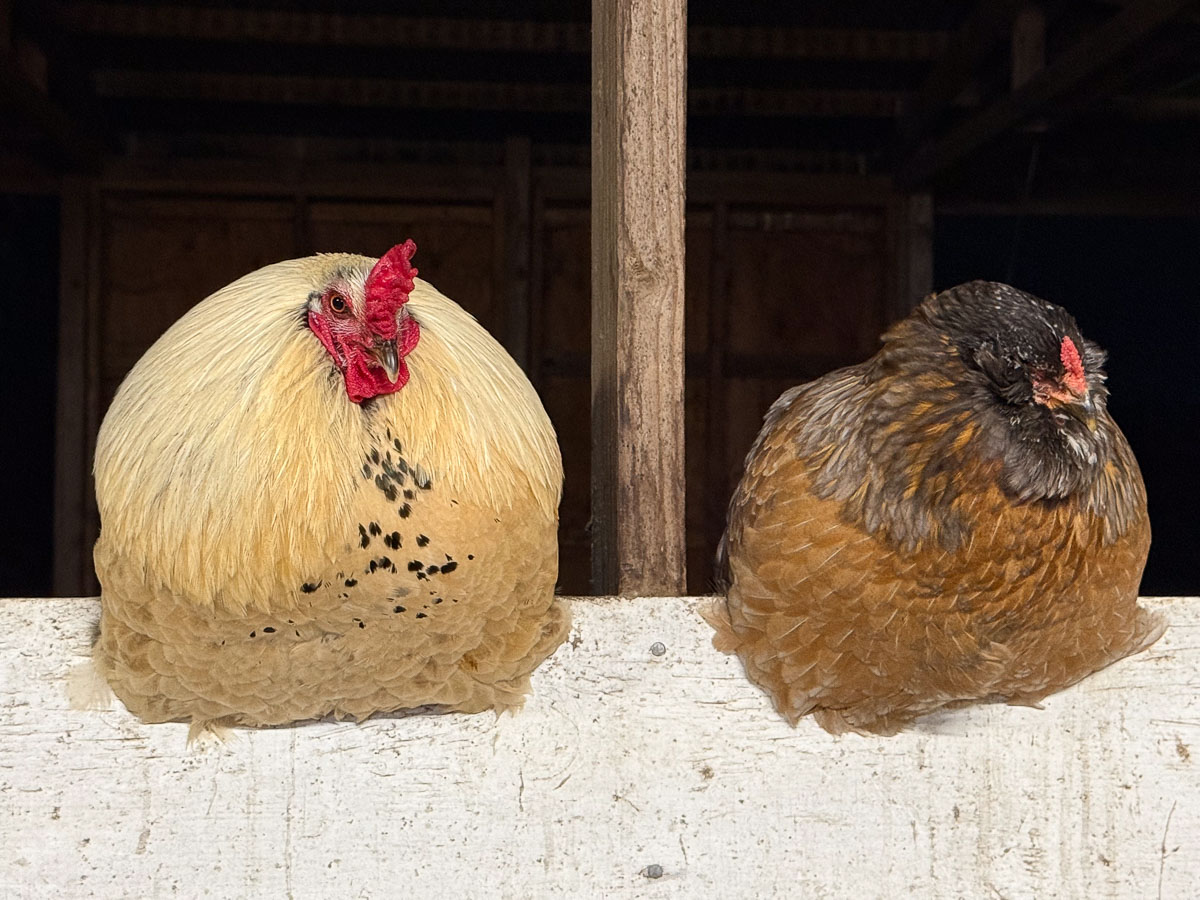
At night the chickens roost on the wall behind the lambing pens.
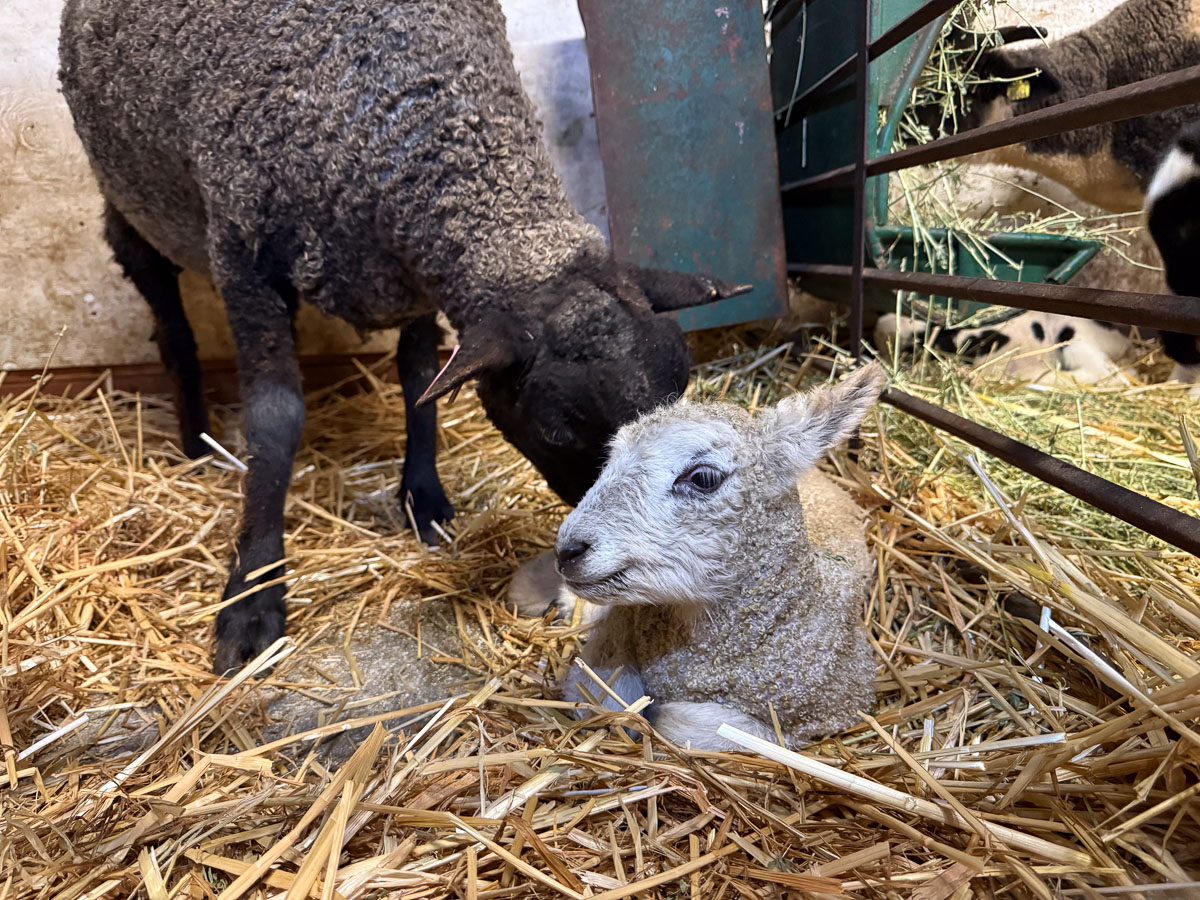
This is Carlotta from the previous day. She is a Romney/Lincoln/Corriedale cross. The lamb’s sire is Clancy, the BFL.
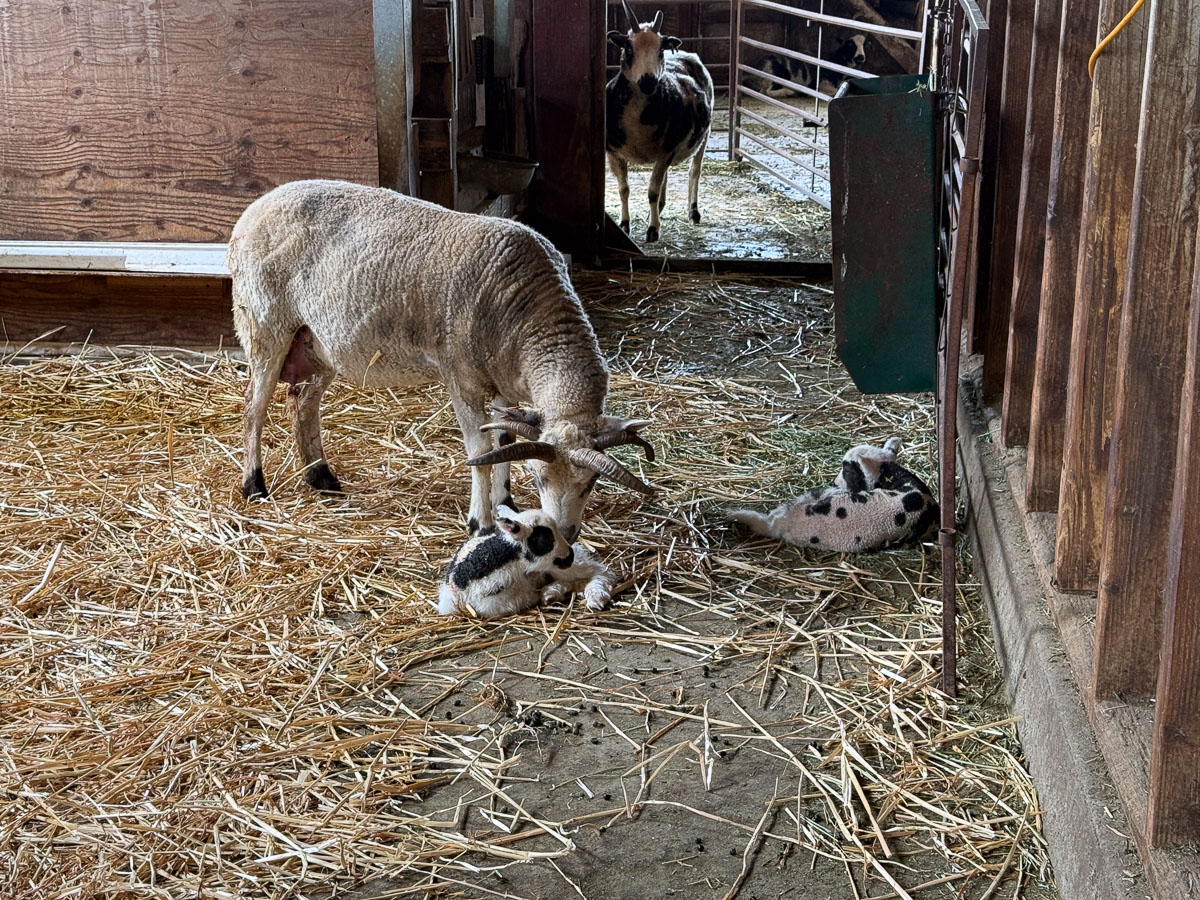
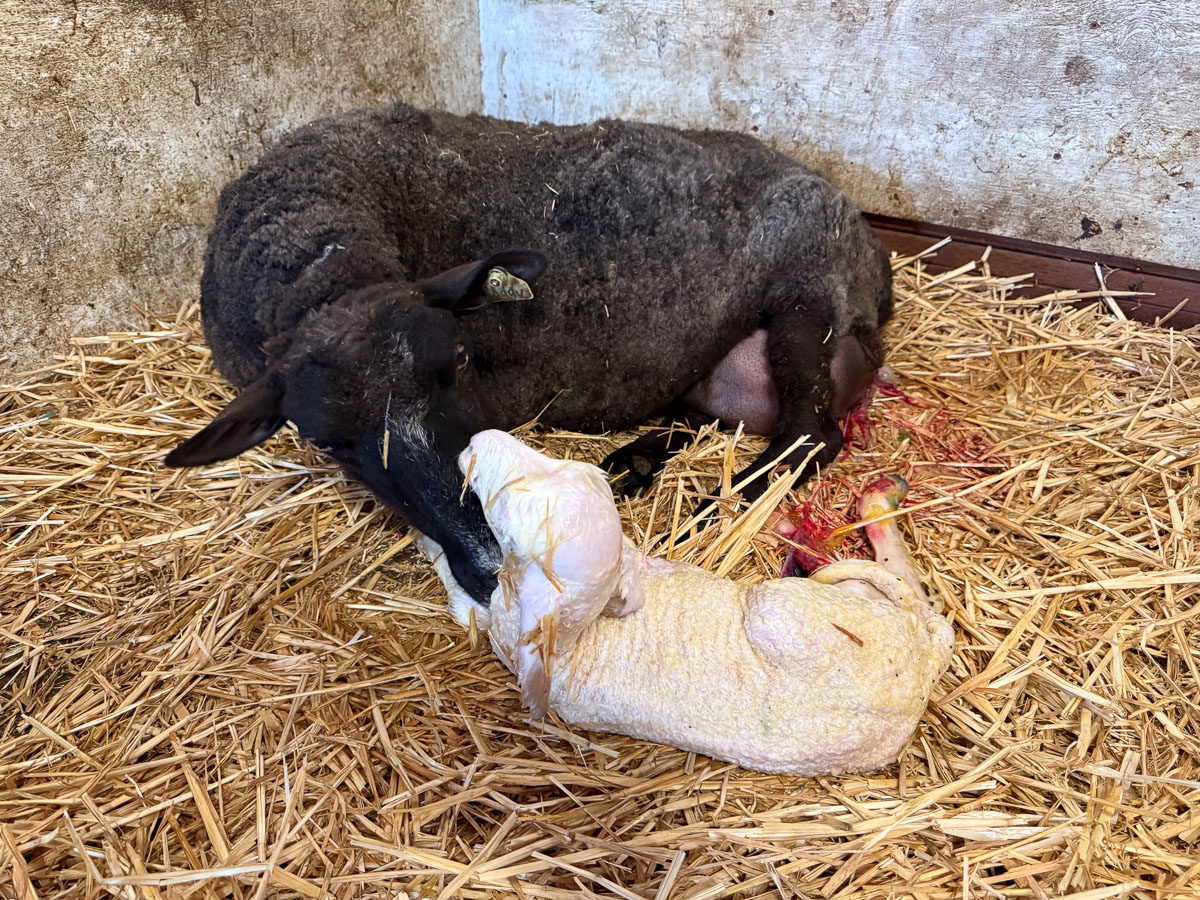
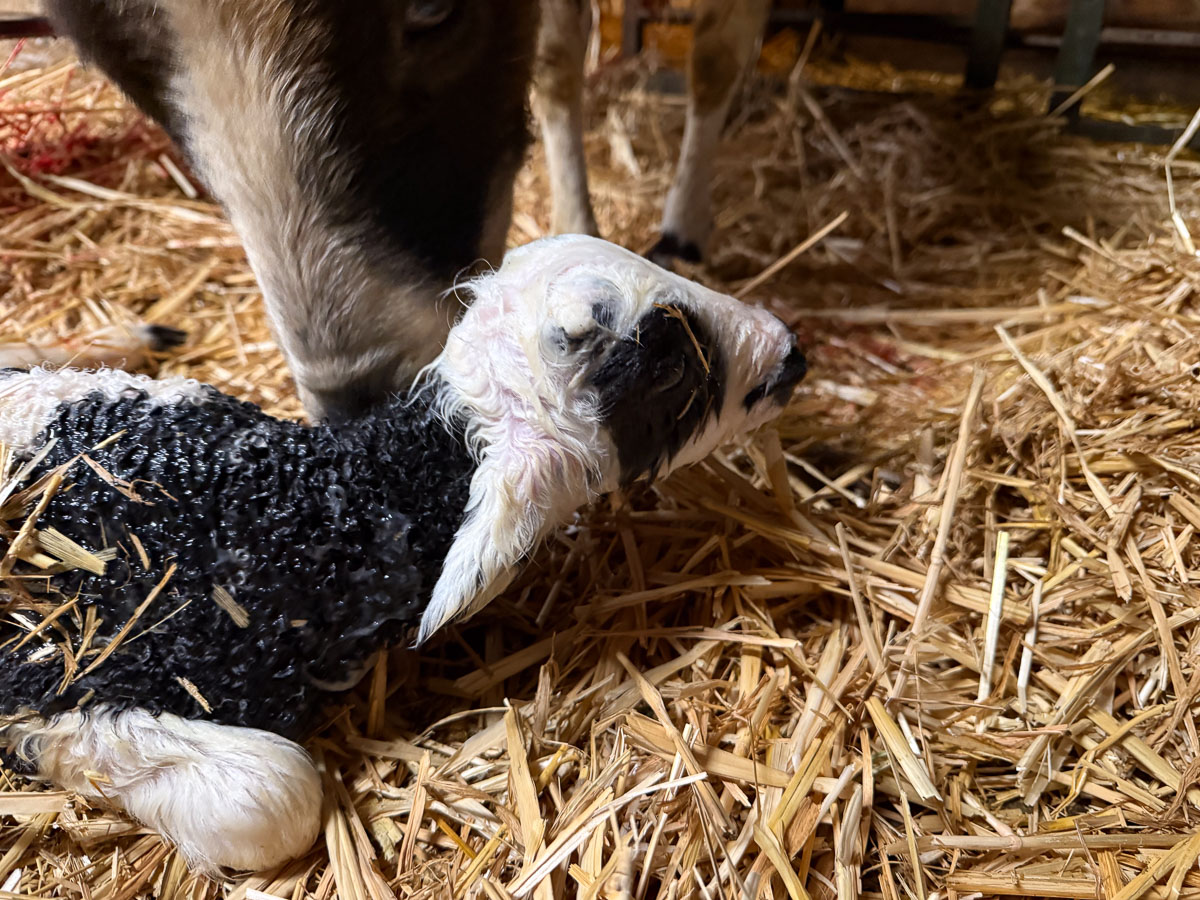
Lambing began Sunday night. The first ewe to lamb had twins, up and nursing when I got to the barn. That is how it is supposed to be. The second was a different story, but maybe that will be a post later. After that it has seemed slow, until yesterday.
This is the first ewe who lambed yesterday, Bideawee Billie Jo.
Twins.
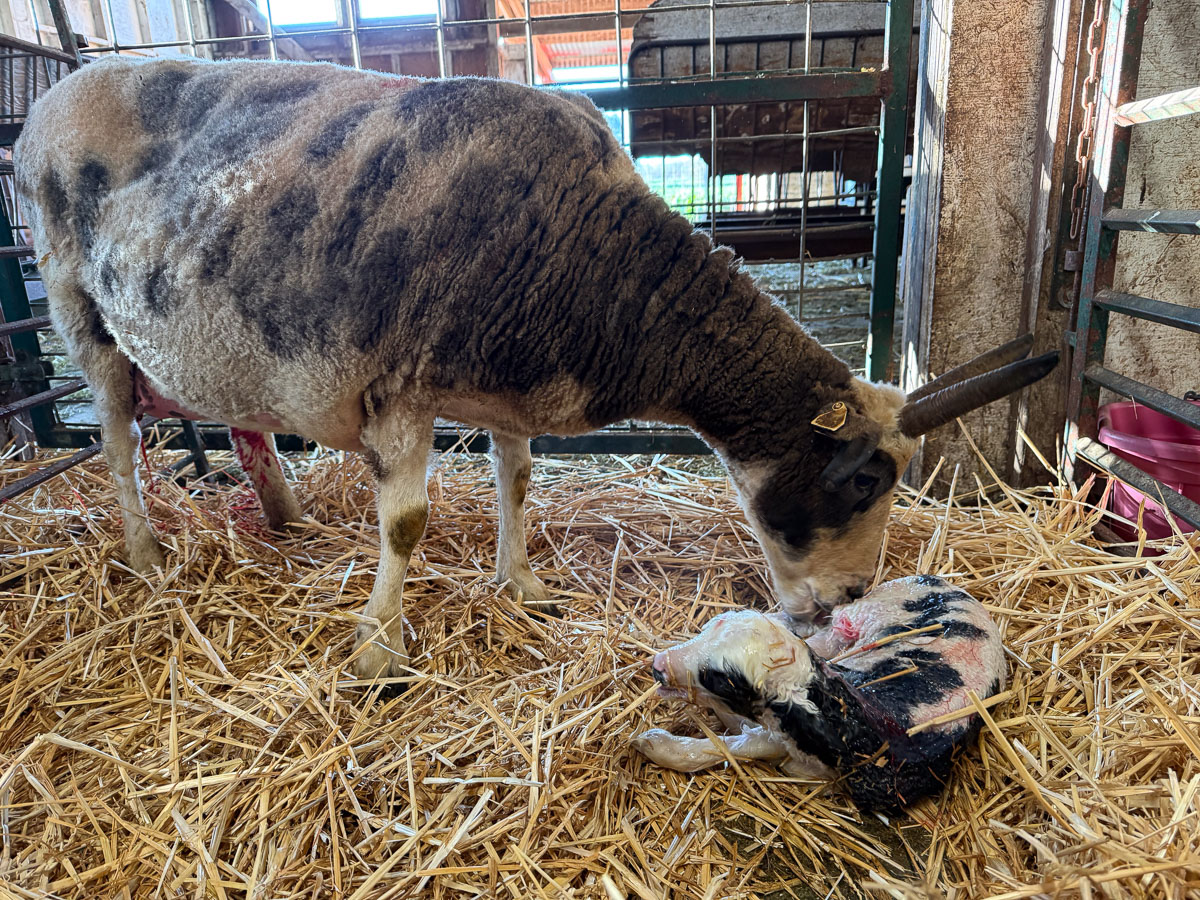
Nothing in the middle of the day but in late afternoon, Beauty started. She ended up with twins, but it took awhile for the second and there was another ewe lambing in between.
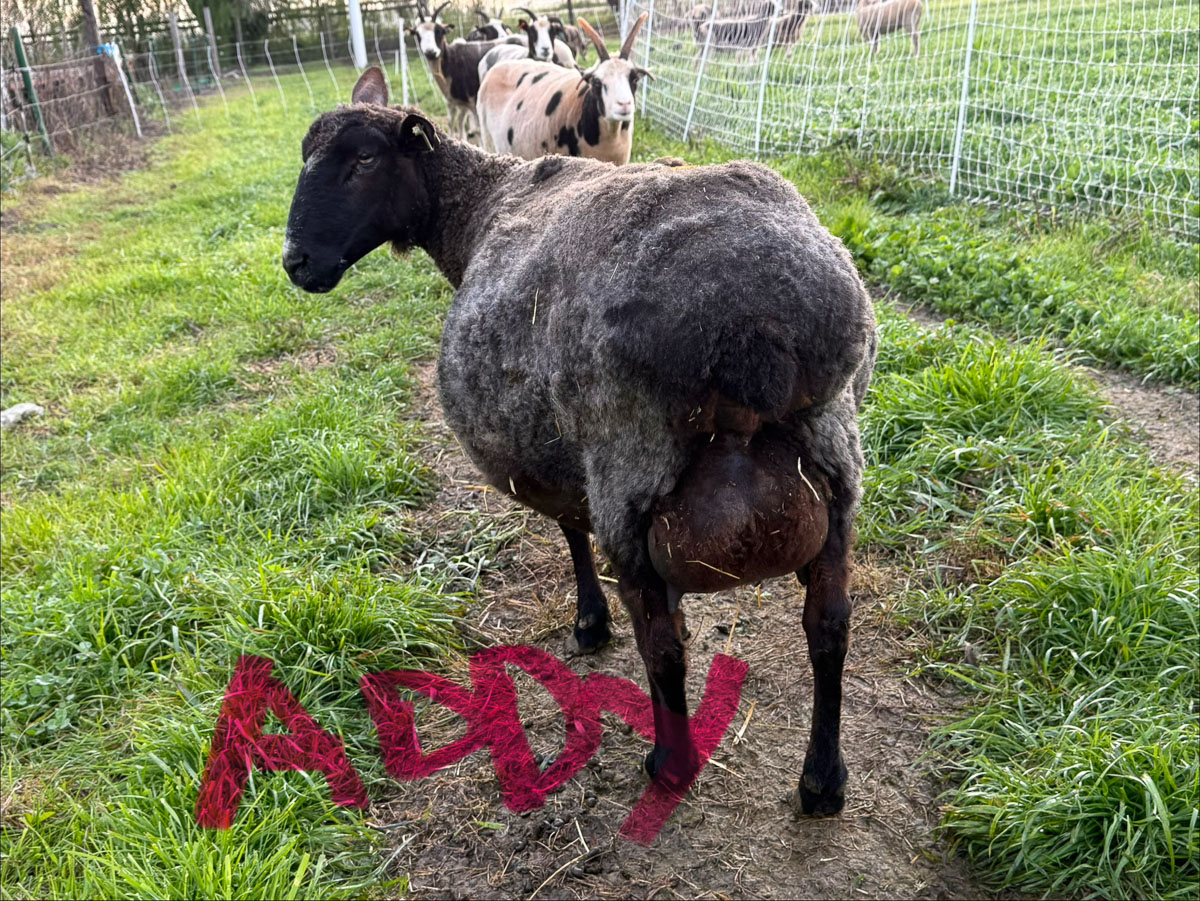
Addy is a Jacob-BFL (Bleufaced Leicester) cross. This photo was taken four days ago.
This is not a post-lambing photo. It was taken about three hours before she had the first lamb. Those sunken sides are a sign that the lambs have “dropped” and we’re getting ready for lambing.
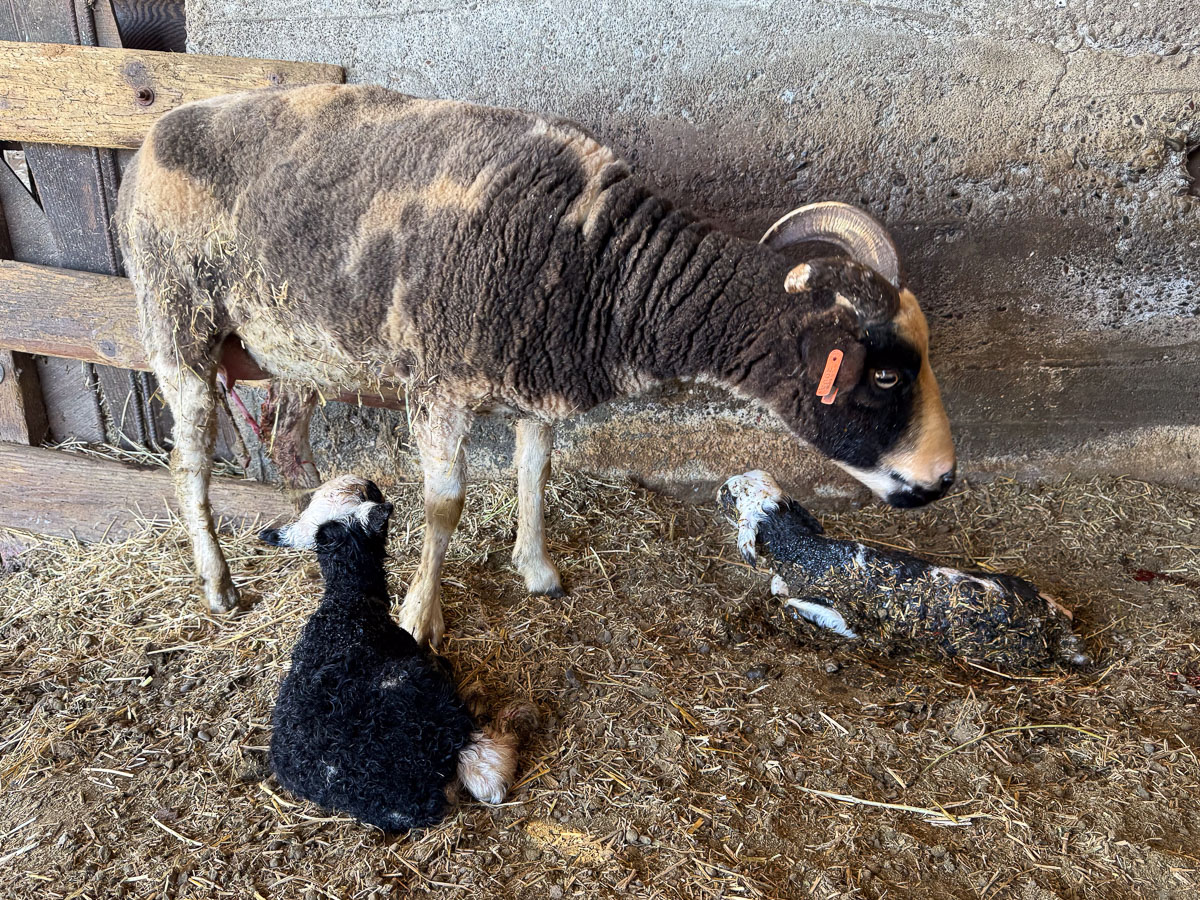
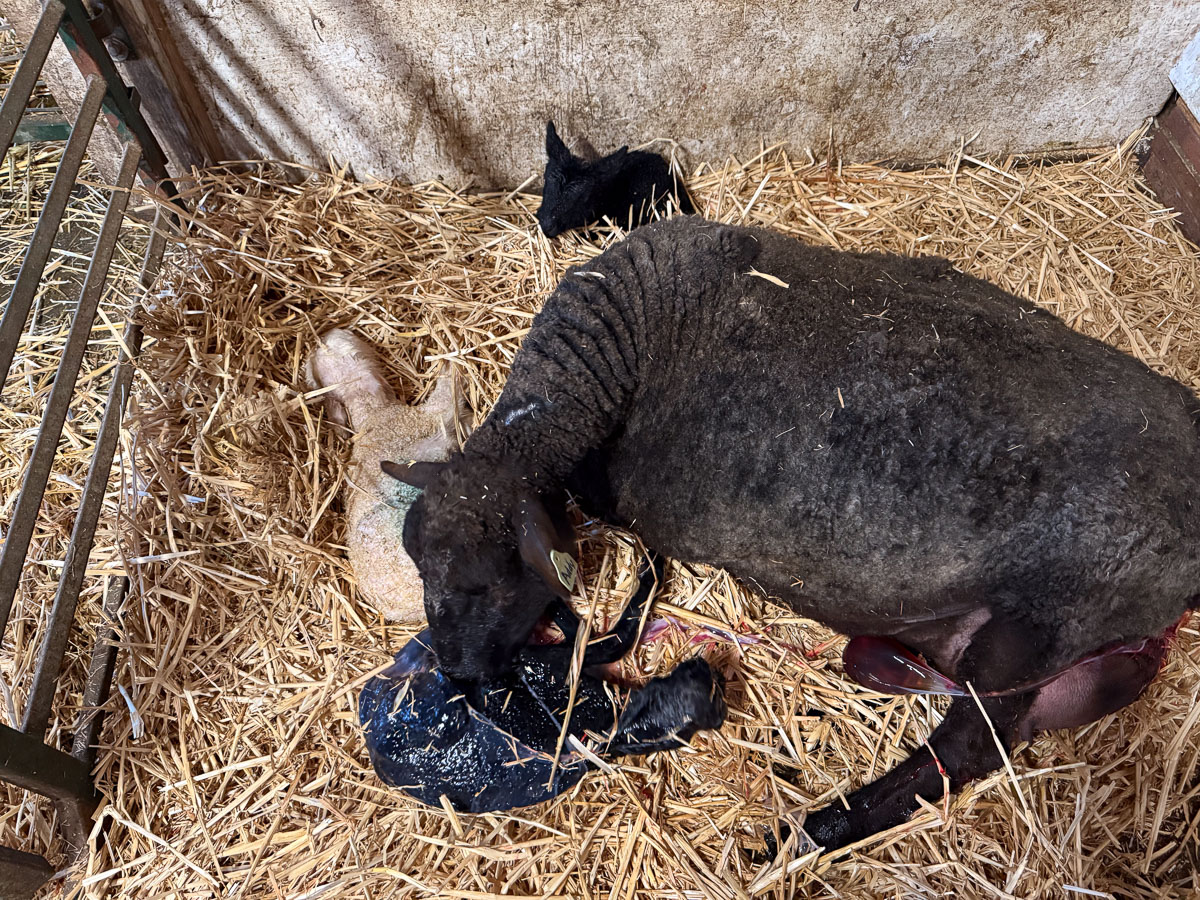
Just after Beauty had her first lamb I looked over the fence and saw that Addy had one lamb. It’s not visible in this photo because it’s behind her. It’s black. Jacob sheep are colored sheep with a spotting pattern. When you breed them to most other breeds you get black lambs because the sire doesn’t have that spotting pattern. Addy is a crossbred, bred to another BFL. So genetics are interesting.
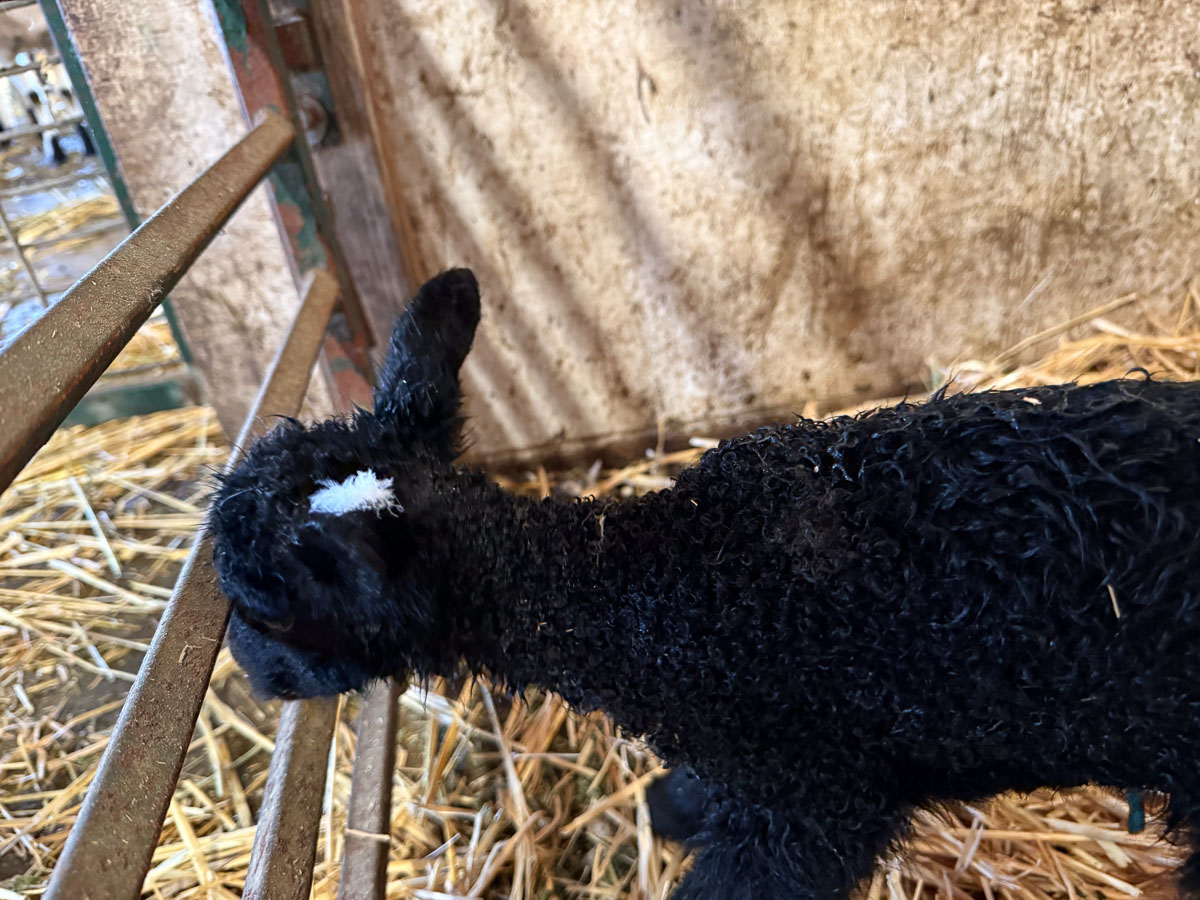
Here’s the first lamb adorned with a white feather that looks like a spot.
But there is more! Ultrasound showed twins. I thought that maybe there was another and, sure enough, there was. This one was born hind feet first.
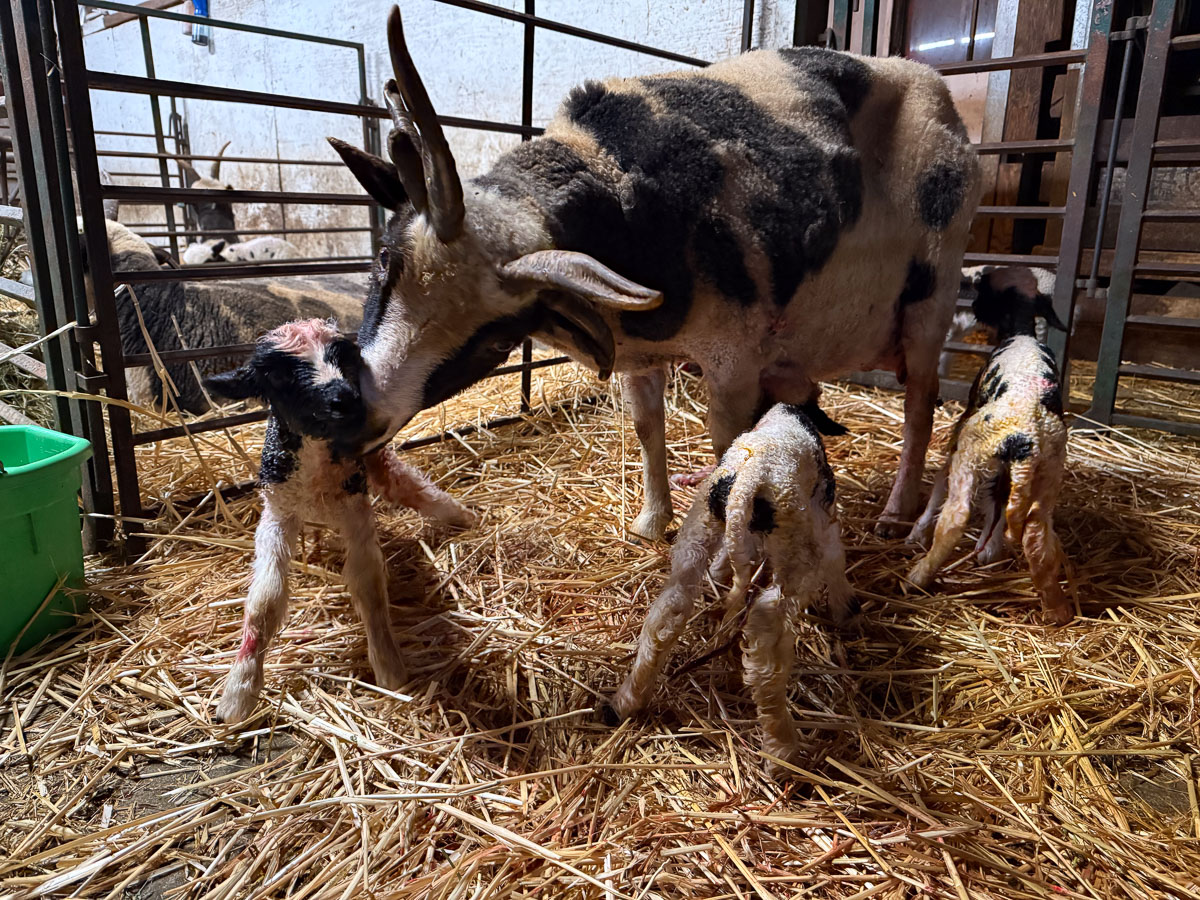
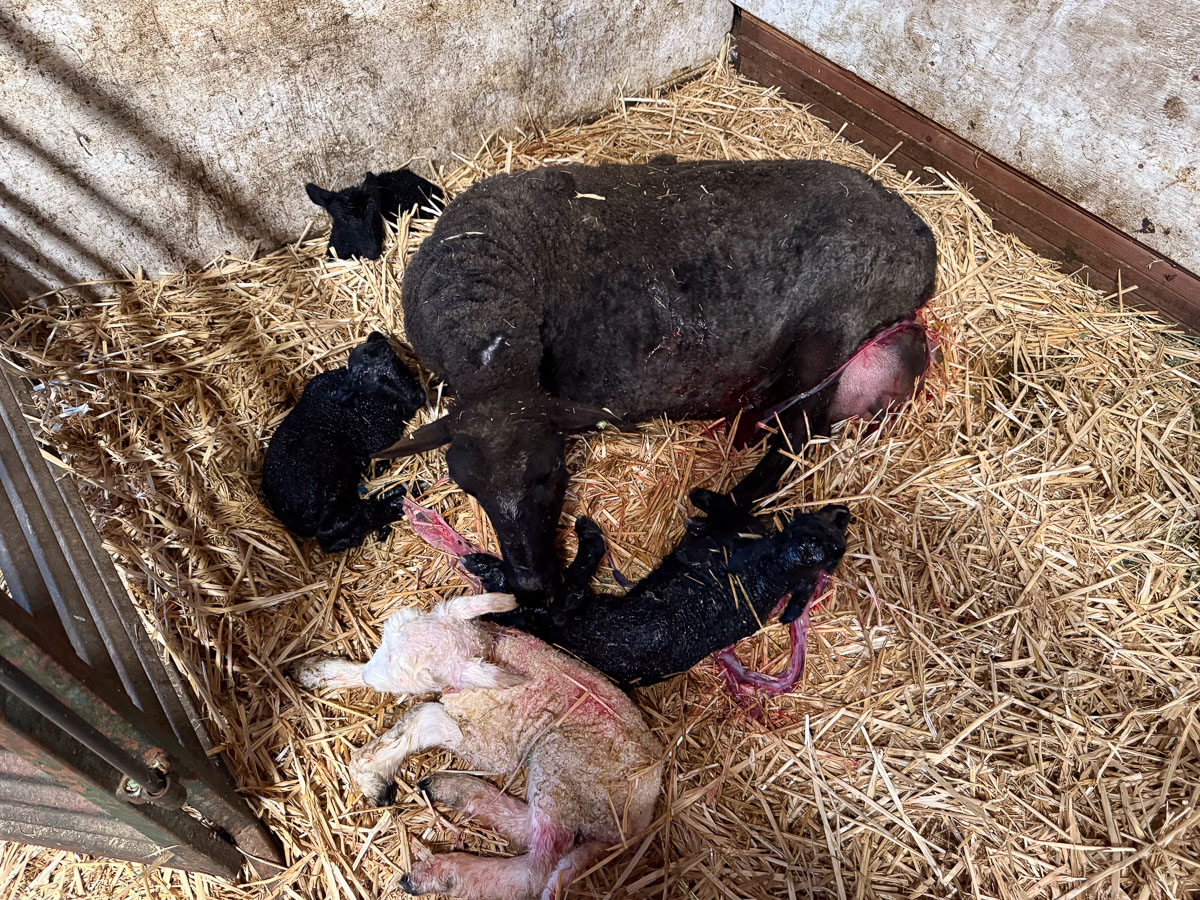
But wait! There’s more! Another hind-feet first delivery. These lambs total 32 pounds!
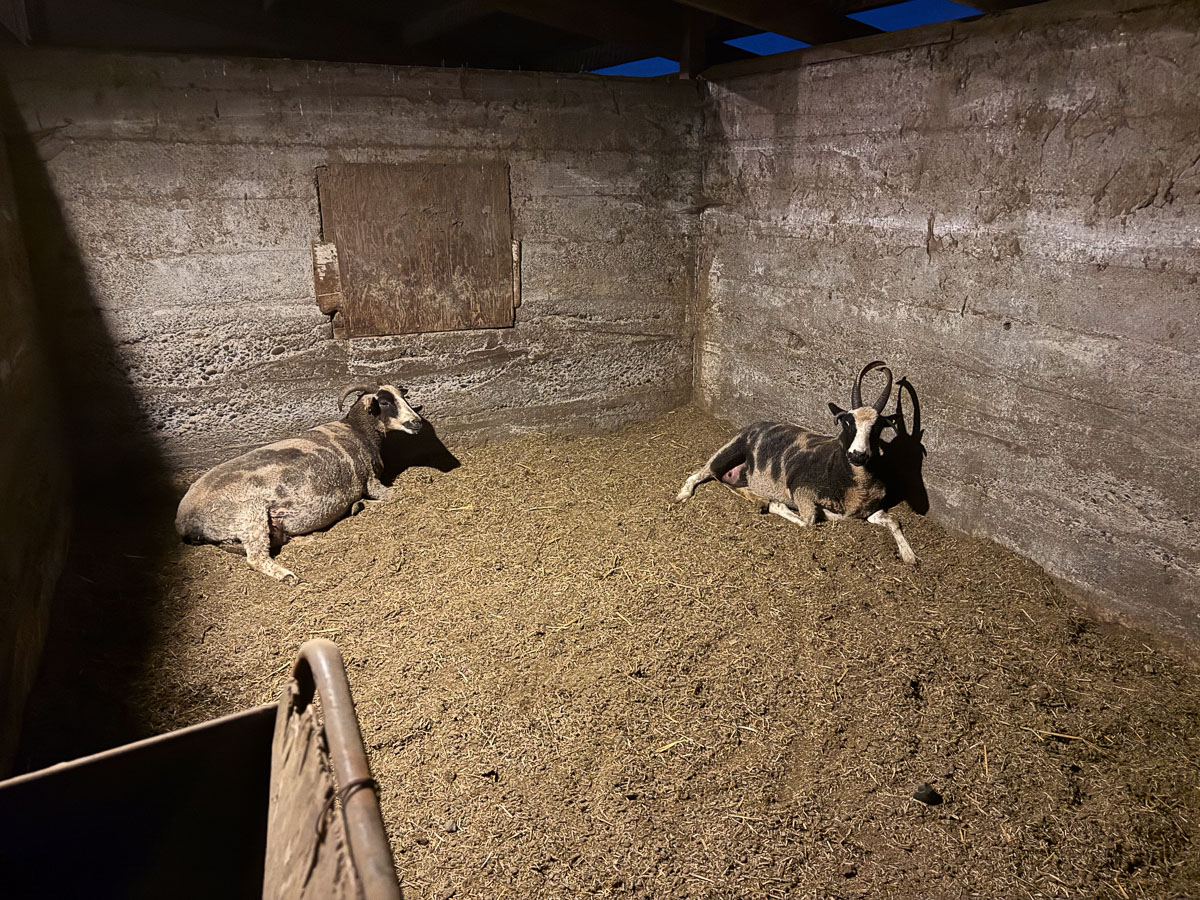
After I’d made sure that all those lambs had nursed I checked in back before I went to the house for dinner with guests. These two I thought required checking again later. This is part of the pen where I used to keep another ram. I have opened this area to the ewes because I have too many sheep for the barn space. Now it’s another space I need to check.
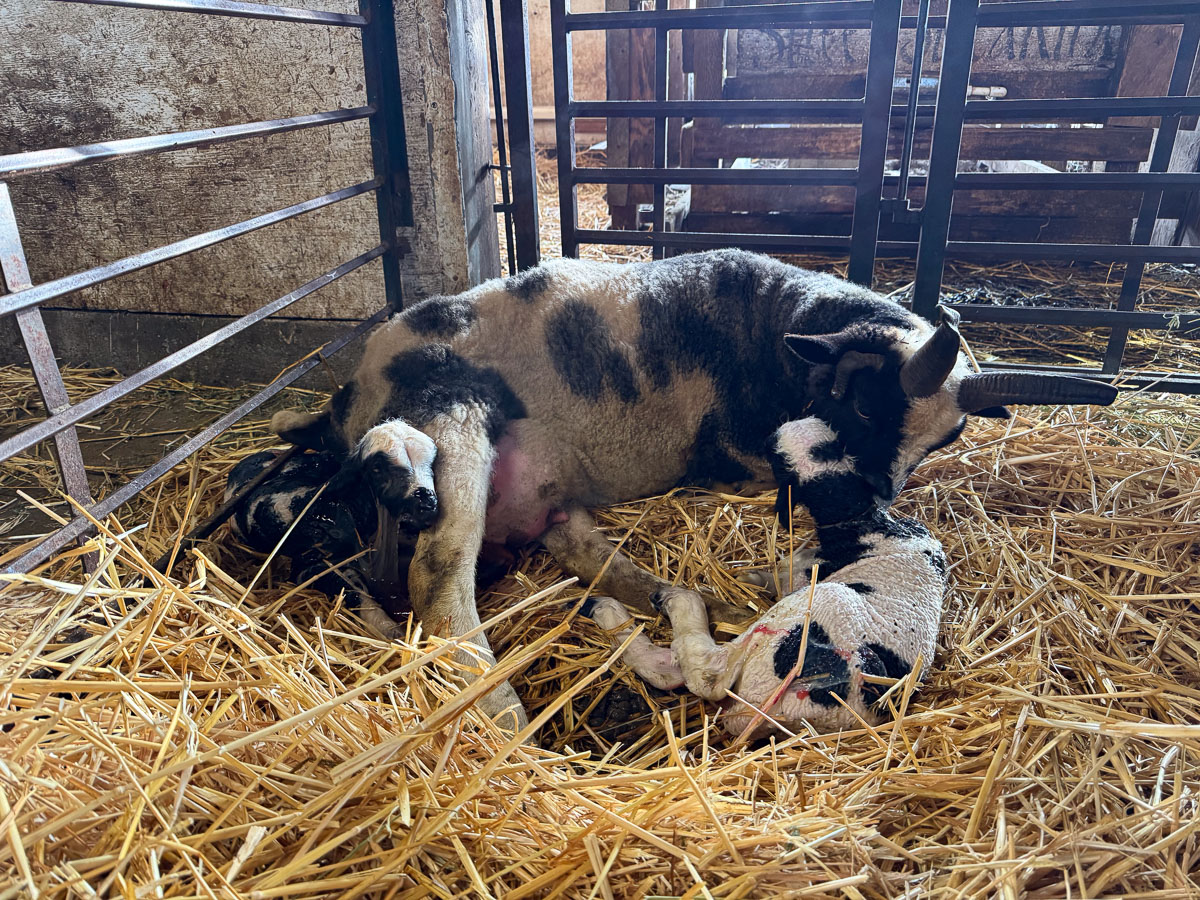
I did not take photos of these ewes and lambs other than this one that shows why sometimes those ram lambs aren’t delivered quite as easily as the ewe lambs. They end up OK but the ewe may have to do a little more work to deliver one with horn buds like this. Those two ewes had a set of twins each and now I have the lambing pens full and one in overflow pens in the barn alley.
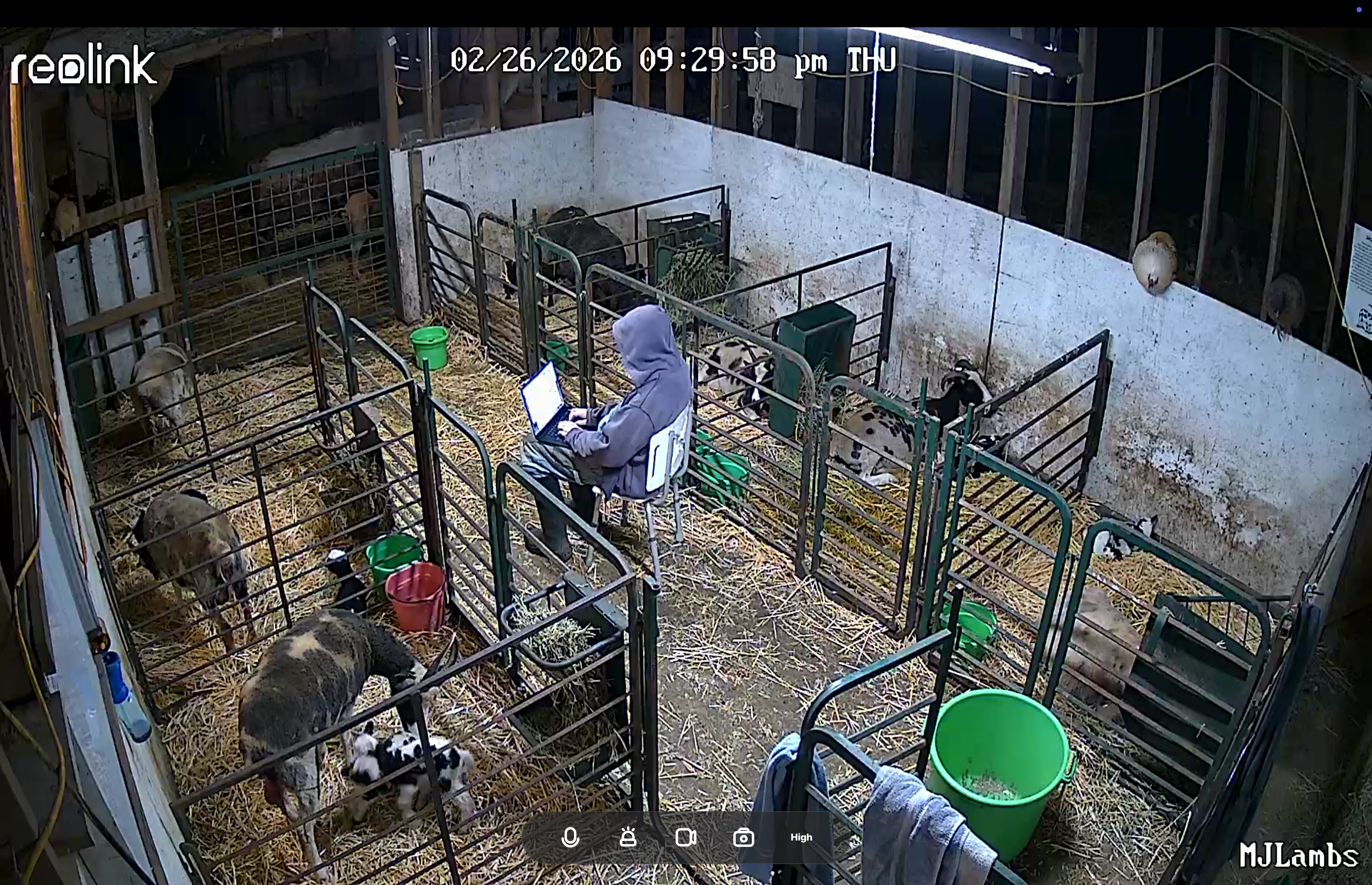
A Farm Club member took a screenshot of her view of my barn camera. I knew I had to spend some time at the computer and figured I’d do it in the barn while waiting for lambs. These are all twins except for Addy at the top corner. It was not a cold day but the bugs were bugging me; therefore, the hood.
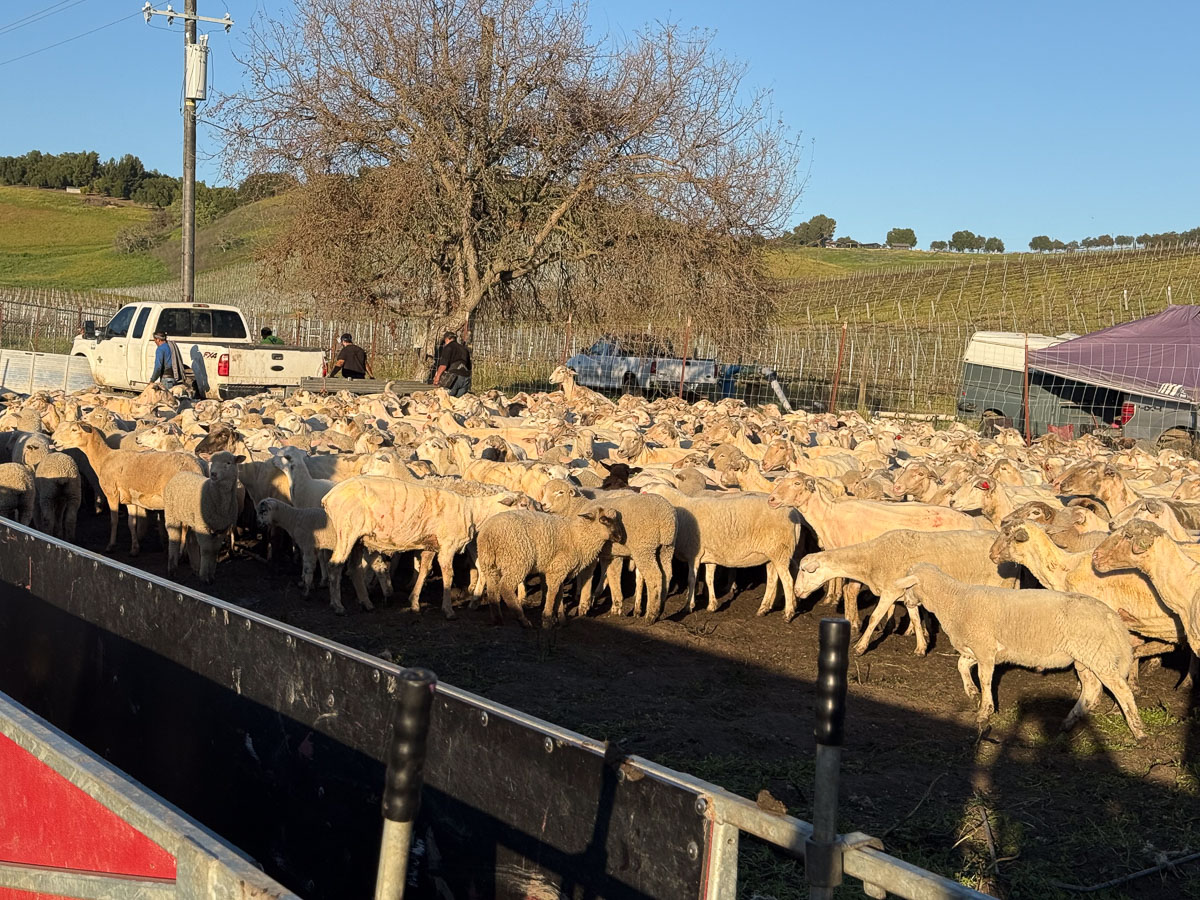
Part 1 is here. I had too many photos to use for one post. I didn’t mention in that post that they sheared 900 sheep on this day. I don’t know the average time for all of the shearers, but the one I watched sheared his sheep in two minutes.
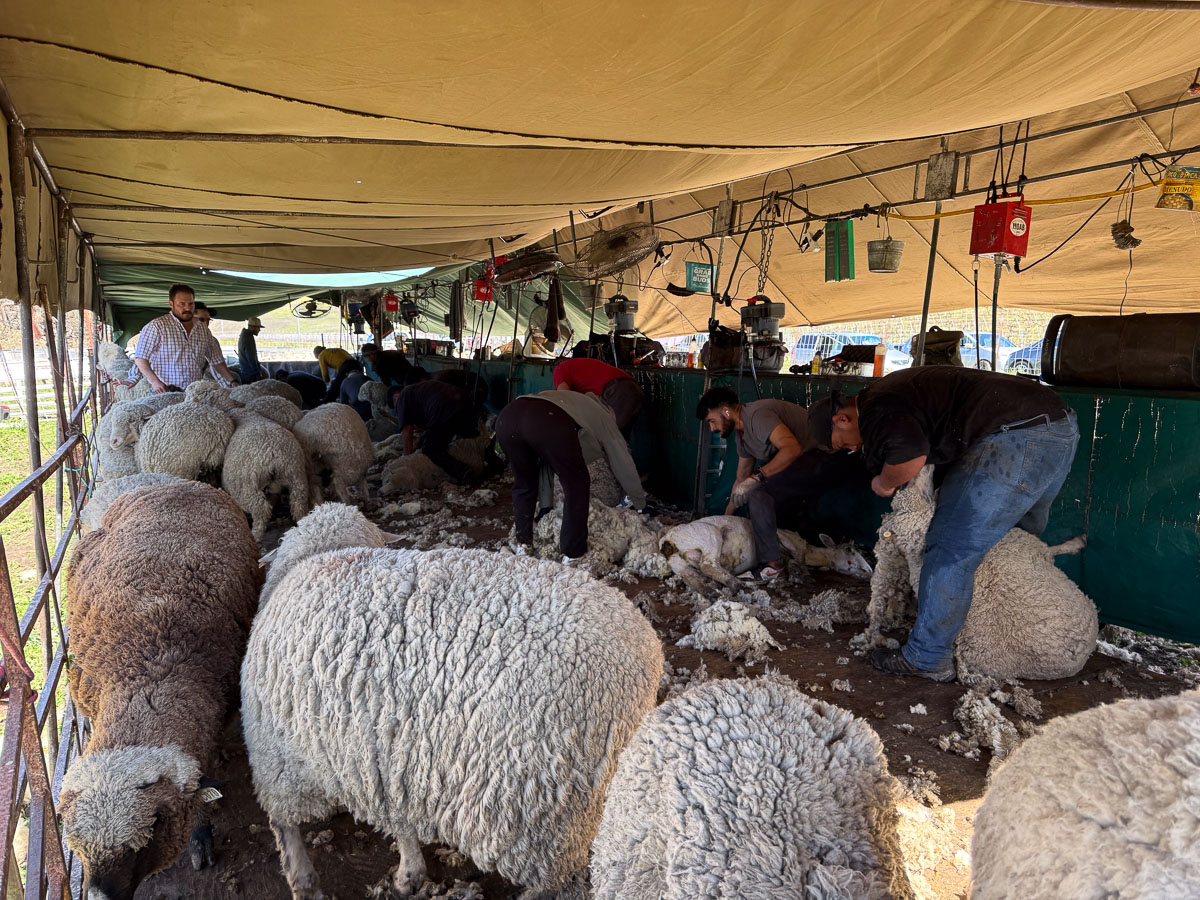
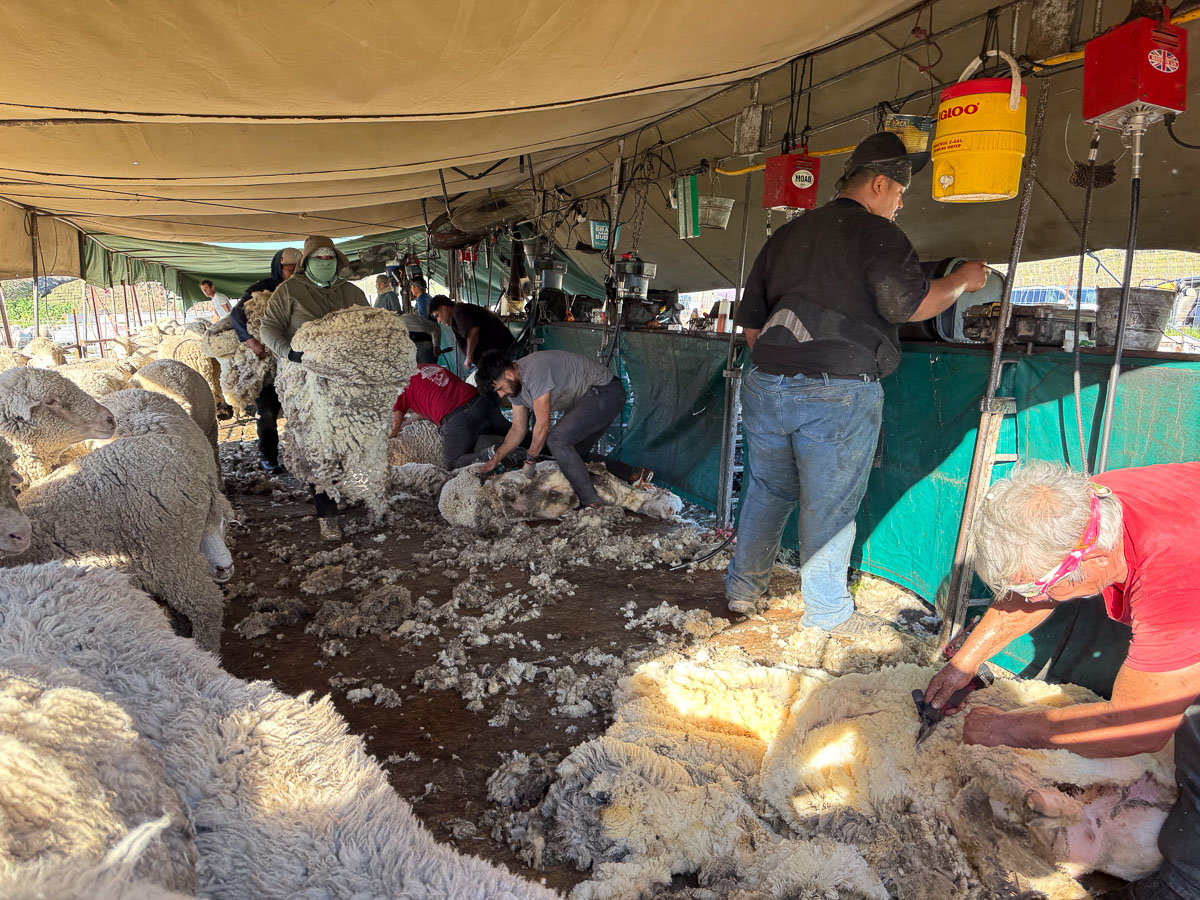
This is another photo inside the shearing shed. The shearers work through a group of sheep and then the next comes in.
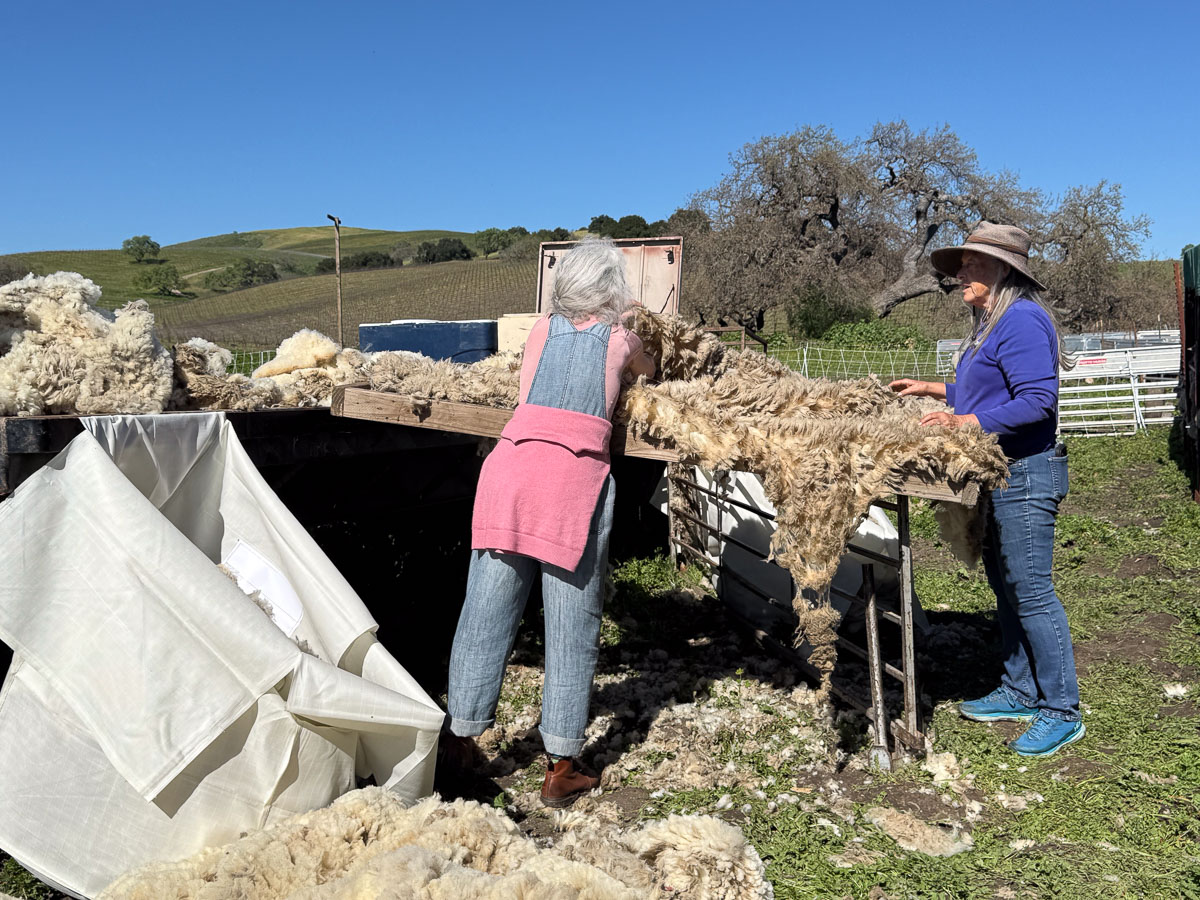
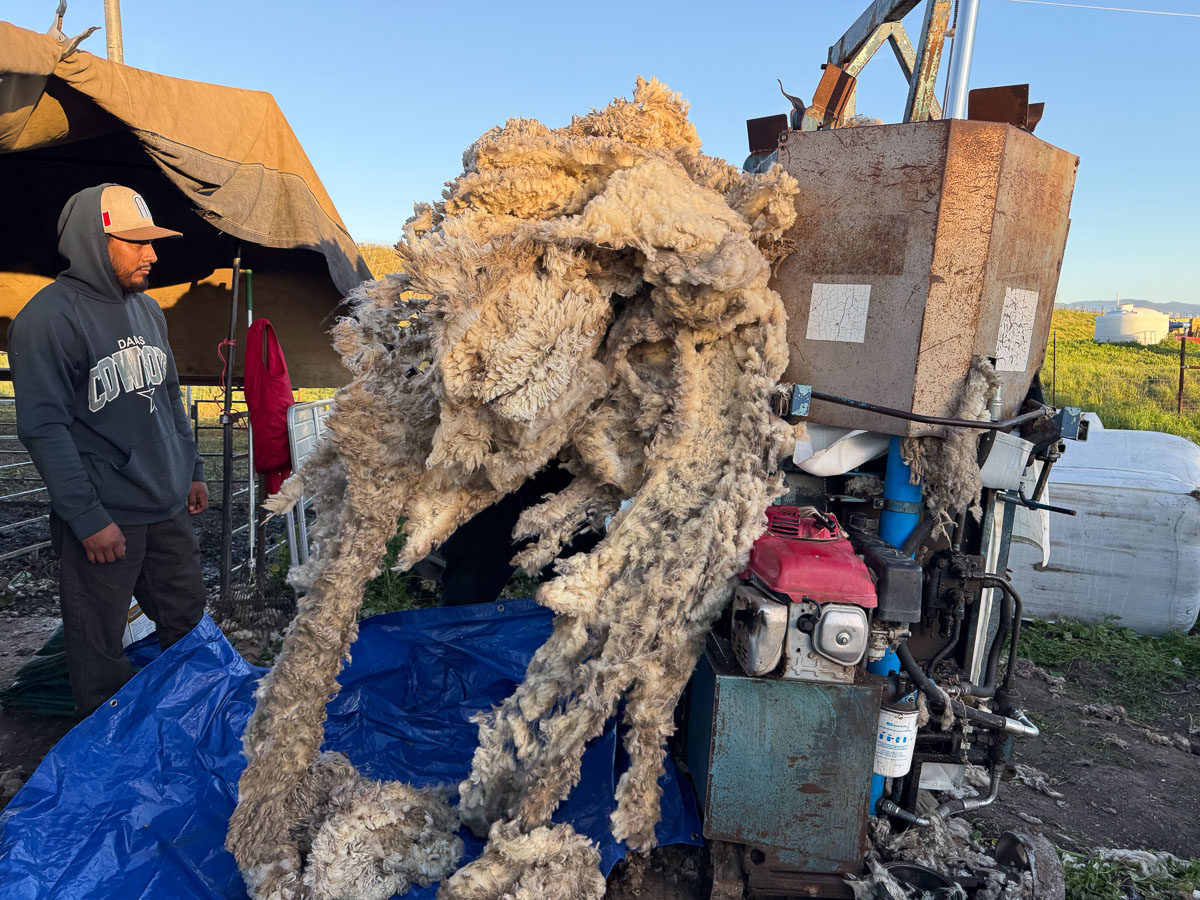
My goal was to get 250 to 300 pounds of wool, but I didn’t get that much for a variety of reasons. One is that there were only three of us working, one of whom had never worked with fleece. Another was our set-up. Notice that the skirting table that was available didn’t have legs. We rested one end on the flatbed truck and the other on a panel we tied to the trailer so it wouldn’t tip over. That made it awkward. The main problem was that we weren’t able to take an individual fleece from the shearing floor and toss it on the skirting table so it would land in sheep-shape. Instead most were picked up three or four at a time and pushed through a space at the end of the shed. They dropped onto a tarp and were picked up and pressed into a bale.
Cole, the sheep owner, was glad we were there and is excited for us to do something with his wool. He wanted to work with us to see our process, but he was moving sheep and dealing with other parts of the process the whole time. There would need to be some adaptations to make it realistic for a group like us to efficiently sort the wool. When I send wool to a small to moderate size mill it is up to me to send only the cleanest (regarding vegetable matter or VM) parts. I need to spread a fleece out so that we can properly skirt it, check for wool break or tenderness, and take only the best. The mills I use do not carbonize the wool. The following is from Woolmark.com and explains how most of the wool yarn that is sold on a large scale is handled
Carbonising is a continuous process which combines scouring to remove the wool grease and a chemical process which removes vegetable matter such as seeds, burs and grass. Carbonising occurs if the greasy wool contains a high percentage of vegetable matter (%VM), typically in excess of 2% to 3%.
Most of the VM contained in wool is cellulosic in nature, which is broken down into carbon, by firstly immersing in a strong solution (6% to 7% weight for volume) of Sulphuric acid (H2SO4) then followed by baking in a dryer set at 95oC to 120oC. After the VM has been turned into carbon the wool is passed through a series of heavy metal fluted rollers which crush the carbonised burs into dust.
I talked to the Cole’s partner, who also had sheep there. He sometimes send a few bales to the mill in Wyoming that I plan to use, although most of his also goes to a wool warehouse for sale. He said that when he bales the wool to be spun into locally sold yarn he has 4 skirting tables set up and a dozen people working to do exactly what we were trying to do. So I didn’t feel so bad about not being able to accomplish what I planned.
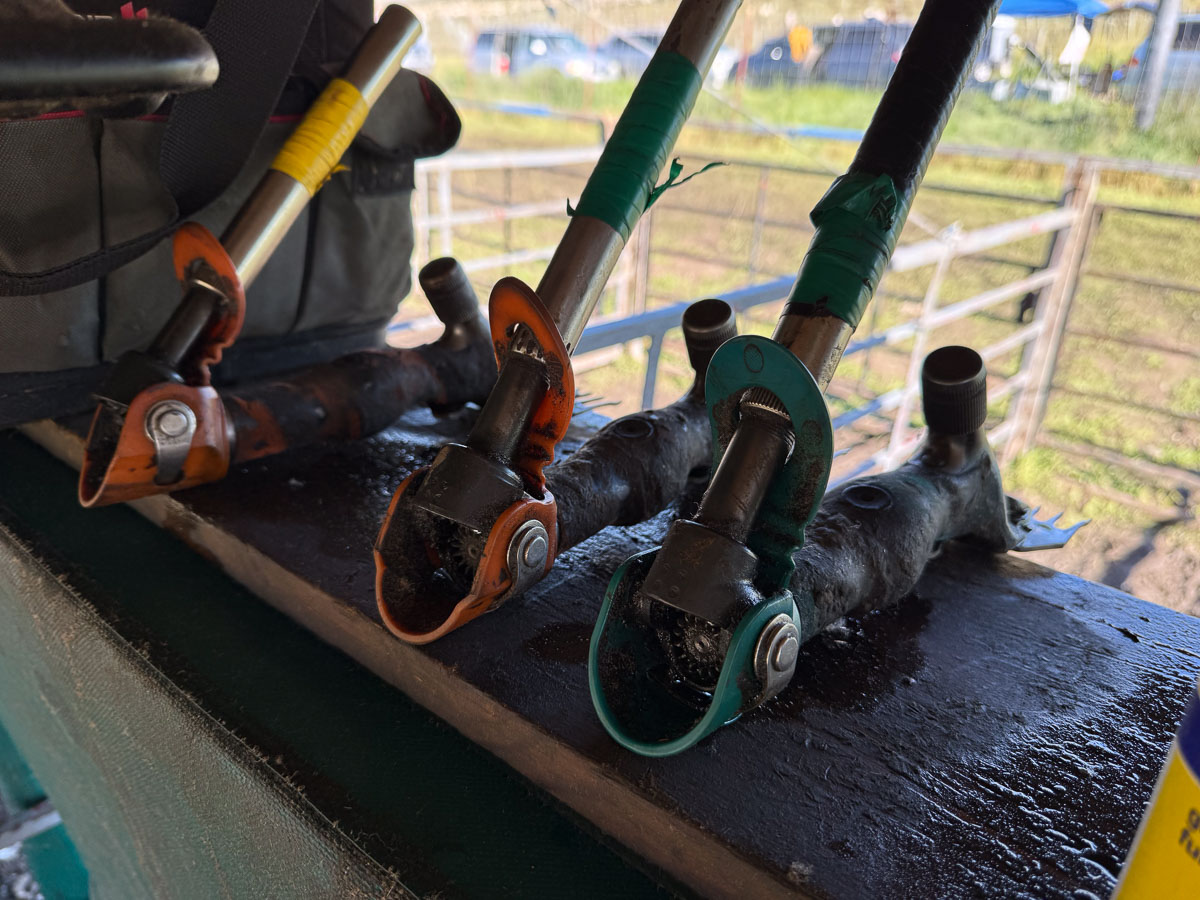
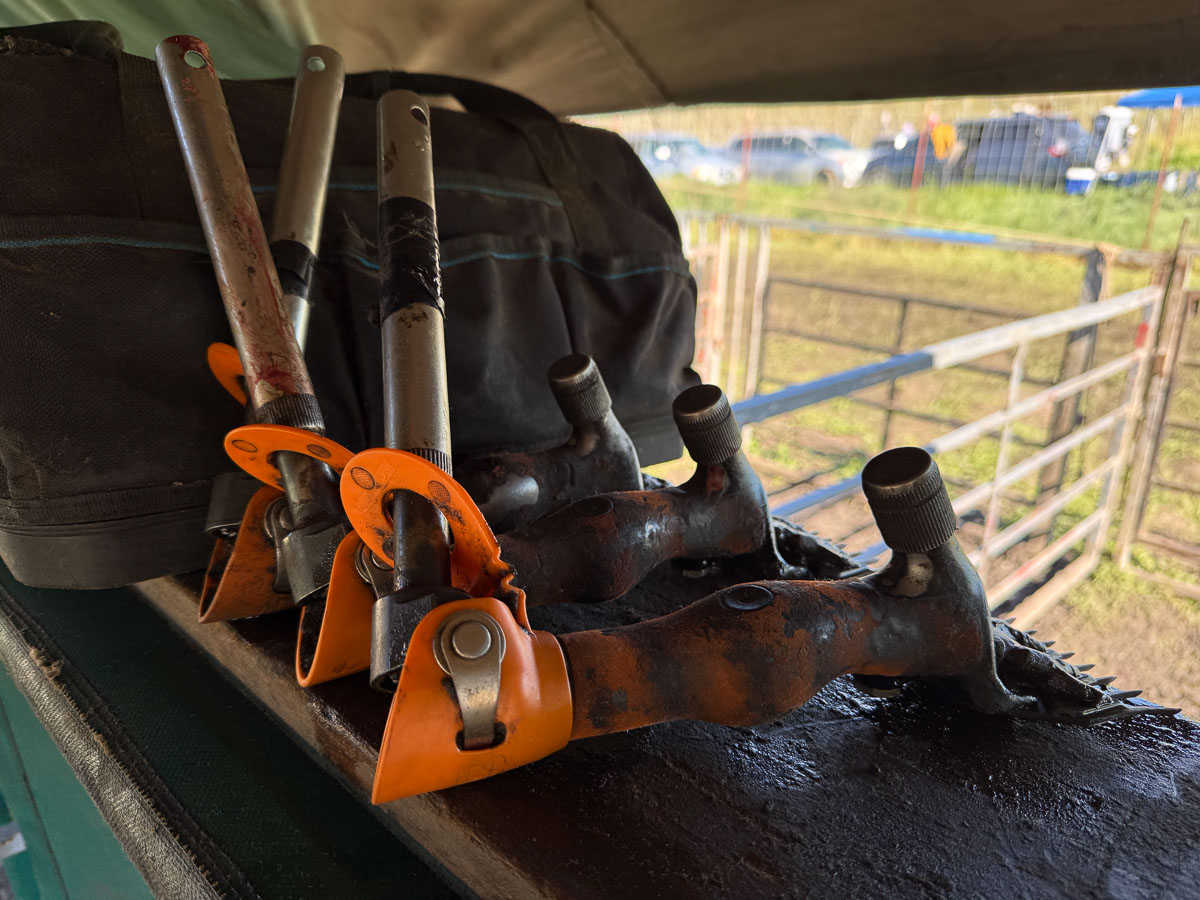
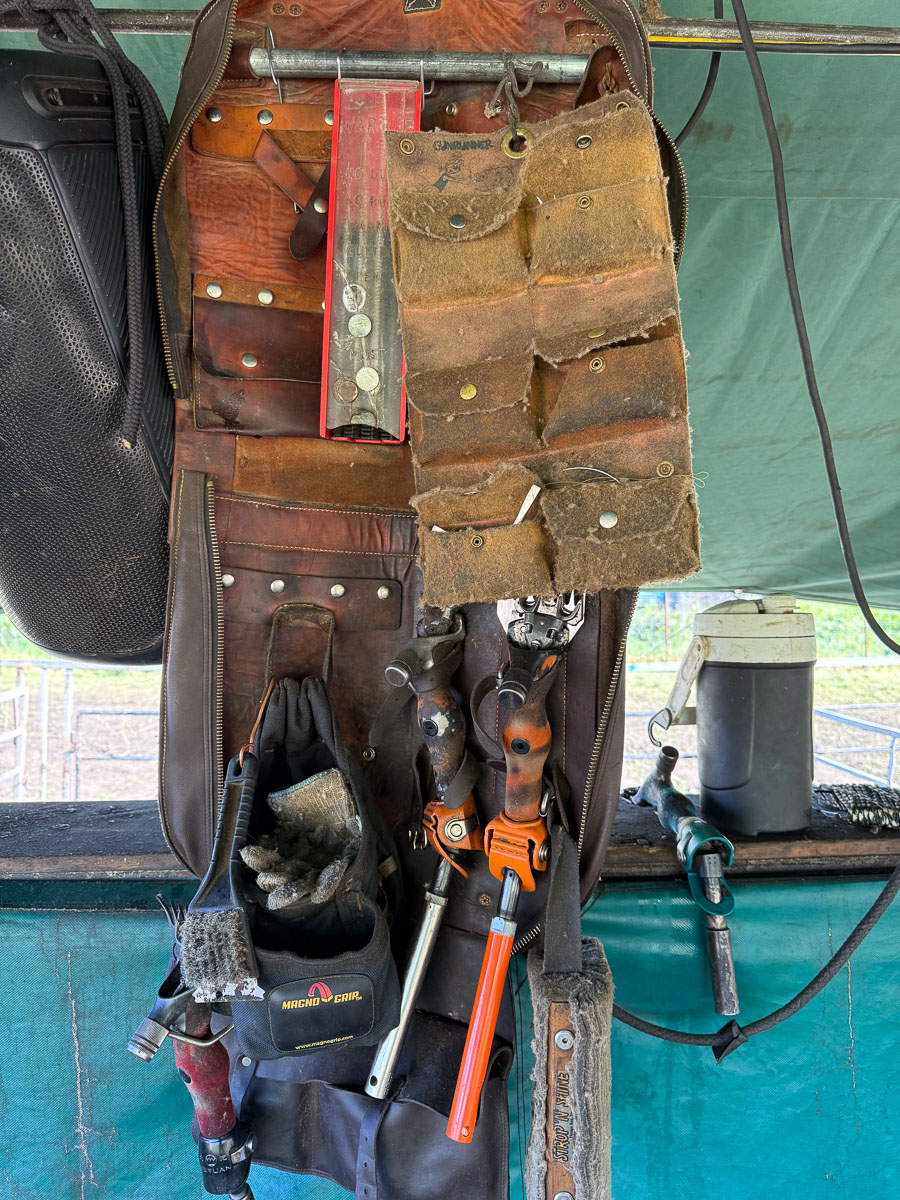
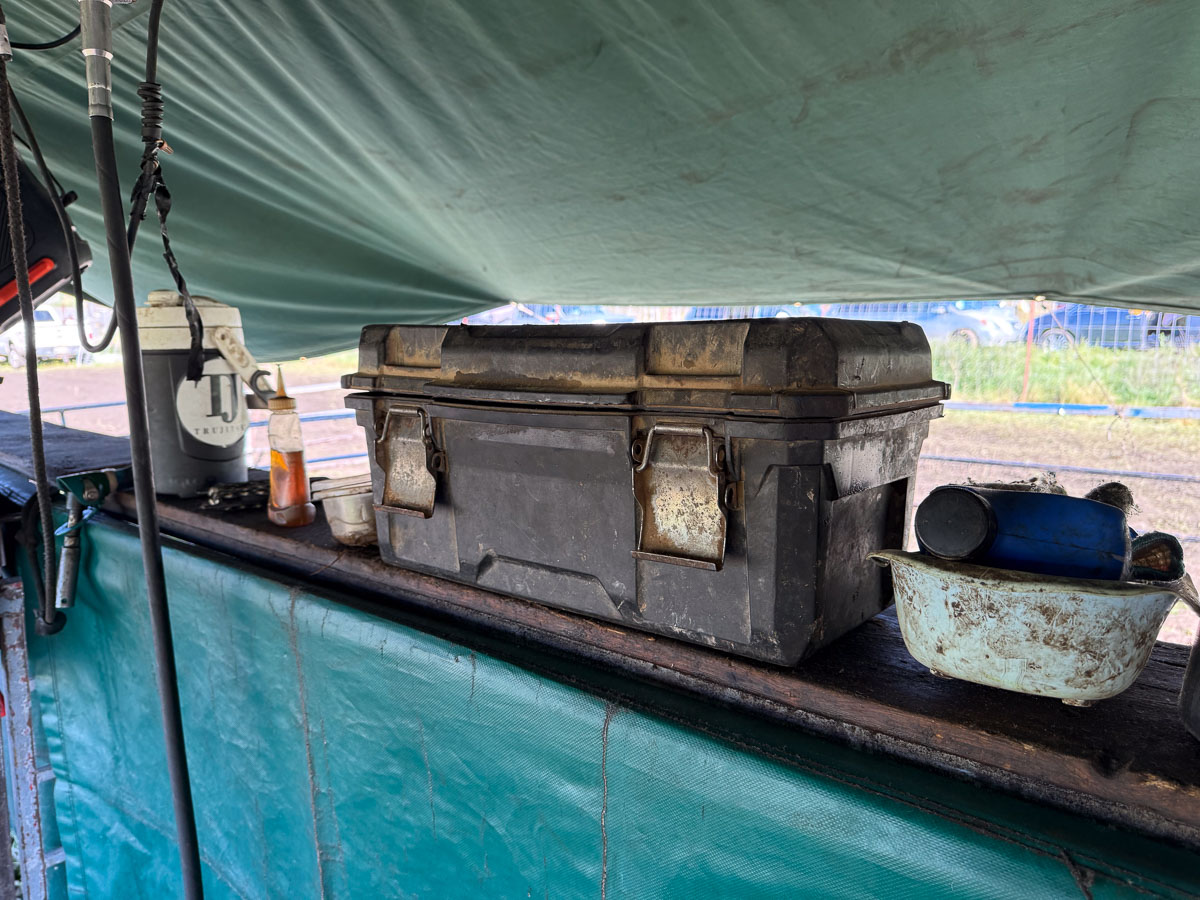
About 2 p.m. after the first 450 sheep were shorn, the shearers took a lunch break while the next group was being brought down from another hillside. I took photos of their gear.
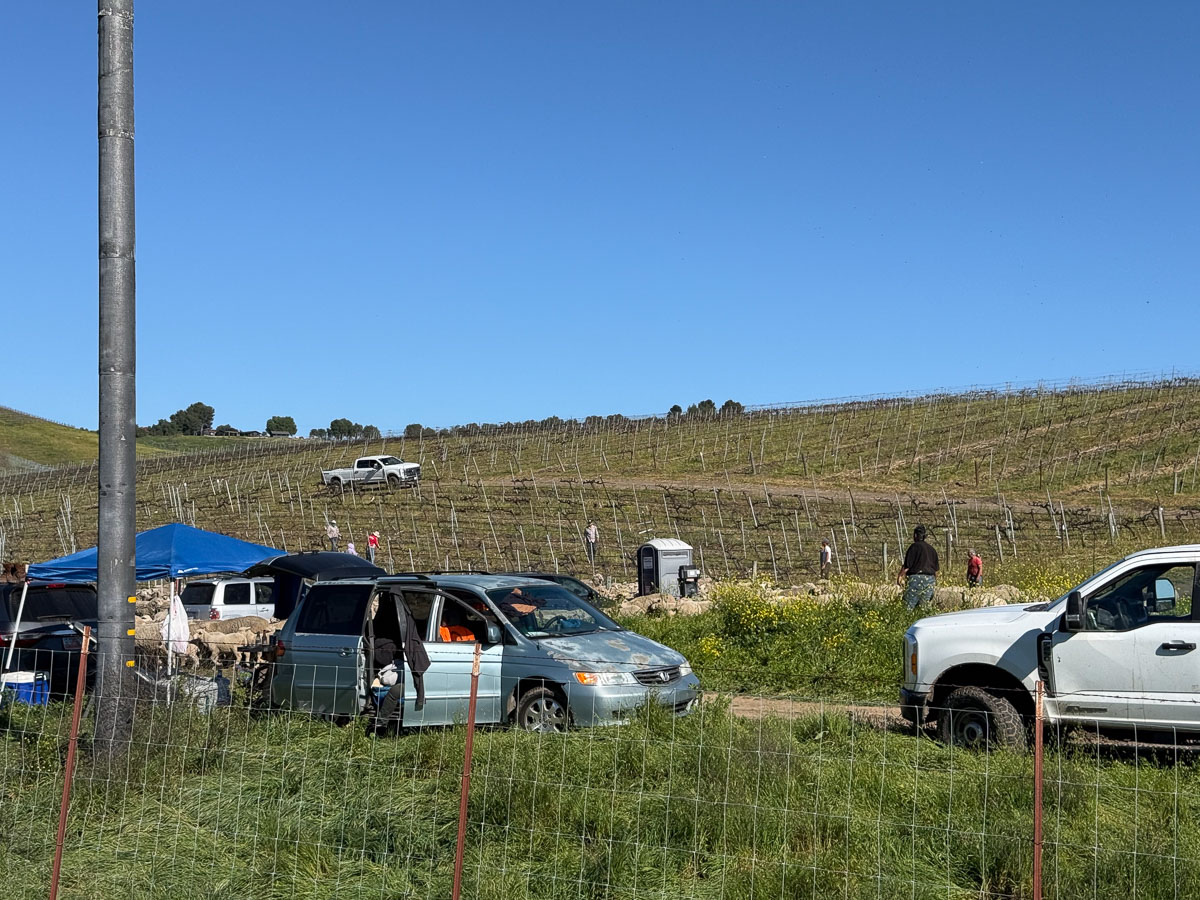
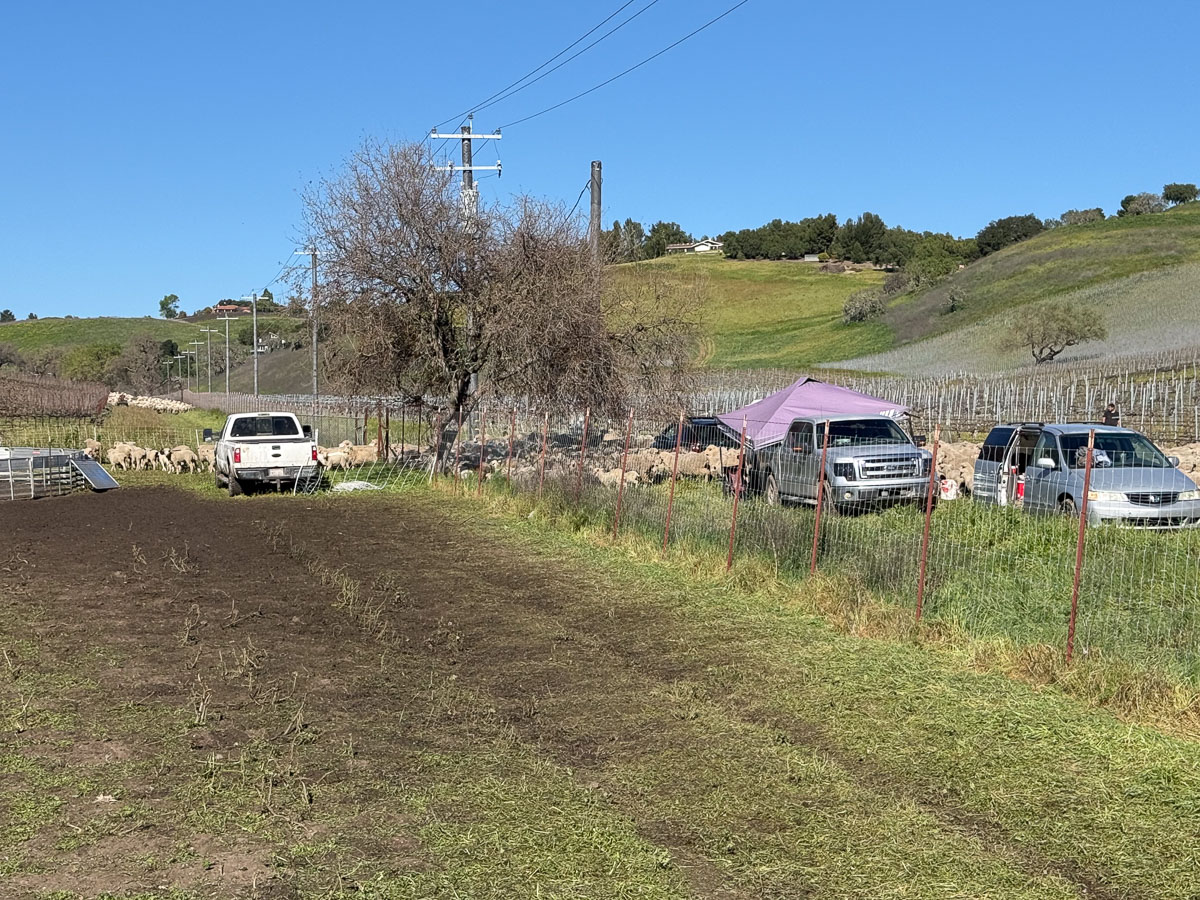
The shearers came in a variety of vehicles and put up the tarp where they had set up a kitchen of sorts. The sheep are below the vineyard and along the road, coming between the vehicles.
Another view as the sheep are moved into the corrals. The previous group is heading up the opposite hill with a 4-wheeler behind them.
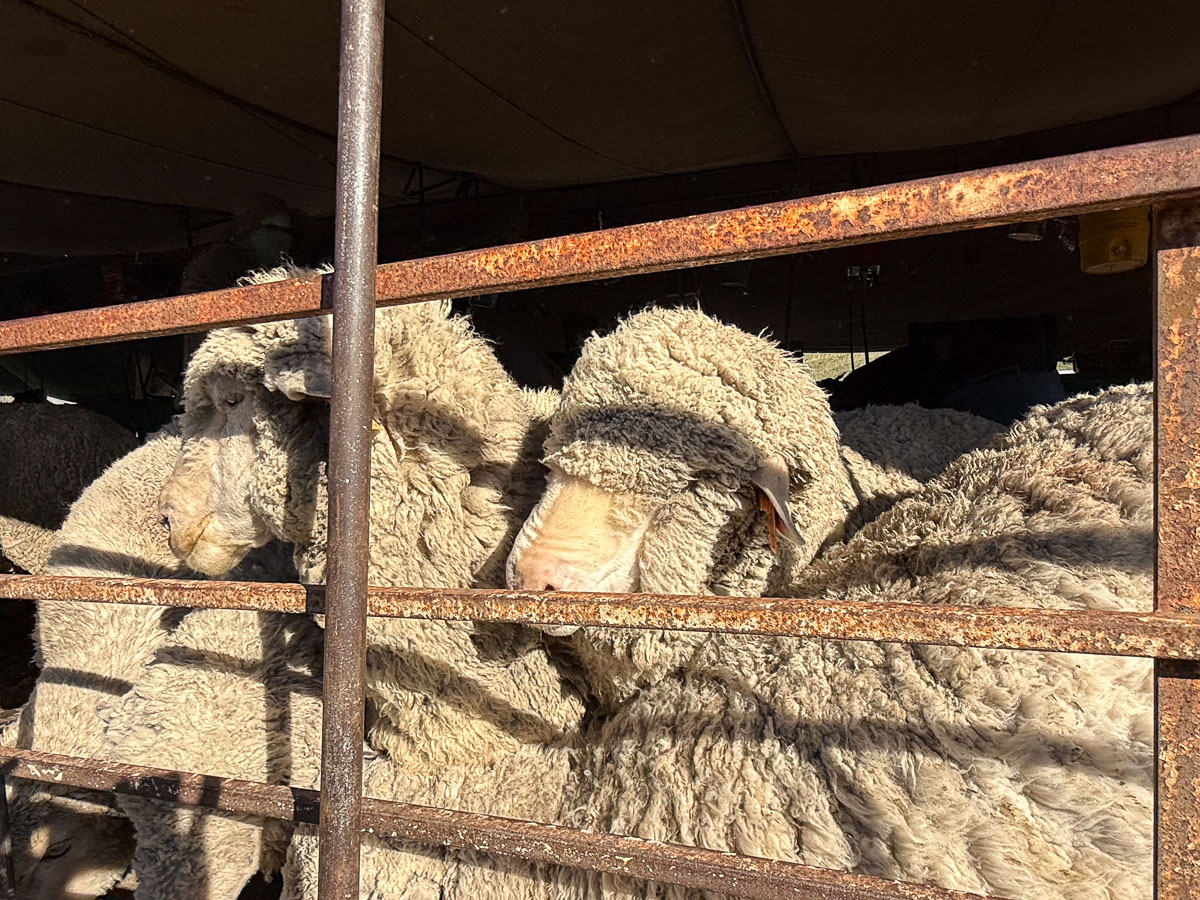
Sheep in the shearing shed.
Another view inside.
Shearing ended just before 5. Some of the shearers are heading back to their vehicles while others started to dismantle the shearing area.
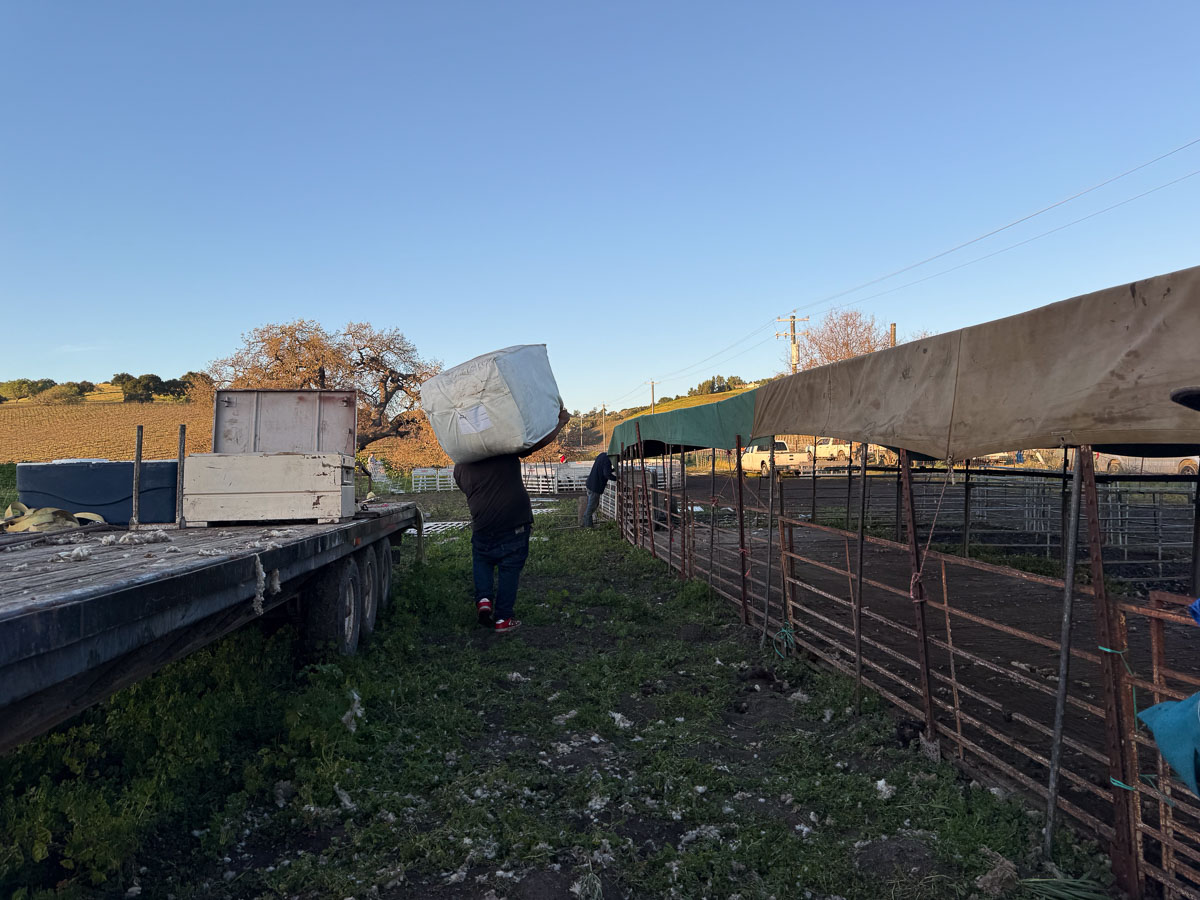
We waited until all the other wool was baled for our little amount to be pressed into a bale.
Bales are usually packed into a solid 400-500 pounds, but this one is only about 125 pounds and squishy. I wanted it baled, because I thought it would be the best way to ship it to Wyoming instead of trying to pack it into lots of boxes. At this point I will wait until after the Timm Ranch shearing day on March 22 and hope I can fit two bales on one pallet.

 Meridian Jacobs' Blog